Carpet area and what you are actually paying for
The rate quoted in a sales office is different from what you actually pay for usable floor space, and the builder decides the difference. RERA changed the unit of sale, but the pitch stayed the same.
Ask about the cost of a flat per square foot, and you will get a specific number. Ask which square feet, and the answer gets unclear.
This uncertainty is the costliest issue in an Indian property deal. Two flats might be priced the same per square foot but can differ by fifteen percent in the actual usable area. The brochure will not clarify this. The important number is carpet area, and since 2017, it is the only figure that must appear in your contract.
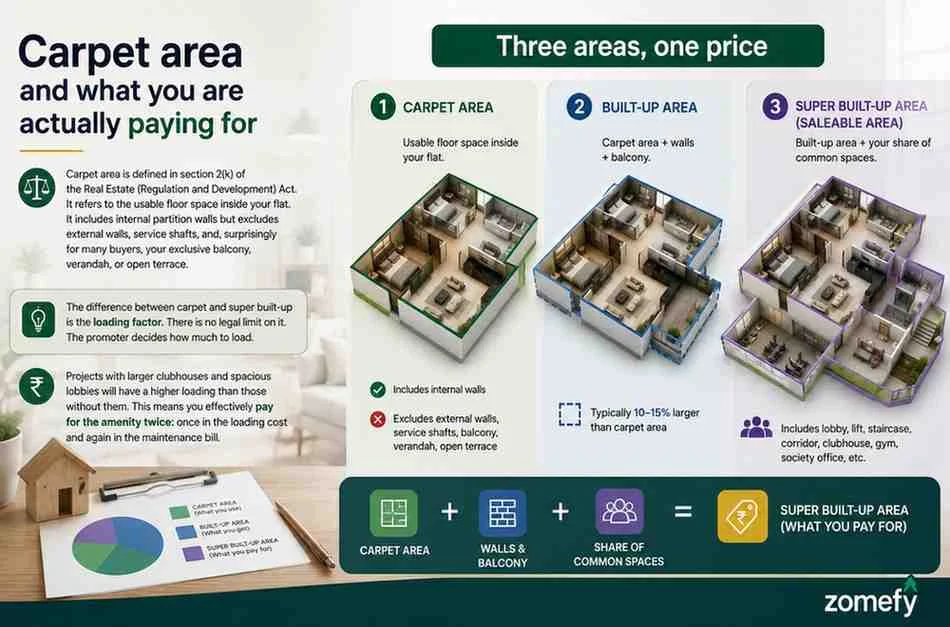
Three areas, one price
Carpet area is defined in section 2(k) of the Real Estate (Regulation and Development) Act. It refers to the usable floor space inside your flat. It includes internal partition walls but excludes external walls, service shafts, and, surprisingly for many buyers, your exclusive balcony, verandah, or open terrace.
Built-up area combines carpet area with walls and balcony. This is typically ten to fifteen percent larger than carpet area.
Super built-up area, also known as saleable area, adds built-up area to your shared allocation of common spaces: lobby, lift, staircase, corridor, clubhouse, gym, and society office. This is the number that has been used to sell flats in India for years and is still the figure most sales offices provide.
The difference between carpet and super built-up is the loading factor. There is no legal limit on it. The promoter decides how much to load. Projects with larger clubhouses and spacious lobbies will have a higher loading than those without them. This means you effectively pay for the amenity twice: once in the loading cost and again in the maintenance bill.
The arithmetic nobody does in the room
A flat advertised as 1,000 square feet at ₹9,000 per square foot costs ₹90 lakh. If the loading is thirty percent, your carpet area is around 770 square feet, leading to a cost of ₹11,688 per square foot for usable floor space.
The same ₹90 lakh flat with a twenty percent loading provides 833 square feet of carpet, which means it costs ₹10,804 per square foot. The advertised price is the same, but there is a difference of sixty-three square feet, roughly the size of a small bedroom.
Calculate this ratio before anything else. Divide the total cost by the carpet area in square feet. That single number is the only fair way to compare two projects, and it is the figure this site publishes.
What the law actually requires
RERA did not eliminate the term "super built-up." Instead, it made carpet area the required disclosure unit.
Promoters must file the carpet area for every apartment with the authority when registering a project. This filing is public, which is why the numbers on this site exist.
Section 13(1) states that a promoter cannot take more than ten percent of the flat's cost upfront before signing a written Agreement for Sale and registering it. If a large booking amount appears on a receipt and an allotment letter, don't overlook this technical detail.
Section 12 deals with advertising. If you paid an advance based on misleading information in a prospectus or advertisement, the promoter owes you compensation. If you choose to withdraw, you are entitled to a complete refund with interest.
The Maharashtra model Agreement for Sale addresses cases where the finished flat is smaller than advertised. It allows a variation of up to three percent in carpet area. If the shortfall exceeds that, the promoter must refund you with interest, while any increase can be charged at the same rate per square foot. Read your agreement carefully instead of assuming it follows the model, especially regarding whether the recalculation is based on carpet area or something else.
Why the register is the honest number
Every rate on this site results from a straightforward calculation: the amount recorded in a registered agreement divided by the carpet area of that flat, based on the promoter's own filing with MahaRERA.
Across 279,778 registered agreements in the Pune projects listed here, the median rate is ₹9,293 per square foot of carpet area. The median flat size is 63.7 square metres, which equals 686 square feet.
Noting that the register lists carpet area in square metres while the market uses square feet is important. The conversion factor is 10.764, which is a common place for errors, including in the filings themselves.
Of the 280,548 rates the Pune filings on this site yield, 770 were set aside because they sit more than two and a half times away from their own project's median. That is about one in 364. Almost all of them are a carpet area filed wrongly, not a flat that genuinely sold at that price.
Two caveats about the figures: they reflect the amount written into the agreement, so stamp duty, registration, and GST are added on top. Additionally, any separate builder charges like covered parking, club membership, floor rise, or infrastructure fees may not be included. These figures represent what buyers agreed to on a given date, not the current asking prices.
What to do before you pay anything
Request the carpet area in square metres as it appears in the register, and verify it against the project's MahaRERA filing. If they do not match, ask for a written explanation.
Request the loading factor as a specific number. A promoter who won't disclose it is being evasive. You can also find it by dividing super built-up by carpet area.
Calculate your own rate based on carpet area, then compare it with what buyers in the same area have actually registered. This comparison is available on the locality page of this site.
Check for additional charges. Costs for parking, club membership, floor rise, and infrastructure can add several percent to a price that initially seemed fixed, and these are usually introduced at the last minute.
Examine the balcony. It is not counted in your carpet area, but you are still paying for it somehow. Ask for clarification on that.
When you receive the agreement, find the figure for carpet area and review the clause regarding what happens if the finished flat is smaller. Confirm the tolerance level and ensure the refund is at the same rate you paid.
Where these numbers come from
Every figure here is taken from promoters' filings with MahaRERA, sourced from the public register and updated as changes occur. None of this comes from estimates or builders. You can verify any project by searching its registration number on the MahaRERA portal; each project page on this site provides the number you need.
This outlines how the Act addresses carpet area. It does not serve as legal advice for your agreement. For disputes, consult a lawyer with experience in MahaRERA matters.
Common questions
- What is carpet area under RERA?
- Carpet area is the usable floor inside the flat, including internal walls but excluding external walls, service shafts, balcony, verandah and open terrace. Since 2017 it is the only area that must appear in your sale agreement.
- What is the difference between carpet area and super built-up area?
- Super built-up (saleable) area adds walls, balcony and your share of common spaces — lobby, lifts, corridors, clubhouse — on top of carpet. Loading often adds fifteen to thirty percent or more, and there is no legal cap on it. The brochure rate is usually on super built-up; the RERA rate is on carpet.
- Why does the per-square-foot rate on Zomefy look higher than portal rates?
- Zomefy quotes registered sale agreements per square foot of RERA carpet. Portal asking rates are usually on super built-up area, which is larger, so the same flat looks cheaper per foot there. Convert before you compare.