← Back to Articles
Published on 04-Dec-2025

Risk-Off Sentiment and Market Rotation in 2025: How Indian Investors Should Navigate Global Volatility and Sector Shifts

The Indian equity markets have entered a critical phase in 2025, characterized by persistent foreign portfolio investor (FPI) outflows, elevated valuations, and heightened global uncertainty.

By Zomefy Research Team
18 min read
financial-insightsIntermediate

Risk-Off Sentiment and Market Rotation in 2025: How Indian Investors Should Navigate Global Volatility and Sector Shifts

2025:risk-offmarket
Reading time: 18 minutes
Level: Intermediate
Category: FINANCIAL INSIGHTS

What You Can Do Next

  • Read the full article for complete insights
  • Save for later reference
  • Share with others learning about this topic

Image not available

The Indian equity markets have entered a critical phase in 2025, characterized by persistent foreign portfolio investor (FPI) outflows, elevated valuations, and heightened global uncertainty. As of November 2025, FPIs have withdrawn over ₹1.43 lakh crore from Indian equities, marking one of the most challenging periods for foreign capital flows in recent years. This exodus has been driven by a combination of factors: the U.S. Federal Reserve's cautious stance on rate cuts, a strengthening U.S. dollar, geopolitical tensions including U.S.-China trade dynamics, and concerns about high domestic valuations in mid-cap and small-cap segments. The Indian rupee has depreciated to record lows of 90.29 per dollar, down nearly 5% for the year. For Indian retail investors and financial professionals, navigating this environment requires a sophisticated understanding of global risk-off sentiment, sector rotation opportunities, and strategic positioning. This article provides a comprehensive analysis of the current market dynamics, identifies which sectors are most vulnerable and which offer resilience, and outlines actionable strategies for investors to protect and grow their portfolios during this period of volatility and transition.

Understanding the Current Market Environment: Global Risk-Off and Capital Flows

The Indian equity markets are experiencing significant headwinds stemming from a global risk-off environment that has intensified throughout 2025. The Nifty 50 and BSE Sensex have faced considerable selling pressure, with the Nifty 50 slipping below the psychologically important 26,000 mark in late October 2025. The India VIX, the market's fear gauge, has remained elevated, signaling heightened volatility expectations among investors. The primary catalyst for this downturn has been the U.S. Federal Reserve's dovish yet cautious messaging regarding future rate cuts, with officials indicating that a December rate reduction is "far from a foregone conclusion." This uncertainty has triggered widespread selling across emerging markets, with India particularly affected due to its exposure to foreign capital flows.

Foreign portfolio investors have been net sellers for most of 2025, with only October providing brief respite when FPIs invested ₹14,610 crore. However, this was preceded by three consecutive months of substantial outflows: ₹23,885 crore in September, ₹34,990 crore in August, and ₹17,700 crore in July. November saw renewed selling pressure with ₹3,765 crore in net outflows. The cumulative withdrawal of ₹1.43 lakh crore represents approximately 0.8-1.0% of the total market capitalization, creating significant downward pressure on equity valuations. Global factors driving these flows include uncertainty regarding the Fed's rate-cut timeline, strong U.S. dollar performance, and diminished risk appetite in emerging markets broadly. Domestically, high valuations in certain sectors, weak industrial indicators, and ongoing geopolitical tensions have compounded investor caution. The rupee's depreciation to 90.29 per dollar reflects both the capital outflows and the relative strength of the U.S. currency, creating additional headwinds for importers and companies with dollar liabilities.

FPI Flow Patterns and Market Impact

FPI flows have become increasingly volatile and unpredictable in 2025, with alternating patterns of buying and selling creating significant market swings. The sectors most affected by FPI outflows include IT services, consumer services, and healthcare—traditionally sectors with high foreign investor concentration. Technology stocks have been particularly vulnerable due to global technology sector volatility and concerns about valuations in the digital economy. The relationship between FPI flows and rupee depreciation is bidirectional: outflows weaken the rupee, while rupee weakness can further discourage foreign investors from entering Indian equities. According to market analysts, the key factors influencing December 2025 FPI activity will be U.S. Federal Reserve rate-cut indications and developments in the India-U.S. trade agreement. President Trump's proposed 50% tariff on Indian goods has created significant uncertainty, with foreign investors hesitant to commit capital without clarity on trade relations. The RBI has been actively selling dollars to support the rupee, but this intervention has limitations. Analysts at ICICI Securities suggest that an India-U.S. trade deal before the financial year-end could significantly boost sentiment for both equities and the rupee. However, equity flows have been described as "quite erratic," with weak FDI flows on a net basis suggesting that sustainable capital flow improvement may take time to materialize.

Click on any column header to sort by that metric. Click again to reverse the order.
Month (2025)
FPI Inflow/Outflow (₹ Cr)
Cumulative (₹ Cr)
Primary Driver
July-17,700-17,700Fed rate uncertainty, strong USD
August-34,990-52,690Emerging market selloff, tech weakness
September-23,885-76,575Geopolitical tensions, valuations
October+14,610-61,965Brief respite, earnings optimism
November-3,765-65,730Risk-off sentiment resumes

Sector Analysis: Winners and Losers in the Risk-Off Environment

The risk-off sentiment of 2025 has created a clear bifurcation in sector performance, with defensive and resilient sectors outperforming cyclical and growth-oriented segments. Understanding these dynamics is crucial for tactical portfolio positioning. Growth at a reasonable price (GARP) stocks and digital-sector stocks demonstrated relative resilience in Q4 2024 and early 2025, declining less than the broad Indian market despite overall weakness. Digital sector stocks performed particularly well due to sustained global demand for IT services, increased domestic digital adoption, and strategic investor interest. However, this resilience has been tested by the broader market weakness in 2025, with technology and financial sectors—traditionally FPI-heavy—experiencing significant outflows.

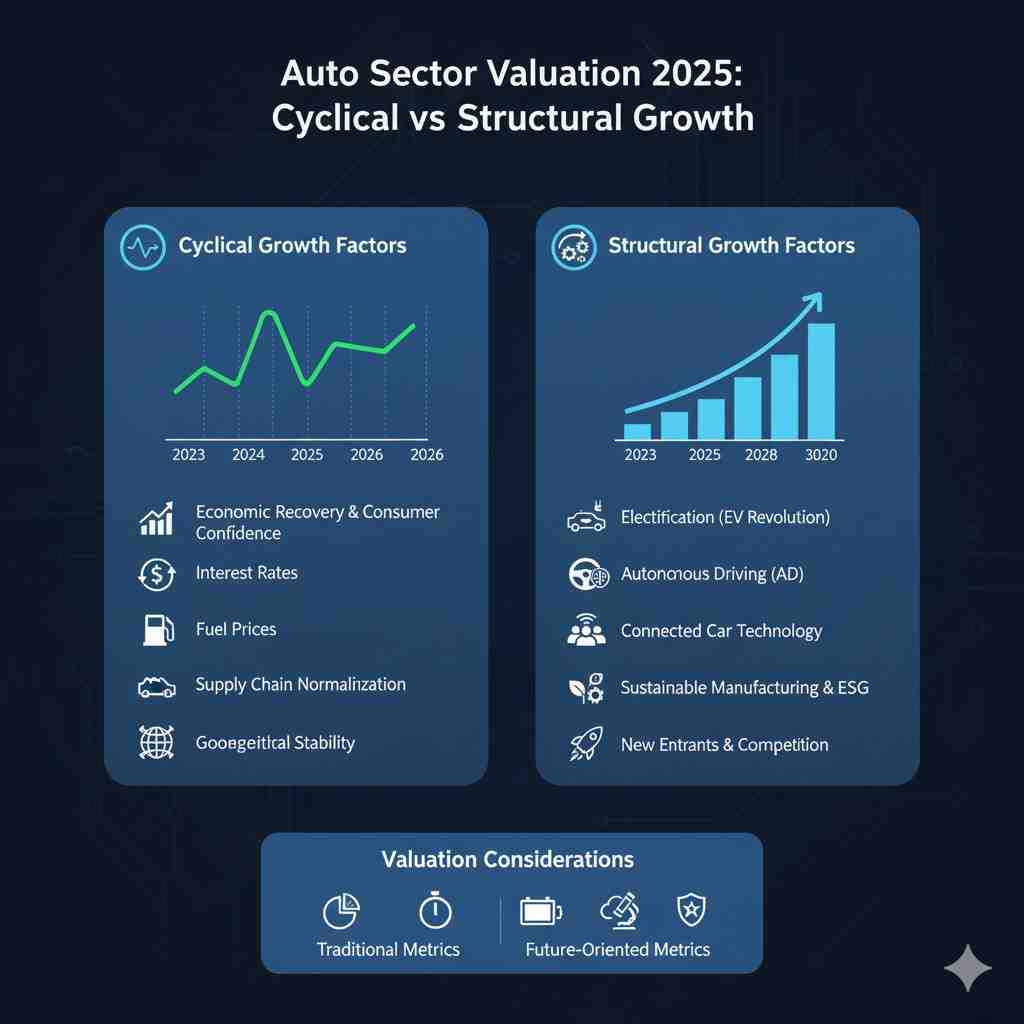
The automotive sector presents an interesting case study in sector rotation. GST revisions have resulted in 5-10% price cuts across auto categories, which is expected to strengthen demand from first-time buyers and premium segments of passenger vehicles and two-wheeled vehicles. The Reserve Bank of India is considering reducing risk weights for auto loans, which alongside policy easing and improved liquidity transmission, could further support sector growth. This suggests that despite broader market challenges, certain cyclical sectors with supportive policy tailwinds may offer attractive opportunities. Consumer services and healthcare sectors have also experienced significant FPI outflows, but their underlying business fundamentals remain relatively stable. The key challenge for these sectors is valuation compression rather than business deterioration. Mid-cap and small-cap segments face particular headwinds due to elevated valuations and limited margin of safety, making them vulnerable to further correction if risk-off sentiment persists.

Click on any column header to sort by that metric. Click again to reverse the order.
Sector
FPI Exposure Level
Valuation Status
Q2 Earnings Trend
Outlook
IT ServicesVery HighElevatedMixedCautious
FinancialsHighFair to ElevatedStrongNeutral
HealthcareHighElevatedModerateCautious
AutomobilesModerateFairImprovingPositive
Consumer StaplesLowFairStableDefensive
EnergyModerateFairStrongNeutral to Positive

Technology and IT Services: Navigating Global Headwinds

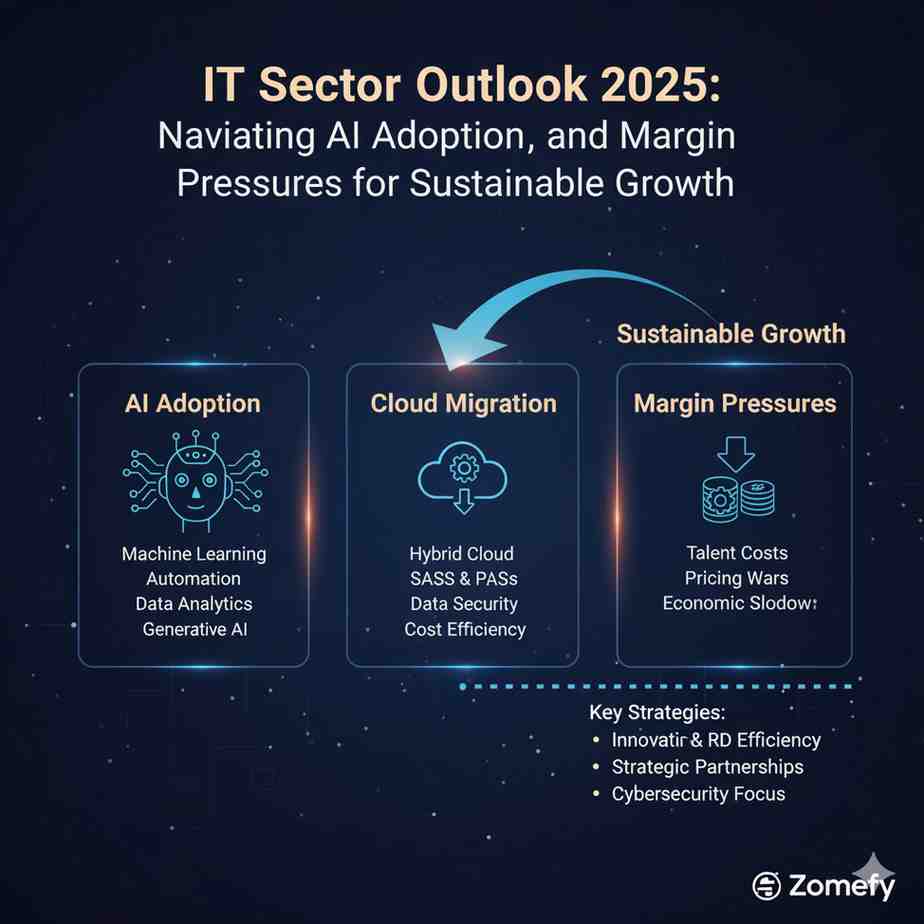
The IT services sector, which has been a cornerstone of foreign investor portfolios in India, faces significant headwinds in 2025. Global technology sector volatility, concerns about spending cycles in developed markets, and the strong U.S. dollar creating translation headwinds have all contributed to FPI selling in this space. However, the sector's long-term growth drivers remain intact: sustained global demand for IT services, digital transformation initiatives, and India's competitive advantages in software development and business process outsourcing. For investors, this presents a classic value opportunity for long-term investors with higher risk tolerance. The sector's earnings growth estimates for 2025-26 remain in the 13-16% range, suggesting that current valuations may not reflect underlying growth potential. Investors should consider accumulating quality IT services companies on weakness, particularly those with diversified client bases and strong balance sheets. However, near-term volatility should be expected, and investors should avoid aggressive concentration in this sector given the ongoing FPI uncertainty and global technology sector weakness.

Defensive Sectors: Consumer Staples and Utilities

Defensive sectors such as consumer staples and utilities have proven more resilient during the risk-off environment, experiencing lower FPI outflows compared to growth sectors. These sectors offer stable cash flows, predictable earnings, and often attractive dividend yields, making them attractive for risk-averse investors during periods of market uncertainty. Companies in this space benefit from essential consumption patterns that are less sensitive to economic cycles. The consumer staples sector, in particular, offers exposure to India's growing middle class and rising consumption patterns, while utilities provide stable returns through regulated business models. For investors seeking to reduce portfolio volatility during this period, increasing allocation to defensive sectors through either direct equity purchases or dedicated defensive mutual funds can provide portfolio stabilization. These sectors also tend to perform well during periods of rupee weakness, as they have limited foreign currency exposure and benefit from import substitution dynamics.

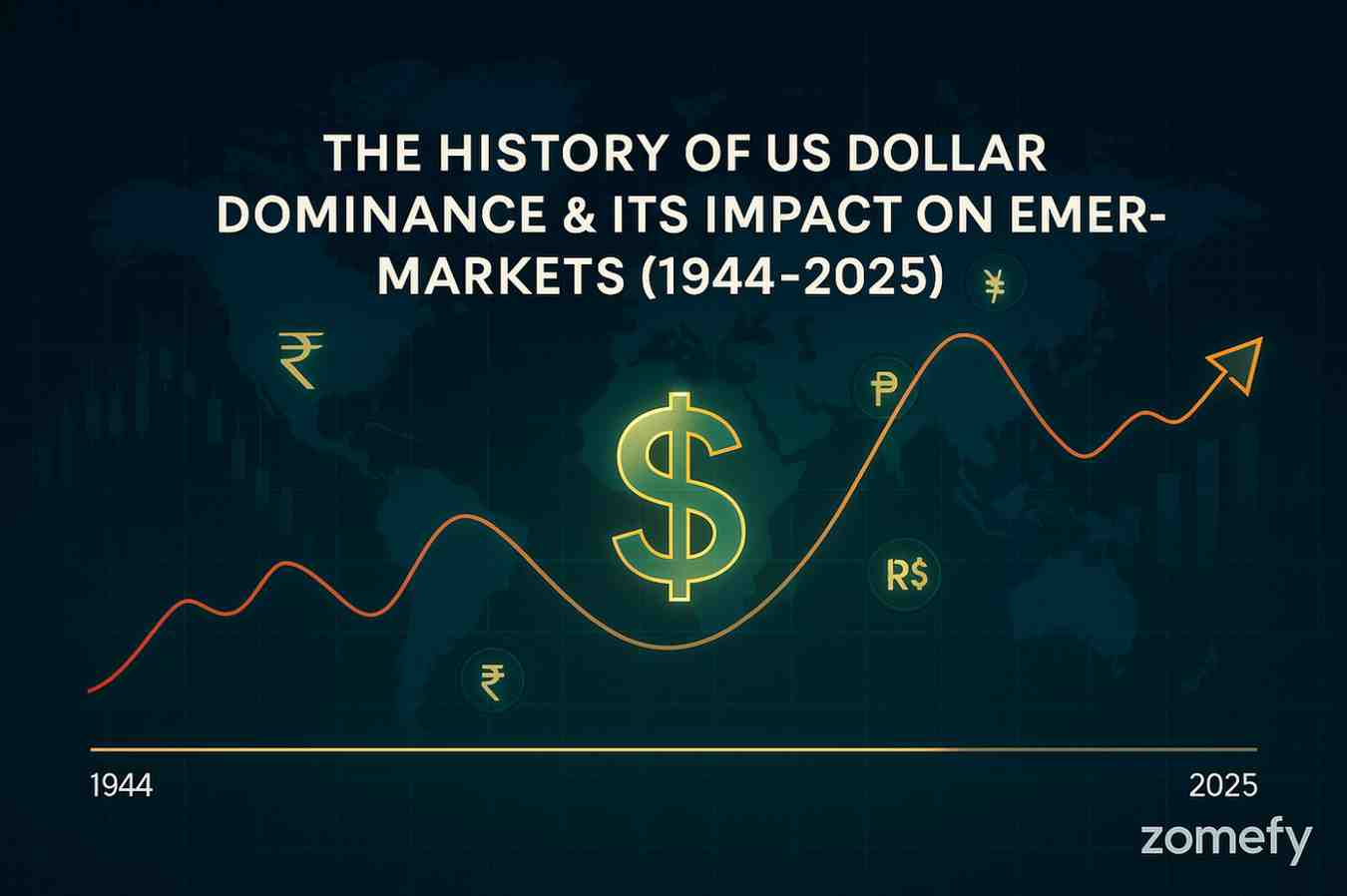
Currency Dynamics and Their Investment Implications

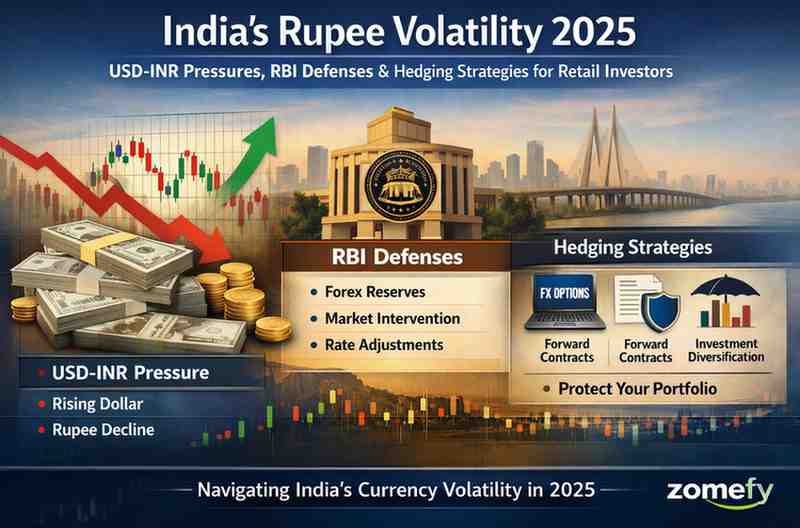
The Indian rupee's depreciation to record lows of 90.29 per dollar in December 2025 represents one of the most significant currency developments in recent years, with profound implications for Indian investors. The rupee has declined nearly 5% for the year against the greenback, reflecting both the FPI outflows and the relative strength of the U.S. dollar. While the Reserve Bank of India has been actively intervening by selling dollars to support the currency, the scale of intervention has been limited by India's foreign exchange reserves management considerations. According to a Reuters poll of FX strategists, the Indian rupee is expected to regain some lost ground against the U.S. dollar over the next three months, with the currency expected to trade around 89.65 against the dollar in the coming 12 months, representing a gain of approximately 0.3%. However, this recovery hinges critically upon India and the U.S. agreeing to a trade deal and a reversal in global risk-off sentiment.

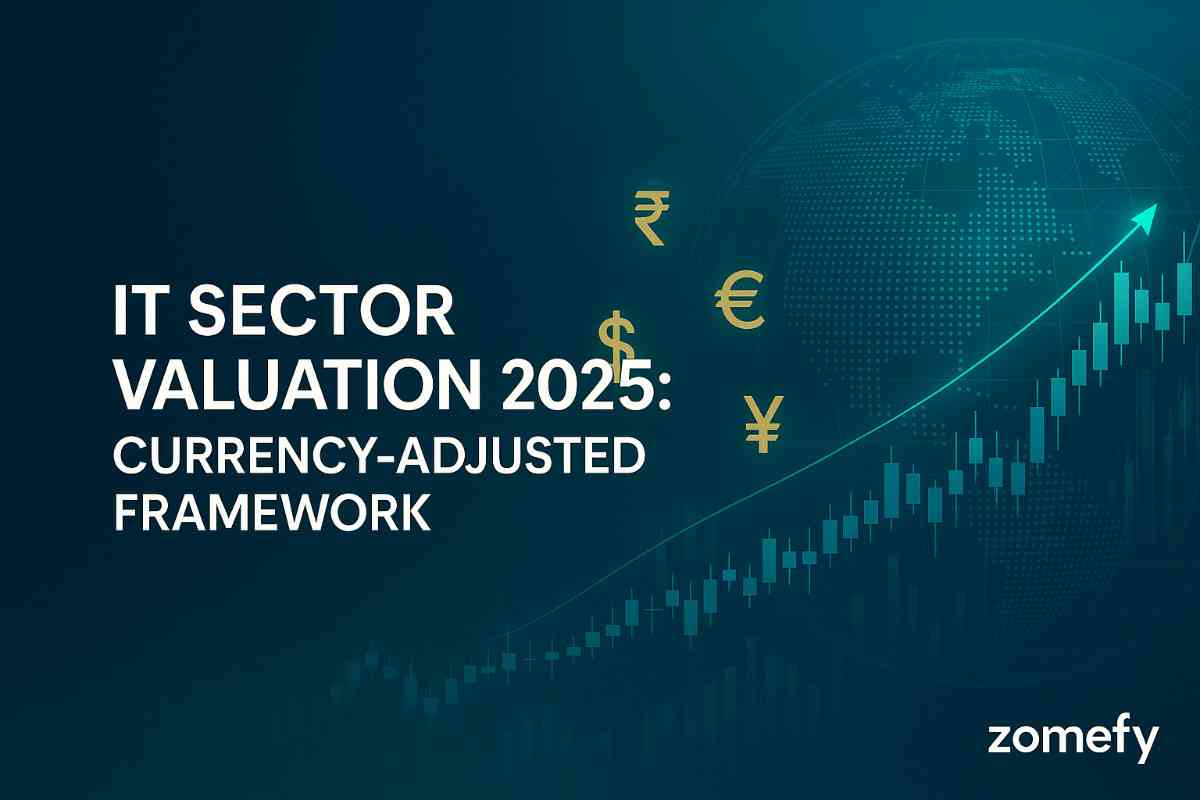
For Indian investors, rupee depreciation has mixed implications. On the negative side, it increases the cost of imports, potentially raising inflation and affecting companies with significant import requirements. It also reduces the rupee value of foreign currency earnings and investments. On the positive side, rupee weakness benefits exporters and companies with significant foreign currency earnings, including IT services firms, pharmaceutical companies, and engineering services providers. The depreciation also makes Indian equities more attractive on a relative basis for foreign investors on a currency-adjusted basis, potentially supporting valuations once global risk sentiment improves. For investors with foreign currency liabilities or those planning to study or travel abroad, rupee weakness increases costs. Conversely, investors with foreign currency earnings or those planning to invest abroad benefit from favorable conversion rates. The key takeaway is that currency movements should be factored into investment decisions, particularly for those with significant foreign currency exposure or international financial obligations.

Click on any column header to sort by that metric. Click again to reverse the order.
Currency Pair
Current Level (Dec 2025)
Year-to-Date Change (%)
12-Month Forecast
Key Driver
USD/INR90.29+4.889.65 (0.3% appreciation)Trade deal, risk sentiment
EUR/INR~94.5+3.2Dependent on EUR/USDECB policy, global growth
GBP/INR~113.2+2.8Dependent on GBP/USDBoE policy, Brexit developments

Impact on Corporate Earnings and Valuations

Rupee depreciation has significant implications for corporate earnings, particularly for companies with substantial foreign currency exposure. IT services companies, which earn approximately 60-70% of their revenues in foreign currency, benefit from rupee depreciation as it increases rupee-denominated earnings. Pharmaceutical companies, which are major exporters, similarly benefit from currency depreciation. However, companies with significant import requirements or foreign currency liabilities face headwinds. The net impact on overall market valuations depends on the composition of earnings and the market's perception of currency sustainability. If investors believe the rupee weakness is temporary and will reverse, they may discount the positive impact of currency depreciation on earnings. Conversely, if weakness is perceived as structural, the benefits to exporters may be more fully reflected in valuations. For investors, the key is to understand the foreign currency exposure of their portfolio companies and adjust expectations accordingly.

Strategic Positioning for Currency Volatility

Given the uncertainty surrounding the rupee and the potential for continued volatility, investors should consider several strategic approaches. First, maintain a diversified portfolio with exposure to both export-oriented companies (which benefit from rupee weakness) and domestic-focused companies (which are less affected by currency movements). Second, consider increasing allocation to gold and other hard assets, which provide a hedge against currency depreciation and inflation. Third, for those with foreign currency liabilities or planned foreign currency needs, consider hedging strategies or gradual accumulation of foreign currency through systematic investment. Fourth, monitor developments in India-U.S. trade negotiations closely, as a successful trade deal could significantly support the rupee and improve market sentiment. Finally, avoid making major financial commitments in foreign currency until the rupee stabilizes and trade deal uncertainty is resolved.

Valuation Concerns and Risk Assessment

One of the most significant concerns facing Indian equity investors in 2025 is the elevated valuation levels across mid-cap and small-cap segments, despite recent corrections. While large-cap indices have held up relatively better, the broader market valuation metrics suggest limited margin of safety for investors entering at current levels. The P/E ratios for mid-cap and small-cap indices remain elevated compared to historical averages and to developed market peers, creating vulnerability to further correction if earnings growth disappoints or risk sentiment deteriorates further. The market's valuation compression in 2025 has been modest relative to the scale of FPI outflows, suggesting that either earnings expectations have fallen significantly or that valuations remain stretched on an absolute basis.

Geopolitical tensions, including U.S.-China trade dynamics and Middle East conflicts, represent additional risks that could trigger sudden risk-off episodes and further market corrections. The proposed U.S. tariffs on Indian goods, if implemented, could impact Indian exporters and reduce foreign investor appetite for Indian equities. Inflationary pressures, both globally and domestically, remain a concern, potentially constraining central bank policy flexibility and limiting the RBI's ability to cut rates aggressively to support growth. The combination of elevated valuations, geopolitical risks, and policy uncertainty creates a challenging environment for investors. However, it also creates opportunities for selective investing in quality companies trading at reasonable valuations and for patient investors willing to accumulate positions gradually during periods of weakness.

Click on any column header to sort by that metric. Click again to reverse the order.
Risk Factor
Severity Level
Time Horizon
Potential Impact
Mitigation Strategy
Geopolitical TensionsHighNear-termSudden market correction (5-10%)Diversification, defensive positioning
Elevated ValuationsHighMedium-termEarnings disappointment, P/E compressionSelective investing, quality focus
FPI OutflowsHighNear-termLiquidity concerns, volatilityDomestic investor participation
Rupee WeaknessMediumMedium-termImport inflation, corporate headwindsExport-focused holdings, hedging
Global Recession RiskMediumMedium-termEarnings downgrades, capital outflowsQuality, dividend-paying stocks
Policy UncertaintyMediumOngoingReform delays, investor confidenceMonitor political developments

Earnings Growth Expectations and Valuation Metrics

Despite current market challenges, consensus earnings growth estimates for the 2025-26 calendar year remain robust at 13% and 16% respectively, according to MSCI India data. This suggests that while market sentiment has deteriorated significantly, underlying business fundamentals have not collapsed. The key question for investors is whether current market prices adequately reflect these earnings growth expectations. For large-cap companies with strong balance sheets and diversified revenue streams, valuations appear more reasonable. For mid-cap and small-cap companies, particularly those with high leverage or cyclical business models, valuations may still incorporate excessive growth assumptions. Investors should conduct thorough fundamental analysis before investing, focusing on companies with sustainable competitive advantages, strong management, and reasonable valuations relative to growth prospects. The current environment rewards disciplined stock selection and punishes indiscriminate buying.
Domestic Political Uncertainty and Policy Execution

India's political landscape has evolved following the 2024 elections, with the majority party now relying on coalition partners, which could impact policy execution and reform momentum. Upcoming state elections and governance challenges may introduce further volatility. Additionally, concerns over media restrictions and civil liberties could affect investor confidence and India's global standing. While India's economic fundamentals remain strong, with GDP growth at 8.2% in the July-September quarter, political uncertainty can create headwinds for market sentiment and investor confidence. Investors should monitor political developments closely and be prepared for potential policy reversals or delays in key reform initiatives. The RBI's independence and credibility remain strong, providing some insulation from political pressures, but investors should remain vigilant about potential changes in fiscal or regulatory policy.

Investment Strategies for Navigating 2025 Market Volatility

Given the complex market environment of 2025, Indian investors should adopt a multi-faceted investment strategy that balances risk management with opportunity capture. The following approaches are recommended based on current market conditions and risk assessment:

Systematic Investment Approach**: Rather than attempting to time the market or deploy large sums at once, investors should consider systematic investment plans (SIPs) or rupee-cost averaging strategies. This approach allows investors to accumulate quality assets at varying prices, reducing the impact of short-term volatility and eliminating the need to perfectly time market entry. SIPs are particularly effective during volatile periods, as they allow investors to buy more shares when prices are low and fewer shares when prices are high.

Quality Over Quantity**: Focus on large-cap companies with strong fundamentals, sustainable competitive advantages, and reasonable valuations. These companies are more likely to weather market volatility and deliver consistent returns over the long term. Avoid chasing high-growth but unproven companies, particularly in the mid-cap and small-cap segments where valuations are stretched and liquidity is lower.

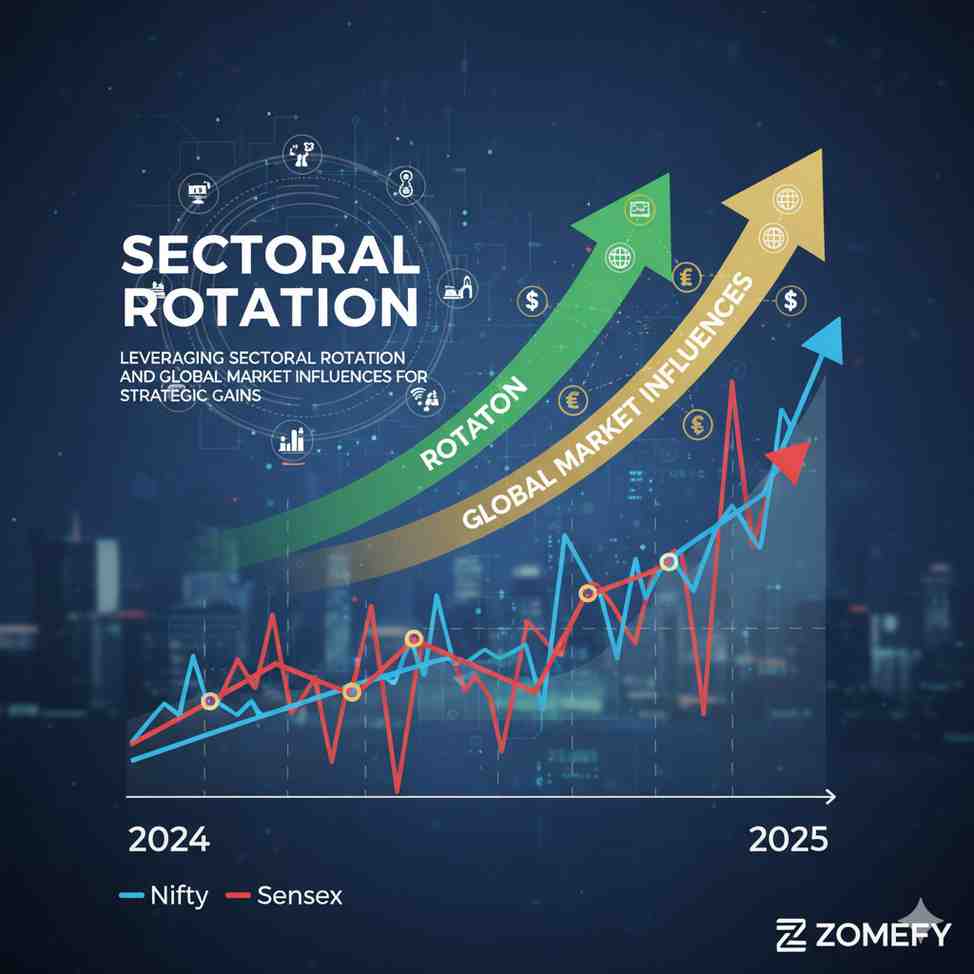
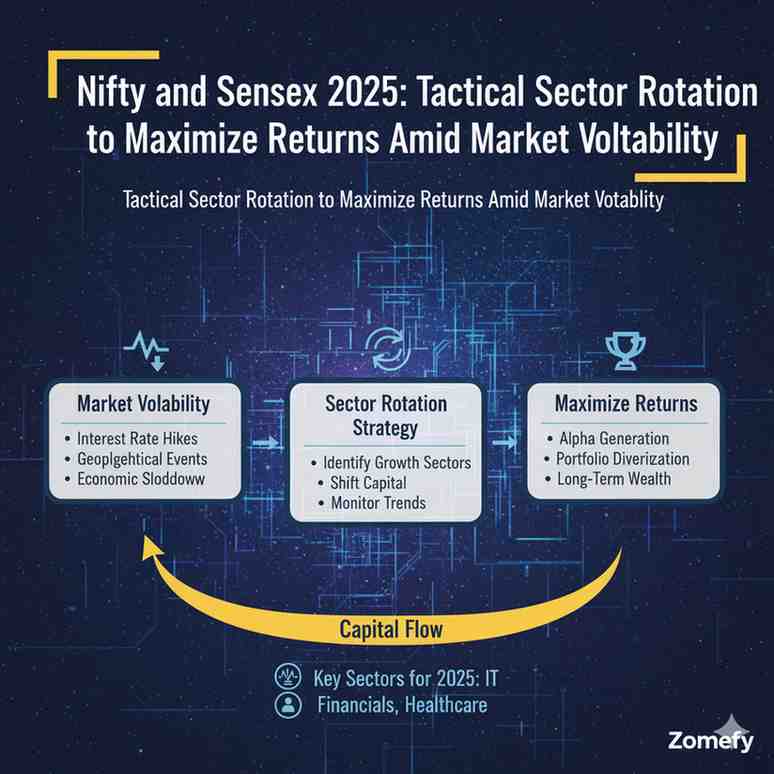
Sector Rotation Strategy**: Gradually reduce exposure to sectors with high FPI concentration and elevated valuations (IT services, healthcare, consumer discretionary), while increasing exposure to defensive sectors (consumer staples, utilities, energy) and sectors with supportive policy tailwinds (automobiles, renewable energy). This rotation should be done gradually to avoid crystallizing losses and to maintain portfolio diversification.

Dividend and Value Focus**: Prioritize stocks with strong dividend yields and reasonable valuations. Dividend-paying stocks provide regular income during volatile periods and tend to be less volatile than growth stocks. Companies with 3-5% dividend yields offer attractive risk-adjusted returns in the current environment.

Debt and Hybrid Instruments**: Increase allocation to debt instruments and hybrid securities, which offer more stable returns and lower volatility compared to equities. Fixed deposits, government securities, and debt mutual funds provide portfolio ballast during equity market weakness. Consider a 40-60 equity-debt allocation for conservative investors and 60-40 for moderate investors during this period.

International Diversification**: Consider increasing exposure to international equities through overseas investment platforms or international mutual funds. This provides diversification away from Indian rupee risk and exposure to different market cycles. However, be mindful of currency risk and tax implications.

Click on any column header to sort by that metric. Click again to reverse the order.
Investment Strategy
Risk Level
Time Horizon
Expected Return
Suitable For
Systematic Investment Plans (SIPs)Low-Medium3-5 years10-12%All investors
Quality Large-Cap FocusMedium3-5 years11-13%Conservative to Moderate
Dividend AristocratsLow-MediumLong-term8-10% + dividendsIncome-focused investors
Sector RotationMedium-High1-3 years12-15%Active investors
Equity-Debt Mix (60-40)Low-Medium3-5 years9-11%Moderate investors
Value InvestingMedium-High3-5 years13-16%Experienced investors

Portfolio Rebalancing and Risk Management

Regular portfolio rebalancing is essential during volatile markets to maintain desired risk levels and lock in gains from outperforming segments. Investors should review their portfolio allocation quarterly and rebalance if equity or debt allocations drift more than 5-10% from target levels. This disciplined approach forces investors to sell outperforming assets (which tend to be overvalued) and buy underperforming assets (which tend to be undervalued), enhancing long-term returns. Additionally, investors should implement stop-loss strategies for speculative positions and maintain adequate emergency funds (3-6 months of expenses) in liquid instruments to avoid forced selling during market downturns. Portfolio insurance through put options or inverse ETFs can be considered for investors with significant concentrated positions, though these strategies involve additional costs and complexity.

Monitoring and Adjustment Framework

Investors should establish a clear framework for monitoring market conditions and adjusting their strategy accordingly. Key metrics to monitor include: FPI flows (weekly), rupee movements (daily), earnings revisions (quarterly), valuation metrics (monthly), and geopolitical developments (ongoing). Establish clear trigger points for strategy adjustment: if FPI outflows exceed ₹50,000 crore in a month, increase defensive positioning; if earnings revisions turn significantly negative, reduce growth stock exposure; if rupee stabilizes above 89 per dollar, consider increasing equity exposure. This systematic approach prevents emotional decision-making and ensures that portfolio adjustments are based on objective criteria rather than market noise or sentiment.

Conclusion and Outlook for 2025 and Beyond

The Indian equity market environment in 2025 presents a complex mix of challenges and opportunities. The persistent FPI outflows, elevated valuations, rupee depreciation, and geopolitical uncertainties create a challenging backdrop for investors. However, India's strong economic fundamentals, with GDP growth at 8.2% in the July-September quarter, supportive policy initiatives, and long-term structural growth drivers remain intact. The key for investors is to distinguish between temporary market sentiment-driven volatility and fundamental business deterioration.

The market outlook for the remainder of 2025 and into 2026 depends critically on several factors: the resolution of U.S.-India trade negotiations, the Federal Reserve's actual rate-cut trajectory, geopolitical developments, and corporate earnings delivery. If trade tensions ease, FPI flows stabilize, and earnings growth meets expectations, the market could experience significant recovery from current levels. Conversely, if geopolitical tensions escalate, global recession risks materialize, or earnings disappoint, further downside is possible.

For Indian investors, the current environment rewards disciplined, systematic, and selective investing. Rather than attempting to catch falling knives or time the market perfectly, investors should focus on building diversified portfolios of quality companies at reasonable valuations, maintaining adequate allocation to defensive assets, and staying invested through market cycles. The investors who emerge strongest from this period will be those who maintain conviction in India's long-term growth story while managing near-term risks prudently. The next 6-12 months will likely determine whether 2025 represents a temporary correction or the beginning of a more prolonged bear market. Regardless, investors with a long-term perspective and disciplined approach should find attractive opportunities to build wealth during this period of volatility.

Key Takeaways for Indian Investors

1.
Embrace Volatility as Opportunity**::
Market corrections create opportunities for disciplined investors to accumulate quality assets at lower prices. Use SIPs and rupee-cost averaging to systematically build positions during weak markets.
2.
Prioritize Quality and Valuation**::
Focus on large-cap companies with strong fundamentals, sustainable competitive advantages, and reasonable valuations. Avoid chasing growth at any price, particularly in mid-cap and small-cap segments.
3.
Diversify Across Sectors and Asset Classes**::
Reduce concentration in FPI-heavy sectors like IT and healthcare. Increase exposure to defensive sectors and consider adding debt and international assets to your portfolio.
4.
Monitor Currency and Trade Developments**::
Keep a close eye on rupee movements and India-U.S. trade negotiations, as these will significantly impact market sentiment and corporate earnings in the coming months.
5.
Stay the Course**::
Despite near-term volatility, India's long-term growth story remains compelling. Investors with a 5-10 year time horizon should not panic sell during corrections but rather use weakness to rebalance and add to quality positions.
6.
Seek Professional Advice**::
Given the complexity of the current environment, consider consulting with a qualified financial advisor to develop a personalized investment strategy aligned with your risk tolerance, time horizon, and financial goals.

Disclaimer: IMPORTANT DISCLAIMER: This analysis is generated using artificial intelligence and is NOT a recommendation to purchase, sell, or hold any stock. This analysis is for informational and educational purposes only. Past performance does not guarantee future results. Please consult with a qualified financial advisor before making any investment decisions. The author and platform are not responsible for any investment losses.

Share this article: