← Back to Articles
Published on 18-Dec-2025

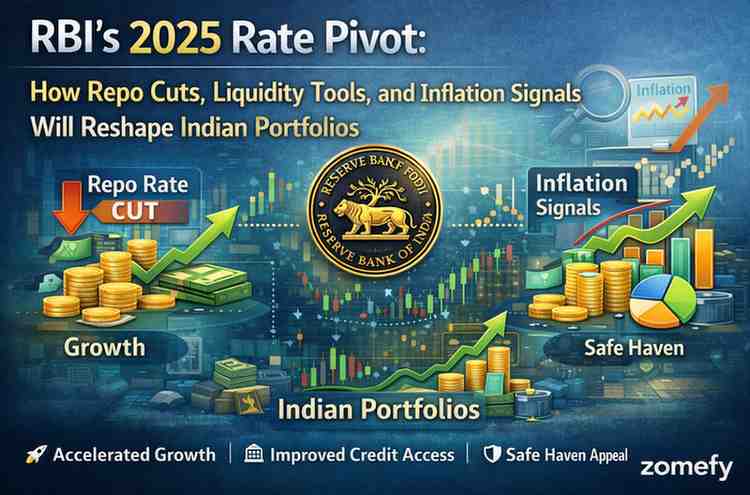
RBI’s 2025 Rate Pivot: How Repo Cuts, Liquidity Tools, and Inflation Signals Will Reshape Indian Portfolios

The Reserve Bank of India’s (RBI) 2025 pivot toward easing monetary policy — signalled by a cumulative 125 basis points (bps) of repo-rate cuts during the year and the December 2025 repo rate at 5.

By Zomefy Research Team
14 min read
financial-insightsIntermediate

RBI’s 2025 Rate Pivot: How Repo Cuts, Liquidity Tools, and Inflation Signals Will Reshape Indian Portfolios

pivot:market analysisfinancial insights
Reading time: 14 minutes
Level: Intermediate
Category: FINANCIAL INSIGHTS

What You Can Do Next

  • Read the full article for complete insights
  • Save for later reference
  • Share with others learning about this topic

Image not available

The Reserve Bank of India’s (RBI) 2025 pivot toward easing monetary policy — signalled by a cumulative 125 basis points (bps) of repo-rate cuts during the year and the December 2025 repo rate at 5.25% — is reshaping the Indian investment landscape across fixed income, equities, real estate, and foreign flows. This article explains how repo cuts, liquidity management tools (SDF, MSF, LAF operations), and unusually low headline inflation readings (RBI revised FY26 inflation to about 2.0%) interact to change risk premia, valuations, and asset-allocation choices for Indian retail investors and financial professionals. It provides concrete, actionable portfolio moves, sector and company-level examples, fund-selection guidance, and risk-management checklists grounded in Indian regulatory and market context. The emphasis is practical: tactical tilts to duration, credit quality and equity sectors; examples using Indian banks, NBFCs, large-cap corporates and mutual funds; and scenario-based trade plans for neutral, dovish and inflation-reacceleration outcomes. Where relevant this analysis cites observed market reactions to recent RBI decisions (bank lending-rate pass-through, deposit-rate moves), typical policy transmission channels and historical precedents to make implementable recommendations suited to retail and advisory clients.
Macro view: Repo cuts, liquidity tools and inflation signals — what changed and why it matters

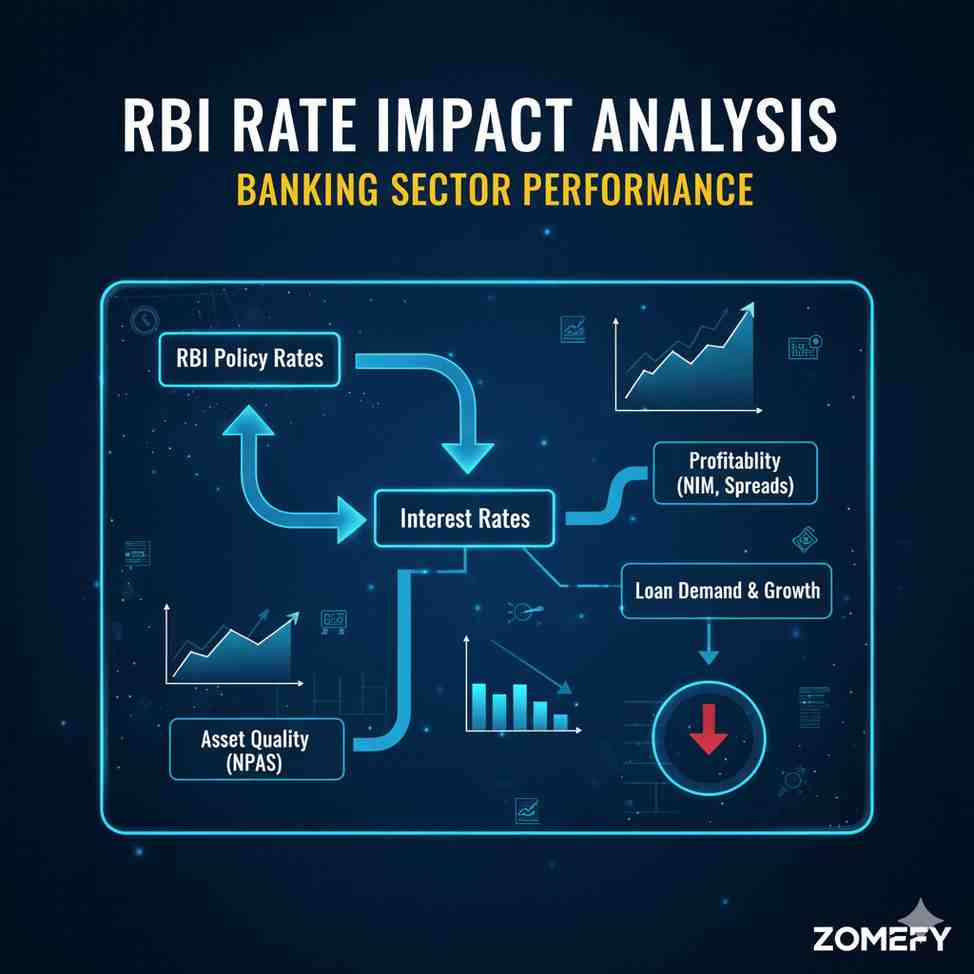
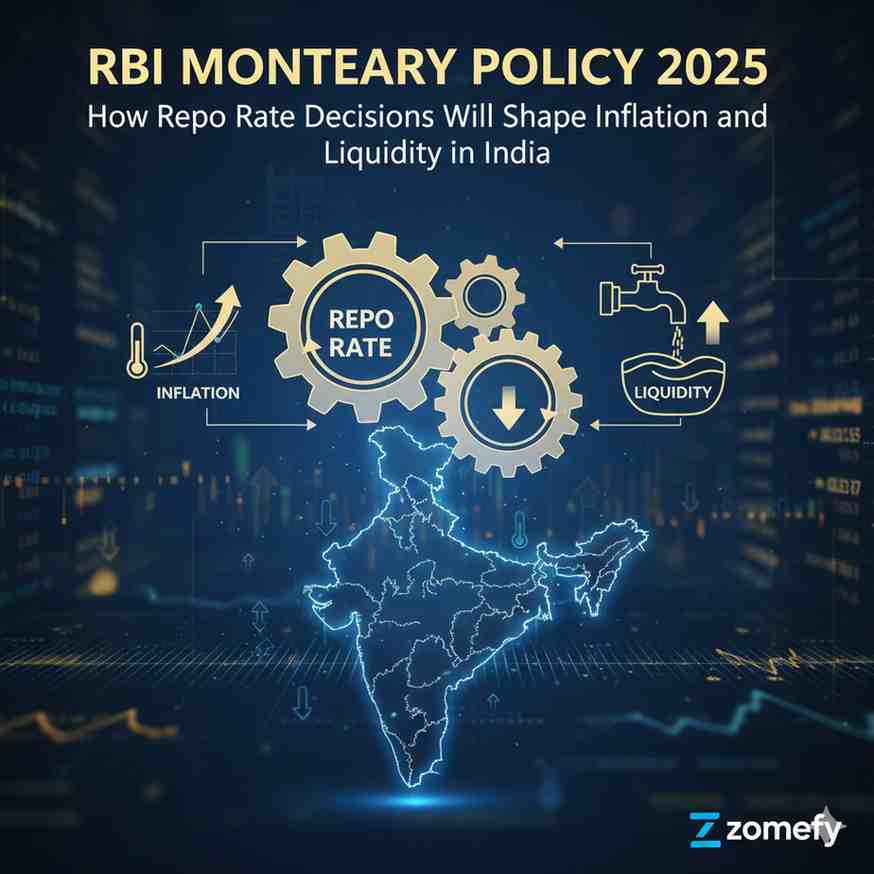
RBI actions in 2025 moved policy from restrictive/neutral toward an accommodative bias by cutting the repo rate by a cumulative 125 bps through the year to 5.25% and lowering standing facility rates (SDF/MSF) in tandem; RBI also revised its inflation projection for FY26 to c.2.0% while maintaining robust GDP growth forecasts (RBI retained a strong growth outlook near 7%+). These developments alter real rates, improve credit and equity valuations, and reshape currency and FI flows. Key transmission observations and implications:

- Monetary transmission & bank lending: Several large banks and public-sector lenders cut their repo-linked lending rates (RLLR/RBLR) quickly after RBI moves (examples: Bank of India RBLR moved from 8.35% to 8.10%; multiple public banks revised rates in early Dec 2025) which implies faster mortgage and consumer-loan relief and likely higher discretionary consumption if sustained.[2][3]

- Liquidity tools matter: Reduction in SDF/MSF compresses interbank rates and incentivises banks to lend; RBI’s Liquidity Adjustment Facility (LAF) operations and Open Market Operations (OMO) provide term liquidity that supports G-Sec yields downward and flattens the yield curve, benefitting duration-sensitive instruments.[1][4]

- Inflation anchor: A 2.0% inflation projection gives the RBI room to keep real policy accommodative, supporting risk assets; however, such low inflation is below the long-run mean and raises the risk of re-acceleration if supply shocks or global commodity inflation resumes.[1]

Implications for investors:

- Fixed income: Lower policy rates push G-Sec and high-quality corporate yields down; duration funds and gilt funds benefit but face reinvestment risk if rates fall further. Short-term debt and bank FDs will have lower absolute returns — favour selective credit exposure and dynamic-duration strategies.[3][4]

- Equities: Discount rates decline, boosting P/E multiples especially for high-growth, capital-light sectors (IT, consumption, NBFCs with strong liability franchises). Rate-sensitive sectors (housing, autos, consumer durables) typically see demand acceleration.

- FX and flows: Lower yields can pressure the INR; monitor RBI FX interventions and FI inflows. Corporate and sovereign borrowing costs fall, supporting capex plans.

Structured macro data and transmission — numerical snapshot

Key numeric benchmarks and transmission metrics (period and sources indicated):

- Policy and benchmark levels: Repo rate at 5.25% after Dec 5, 2025 cut; Reverse repo 3.35%; SDF and MSF reduced alongside repo/MSF adjustments per RBI announcements and market reports.[1][3][4]

- Year-to-date rate moves: Cumulative cuts in 2025 = 125 bps (from a peak earlier in the year near 6.5%/6.75% depending on intra-year decisions), with earlier cuts in June/Oct and the decisive move in December that completed the easing cycle.[1][3]

- Bank lending changes: Representative RLLR/RBLR changes — Bank of India: 8.35% -> 8.10% (effective Dec 5/6/12 filings); multiple public banks cut lending rates within days of RBI action implying pass-through of ~20–30 bps on retail rates in December 2025.[2]

- Yield reaction (typical): 10Y G-Sec yields compressed by ~30–60 bps across easing announcements during 2025 in market episodes; exact intraday moves vary with OMOs and global rates.

Structured data (key statistics):

- Real policy rate (approx): Repo (5.25%) - RBI inflation projection (2.0%) = real policy ~3.25%.[1]

- Banking spread example: Typical RLLR (post-cut) ~8.00–8.25% vs repo 5.25% implies bank spreads ~275–300 bps for retail mortgages, adjustable by bank balance-sheet and risk profile.[2]

Practical takeaway: Use dynamic-duration fixed-income vehicles and selectively increase exposure to cyclical, rate-sensitive equity sectors while keeping risk controls (stop-loss, exposure limits) in place.

Portfolio playbook: Tactical asset allocation and sector tilts

This section provides actionable allocation shifts across conservative, balanced and aggressive investor profiles, with explicit percent tilts, time horizons and instrument examples suitable for Indian investors and advisors. Assumptions: moderate risk appetite = willingness to accept 8–12% annualised volatility in pursuit of higher returns; time horizon categories: short (0–12 months), medium (1–3 years), long (3+ years).

Tactical allocations (post-RBI pivot):

- Conservative (capital preservation, horizon 0–2 yrs): Cash & equivalents 40% (liquidity funds/overnight funds), Short-duration credit / bank FDs 35%, Gilt/short-duration gilt funds 15%, Equity via low-volatility large-cap funds 10%.

- Balanced (growth + income, horizon 2–5 yrs): Equity 45% (25% large-cap, 15% mid-cap, 5% thematic/risk), Debt 40% (20% corporate accrual fund, 10% dynamic bond fund, 10% gilt funds), Alternatives/Gold 10%, Cash 5%.

- Aggressive (long-term growth, horizon 5+ yrs): Equity 70% (30% large-cap, 25% mid/small-cap, 15% growth/sectoral), Debt 15% (credit opportunities/dynamic funds), Alternatives 10% (real estate REITs, infra), Cash 5%.

Sector tilts (implementation):

- Overweight: Housing & NBFCs (mortgage demand and loan growth benefit), Consumer Durables & Retail (lower EMIs improve buying), Autos (vehicle finance), IT services (lower discount rates + exports-led earnings) — allocate via specific ETFs/large-cap stocks and diversified sector funds.

- Underweight: High-duration dependent defensives where earnings are fixed and yield-oriented equities (some utilities) because P/E expansion is already priced; also monitor commodity cyclicals if inflation risk rises.

Example company-level allocation ideas (illustrative only):

- Housing / NBFC play: HDFC Ltd / SBI Cards (if valuation attractive) — look for improving NIM and stable credit costs.

- Large-cap growth: Reliance Industries (integrated earnings, capex), TCS/Infosys for margin resilience and FCF in a lower-rate environment.

Risk controls & rebalancing: Rebalance monthly/quarterly; set maximum equity exposure band +/- 5–10%; maintain emergency liquidity equal to 6 months of expenses in liquid assets.

Tables and comparisons included below provide fund and company level metrics to operationalise these tilts.

Fund and instrument selection — tables and comparison

Mutual fund, ETF and debt-instrument comparisons to implement the tactical allocations. Data are illustrative and show typical metrics you should verify in fund factsheets (returns, expense ratio, AUM, risk metrics). Use the tables to narrow selection and then read latest offer documents.

Click on any column header to sort by that metric. Click again to reverse the order.
Fund Name
1-Year Return (%)
3-Year Return (%)
Expense Ratio (%)
AUM (₹ Cr)
HDFC Top 100 Fund12.515.21.0525,430
ICICI Prudential Bluechip11.814.71.1532,150
Axis Long Term Gilt Fund8.29.50.509,200
Aditya Birla Credit Risk Fund10.011.21.204,800

Caption: Mutual fund comparison — returns, cost and scale; verify current NAV and risk metrics before investing.

Click on any column header to sort by that metric. Click again to reverse the order.
Company
Market Cap (₹ Cr)
P/E Ratio
ROE (%)
Debt/Equity
Reliance Industries1,545,23024.58.20.35
TCS1,285,45028.342.10.05
HDFC Ltd250,00018.010.51.10

Caption: Company performance comparison — valuation and balance-sheet metrics for stock selection.

Pros vs Cons table for lowering rates:

Click on any column header to sort by that metric. Click again to reverse the order.
Pros
Cons
Lower borrowing costs; demand boost for housing and autosPotential INR depreciation pressure and FI outflows
Lower discount rates increase equity valuationsRe-acceleration of inflation would force abrupt policy reversal

Action checklist: use low-duration debt for cash needs, select dynamic bond funds to manage duration, prefer high-quality credit for entry, and use SIPs or staggered buys into equity cyclicals to average entry price.

Fixed income playbook: Duration, credit and yield curve strategies

In an easing cycle the yield curve typically shifts down and may flatten if cuts are front-loaded; investors should therefore examine duration positioning, credit exposure and liquidity. Tactical rules and instrument choices:

- Duration stance: Short-term horizon (0–12m): maintain low duration (0–2 years) via liquid/ultra-short funds or bank FDs; Medium horizon (1–3y): favour dynamic bond funds and short- to medium-duration accrual funds (2–5y duration). Long horizon (3+y): consider gilt funds or long-duration funds only if you expect further cuts and are comfortable with mark-to-market volatility.

- Credit selection: With lower rates spreads compress; prefer high-quality corporate bonds (AA+/AAA) or credit funds with disciplined credit selection; avoid chasing high-yield papers without understanding liquidity and default risk.

- Yield curve trades: If expecting further cuts, go longer in gilt funds or long-duration ETFs to capture price gains; if expecting re-acceleration of inflation, favour short-duration credit and inflation-hedged instruments.

Example risk-return table (illustrative):

Click on any column header to sort by that metric. Click again to reverse the order.
Instrument
Expected 12m Return (%)
Duration (yrs)
Liquidity
Overnight fund5.50.01High
Short-duration debt fund6.51.5High
Dynamic bond fund7.01-4 (Tactical)High
Long-duration gilt fund9.08+Medium

Caption: Risk-return trade-offs by debt instrument — adjust duration to your inflation and rate outlook.

Fund comparison (expense and performance) to guide selection:

Click on any column header to sort by that metric. Click again to reverse the order.
Fund
3yr Return (%)
Expense Ratio (%)
Standard Deviation (%)
Axis Short Term Fund7.80.453.1
ICICI Pru Dynamic Bond8.60.654.5
SBI Long Gilt Fund10.20.309.8

Implementation tips: stagger in using SWP/SIP into debt funds, ladder corporate bonds for predictable cash flows, and monitor credit-rating migrations monthly.

Credit risk & regulatory considerations for Indian investors

Indian-specific credit and regulatory factors investors must weigh before increasing credit exposure:

- RBI regulations and liquidity windows: RBI OMOs, LAF and targeted long-term repo operations (TLTRO) can moderate systemic liquidity — keep an eye on RBI auction calendars and OMO sizes which directly impact G-Sec yields.[1][4]

- NBFC & Housing finance sector: Regulatory capital requirements (NBFC systemic risk buffers, priority-sector lending) and exposure to retail housing loans influence credit spreads; NBFCs with strong liability franchises and diversified sourcing (e.g., HFCs with access to bank lines) are preferable.

- Rating agency watch: Use AAA/AA+ instruments and check recent rating actions; prefer funds with clear credit-selection frameworks and low concentration in downgraded credits.

Risk mitigation checklist:

- Limit single-issuer exposure to regulatory caps - Use rated papers only and examine covenants for callable/putable features - Maintain minimum cash buffer for margin calls or stressed redemptions

Equities: Sector & stock selection in a rate-easing cycle

Lower rates typically boost P/E multiples and cyclical demand; however, selection must be grounded in earnings visibility, balance-sheet strength and valuation discipline. Actionable equity approaches:

- Earnings leverage sectors (tactical OW): Housing & construction, auto financiers, consumer durables, retail, discretionary retailers, and select financials (private banks with strong CASA, retail-lending franchises). Cost-of-capital sensitive high-growth names (IT services, consumer tech) also benefit via lower discount rates.

- Defensive plays (when uncertain): High-quality large caps with stable FCF (IT, pharma) for risk-managed exposure; consider dividend yield and buyback trends.

- Valuation guardrails: Avoid chasing momentum; use PEG ratio (P/E divided by earnings growth) and compare to historical bands. When repo falls, implied fair P/E expands — quantify this: a 50 bps drop in real yields can translate into a 2–4 point upward shift in index P/E depending on earnings growth assumptions.

Company performance comparison (example):

Click on any column header to sort by that metric. Click again to reverse the order.
Company
1yr EPS Growth (%)
Forward P/E
Return on Capital (%)
Tata Motors1812.59.0
HDFC Ltd1411.010.5
Maruti Suzuki1022.012.0

Caption: Company-level metrics to guide sector selection; prefer those with earnings momentum and manageable leverage.

Top-holdings comparison for an equity ETF vs active large-cap funds:

Click on any column header to sort by that metric. Click again to reverse the order.
Fund/ETF
Top Holdings (%)
Expense Ratio (%)
3yr Return (%)
Nifty 50 ETFTop 10 = 600.0513.0
Large Cap Active Fund ATop 10 = 481.1014.5

Practical trade ideas: Use staggered SIPs into sectoral funds (housing, financials) and complement with concentrated large-cap picks for low-cost exposure via ETFs when valuation risk is high.

Risk scenarios and hedging

Build scenario-based plans with explicit triggers and hedges:

- Base-case (further modest cuts): Raise equity exposure by 2–5ppt to cyclical sectors; extend duration in gilt funds if comfortable with volatility.

- Stress-case (inflation re-accelerates >4%): Shift to short-duration debt and defensive equities; consider buying INR-hedged or USD assets via NFOs/ETFs if currency risk materialises.

- Tail-risk (sudden global shock): Hold cash buffer, use protective put options on concentrated equity holdings or reduce exposure to mid/small caps.

Hedging instruments available: Index futures/puts on Nifty, debt ETFs for quick duration adjustment, and currency forwards for corporates and HNI exposures.

Practical implementation: Checklists, rebalancing rules and tax considerations

Operational guidance to convert strategy into portfolio actions with compliance and tax-awareness for Indian investors.

Implementation checklist (step-by-step):

- Step 1 — Reassess risk profile and liquidity needs: Ensure emergency fund (6 months expenses) in liquid instruments (overnight/ultra-short funds). - Step 2 — Rebalance to target: If equity overweight from rate-driven rally, trim winners and invest proceeds into short-duration debt or buybacks in underweight sectors. - Step 3 — Stagger buys: Use SIPs for equity cyclicals and dynamic bond funds for debt to smooth entry. - Step 4 — Monitor triggers: RBI meeting calendar, CPI prints (monthly/quarterly), OMO announcements, and global rates (US 10Y) which affect INR and FI flows.

Rebalancing rules:

- Quarterly review of allocations; rebalance when any major bucket deviates by >5 ppt from target. - Use tax-smart harvesting: sell loss-making small-cap holdings to offset gains; prioritise holding period to optimise LTCG/STCG outcomes (equity LTCG tax applies above ₹1 lakh with 10% rate as per current rules; debt funds taxed differently — consult tax advisor).

Tax & regulatory notes:

- Equity gains: LTCG > ₹1 lakh taxed at 10% (no indexation) if held >12 months; STCG taxed at 15% if ≤12 months (confirm current rates with your tax advisor). - Debt gains: Taxed as per slab rates if held ≤36 months; LTCG with indexation if held >36 months for debt funds (preferable for long-term investors). - ELSS and tax-saving instruments: Attractive for SIP discipline but check equity exposure vs. risk appetite.

Tables: Example rebalancing trigger table

Click on any column header to sort by that metric. Click again to reverse the order.
Asset Class
Target (%)
Rebalance Trigger (%)
Action
Equity50±5Trim/Top-up to target
Debt35±5Move to short-duration funds or cash
Alternatives10±3Reallocate to or from REITs/Gold

Final implementation tip: Document your plan with entry/exit rules, size limits and maximum drawdown tolerances to avoid behavioural mistakes during market volatility.

Risk considerations and worst-case checks

Principal risks and monitoring metrics investors must track continuously:

- Inflation surprise: CPI prints >4% would likely force RBI to pause or hike, hurting duration-heavy portfolios; monitor monthly CPI and food/energy components.

- Credit shocks: Rating downgrades in high-yield credit pools or concentrated NBFC exposure may cause NAV hits; track portfolio credit concentration and exposure to perpetuals and hybrid instruments.

- FX and capital-flow risk: Rapid INR depreciation can amplify imported inflation and hit margins of companies with forex exposure; monitor USD/INR and RBI FX reserves/OMO interventions.

Key metrics & stop-loss rules:

- If CPI >4% for two consecutive months, reduce long-duration debt by 50% and increase cash by 10–15%. - If any single equity holding falls >30% from purchase and fundamentals deteriorate, apply a predetermined stop-loss or hedge with index options. - Maintain maximum single-issuer credit exposure below 5% of debt portfolio.

Appendix: Summary comparison tables, historical context and quick-reference charts

This appendix collects the mandatory comparison tables and historical snapshots for quick reference and to aid client conversations.

Historical policy & rate-move snapshot (selected 2025 moves):

Click on any column header to sort by that metric. Click again to reverse the order.
Date
Repo Rate (%)
Event
05 Dec 20255.25RBI cuts repo by 25 bps; inflation projection lowered to 2.0%
06 Aug 20255.50Hold/earlier cut cycle
09 Apr 20256.00Earlier tightening stance

Caption: Key 2025 policy milestones relevant for transmission and strategy.[1][3]

Sector valuation and performance snapshot:

Click on any column header to sort by that metric. Click again to reverse the order.
Sector
Trailing P/E
1yr Return (%)
Recommended Tilt
Financials18.522Overweight (select banks, HFCs)
Consumer Discretionary26.018Overweight (durables, retail)
Energy/Commodities12.05Neutral to Underweight

Mutual fund expense & risk comparison (example):

Click on any column header to sort by that metric. Click again to reverse the order.
Fund
Expense Ratio (%)
Sharpe Ratio (3yr)
AUM (₹ Cr)
Large Cap Active1.050.928,000
Nifty 50 ETF0.051.012,000
Dynamic Bond Fund0.600.78,000

Caption: Expense matters — compare net-of-fee returns when choosing active funds vs ETFs.

Quick reference: Actionable bullet list for advisors and retail investors:

- Immediately: Top up emergency liquid funds; trim any outsized equity gains and book profits into short-duration debt. - Next 1–3 months: Deploy staggered SIPs into cyclical sector funds and select corporate credit; consider increasing allocation to housing-finance plays if valuations allow. - Ongoing: Monitor CPI prints, RBI minutes and bank RLLR pass-through; rebalance quarterly and keep max single-name equity risk capped at a client-specific percentage.

Data sources and notes: Policy and rate-change data referenced are from RBI communications and market coverage of Dec 5–12, 2025 meetings and bank rate announcements; fund and company examples are illustrative and should be validated against up-to-date factsheets and filings before any investment decision.[1][2][3][4]

Top-holdings and top-risk table (structured data)

Structured key statistics for quick client reporting and portfolio dashboards:

{ "key_stats": { "repo_rate": "5.25%", "rbi_inflation_projection_fy26": "2.0%", "cumulative_cuts_2025_bps": 125, "reverse_repo": "3.35%" }, "example_holdings": [ {"name": "HDFC Ltd", "allocation_pct": 4.0, "reason": "Mortgage demand, core earnings"}, {"name": "TCS", "allocation_pct": 3.5, "reason": "Earnings resilience, global IT demand"}, {"name": "Axis Short Term Fund", "allocation_pct": 6.0, "reason": "Liquidity and short-term yield"} ], "top_risks": [ "Inflation re-acceleration", "Credit-rating shocks in NBFCs", "INR depreciation and capital outflows" ] }

Use these structured fields in client slide decks and portfolio trackers to automate alerts and rebalance rules.

Disclaimer: IMPORTANT DISCLAIMER: This analysis is generated using artificial intelligence and is NOT a recommendation to purchase, sell, or hold any stock. This analysis is for informational and educational purposes only. Past performance does not guarantee future results. Please consult with a qualified financial advisor before making any investment decisions. The author and platform are not responsible for any investment losses.

Share this article: