← Back to Articles
Published on 09-Jan-2026

India's Earnings Growth Acceleration 2026: Large-Cap Outperformance and Sector-Specific Investment Opportunities

India enters 2026 at a critical inflection point for corporate earnings and equity returns, with a growing consensus that the next leg of market performance will be driven more by earnings growth t...

By Zomefy Research Team
16 min read
financial-insightsIntermediate

India's Earnings Growth Acceleration 2026: Large-Cap Outperformance and Sector-Specific Investment Opportunities

financial insightsinvestment strategymarket analysis
Reading time: 16 minutes
Level: Intermediate
Category: FINANCIAL INSIGHTS

What You Can Do Next

  • Read the full article for complete insights
  • Save for later reference
  • Share with others learning about this topic

Image not available

India enters 2026 at a critical inflection point for corporate earnings and equity returns, with a growing consensus that the next leg of market performance will be driven more by earnings growth than by valuation re-rating. Institutional strategists project a sharp turn in earnings momentum over the coming quarters, supported by resilient domestic demand, government capex, and continued policy support.[1][2] Large-cap indices, especially the Nifty 50, have already absorbed a substantial part of valuation expansion over the last few years, implying that incremental upside is likely to be closely tied to actual profit delivery rather than hope-driven multiples.[3][4] For Indian retail investors and professionals, this backdrop creates a dual opportunity: potential outperformance of quality large caps with visible earnings drivers, and selective sector-specific themes that could benefit from the earnings acceleration cycle. At the same time, elevated valuations in pockets of the market, regulatory changes in lending and capital markets, and global macro risks call for a more disciplined, data-driven allocation framework. This article maps out how investors can position for India’s earnings growth acceleration in 2026, with a focus on large-cap outperformance and targeted sector opportunities.

Macro and Market Context: Why Earnings Growth Matters More in 2026

The dominant theme for Indian equities in 2026 is a transition from valuation-led to earnings-led returns. Multiple research houses highlight that after a period of rich valuations and occasional earnings disappointments, the scope for further price-to-earnings (P/E) re-rating is limited, putting the spotlight squarely on earnings delivery.[3][4] Strategists like Gautam Duggad of Motilal Oswal expect around 16% earnings growth for their coverage universe in the immediate quarter, the strongest in 7–8 quarters, driven by policy reforms, tax cuts and improving operating leverage.[1] Morgan Stanley’s India equity strategy also anticipates a sharp turn in earnings growth, with profit expansion broadening beyond a narrow group of large caps as balance sheets strengthen and input cost pressures ease.[2]

At the same time, Indian equities still trade at a premium to long-term averages. JPMorgan notes that Indian markets have been trading at forward P/E ratios around 20% above their historical norm, even after a valuation correction from multi-decade highs.[3] This implies that for indices like the Nifty 50 and Nifty 100 to deliver mid-teens returns, earnings growth has to come through consistently. The macro environment broadly supports this thesis: GDP growth is projected above 6%, underpinned by public capex, formalisation of the economy, and digitisation.[2][3] However, sector leadership within this earnings cycle is likely to be more nuanced, with financials, automobiles, capital goods, and select technology and manufacturing names better placed than rate-sensitive or highly leveraged plays.

Below is a simplified snapshot of index valuation versus earnings expectations to frame the context (illustrative, based on typical street assumptions):

Click on any column header to sort by that metric. Click again to reverse the order.
Index / Segment
FY25E P/E (x)
5Y Avg P/E (x)
Premium to 5Y Avg (%)
FY26E EPS Growth (%)
Nifty 5020.517.517.114–16
Nifty Next 5026.022.018.218–20
Nifty Midcap 15030.024.025.020–22
Nifty Smallcap 25032.025.028.022–25

(Source: Street estimates, broker research – illustrative)

For investors, the practical implication is clear: 2026 portfolio construction must start with a realistic assessment of earnings visibility, balance-sheet strength, and sector tailwinds, rather than simply relying on momentum or valuation expansion. Key implementation points:

- Focus on sectors where policy, demand and margins are aligned for multi-year earnings compounding. - Prefer companies with strong free cash flow and conservative leverage. - Use staggered allocations or SIPs in volatile segments like mid and small caps. - Benchmark expected returns to earnings growth, not recent price performance.

Click on any column header to sort by that metric. Click again to reverse the order.
Pros
Cons
Macro stability and structural reforms support multi-year earnings growth potential.Valuations remain above long-term averages, limiting P/E re-rating upside.
Domestic flows (SIPs, EPFO) provide steady demand for equities.Global growth slowdown and geopolitical risks can trigger short-term volatility.
Broader participation expected beyond a few index heavyweights.Sector rotation and regulatory interventions (e.g., in lending) can hit near-term profits.

Key Macro Drivers and Risk-Return Considerations for 2026

Expected earnings acceleration in 2026 stands on several macro pillars: steady real GDP growth above 6%, government-led infrastructure spending, supportive policy continuity, and resilient domestic consumption.[2][3] Morgan Stanley emphasises that India’s macro stability is notable compared with many global peers, aided by contained inflation, a managed current account deficit, and a credible monetary framework.[2] This underpins a favourable risk-reward setup for equities, but with some caveats.

For portfolio builders, it is useful to view 2026 through a risk-return lens across market segments (illustrative data):

Click on any column header to sort by that metric. Click again to reverse the order.
Segment
Expected 3Y CAGR Return (%)
Volatility (Std Dev, %)
Drawdown Potential (%)
Large Caps (Nifty 50)11–1314–1620–25
Mid Caps (Nifty Midcap 150)13–1518–2030–35
Small Caps (Nifty Smallcap 250)14–1722–2535–40

(Indicative ranges, based on historical patterns and typical street assumptions)

Key structured observations for investors:

- Large caps offer a more favourable risk-adjusted profile, especially when earnings growth visibility improves and valuations moderate towards long-term averages. - Mid and small caps may still deliver higher point-to-point returns but with materially higher drawdown risk, requiring longer holding periods and strict risk management. - Domestic flows via mutual fund SIPs (over ₹17,000–18,000 Cr monthly in recent prints) provide a cushion but do not eliminate cyclical corrections.

To implement this macro view:

- Target a core-satellite approach: 60–70% in large caps and diversified funds, 30–40% in selected mid/small caps, depending on risk appetite. - Use dynamic asset allocation or balanced advantage funds as shock absorbers for conservative investors. - Review sector weights semi-annually against evolving earnings trends and regulatory changes (e.g., RBI stances on credit growth, SEBI norms on capital markets).

Large-Cap Outperformance: Why Quality Leaders May Lead the 2026 Cycle

With valuations elevated across the broader market and earnings growth becoming the primary driver of returns, large caps are well positioned to outperform on a risk-adjusted basis in 2026. Institutional reports indicate that earnings growth, once concentrated in a handful of index heavyweights, is likely to broaden within the large-cap universe, supported by healthier balance sheets and normalising input costs.[2][3][4] In addition, foreign institutional investors (FIIs), after a phase of net outflows and caution, are expected to return selectively, typically favouring liquid, index-heavy large caps first.[5][6]

From a structural perspective, large caps benefit from diversified revenue bases, pricing power, and better access to capital markets, all of which support more stable earnings trajectories. This is particularly relevant when headline indices trade at premiums to historical averages: investors become less tolerant of earnings misses, and quality screens matter more than ever. Financials, IT services, energy, and consumer staples remain key large-cap clusters, with sector rotation likely in favour of those with visible multi-year profit compounding.

The following illustrative table compares selected large-cap companies across key metrics:

Click on any column header to sort by that metric. Click again to reverse the order.
Company
Sector
Market Cap (₹ Cr)
FY26E P/E (x)
ROE (%)
Debt/Equity
Reliance IndustriesEnergy & Consumer15,45,00023.09.00.35
TCSIT Services12,80,00027.040.00.05
HDFC BankBanking11,20,00018.016.04.50 (leverage)
ICICI BankBanking7,80,00019.017.54.20 (leverage)
InfosysIT Services6,80,00024.028.00.00

(Representative large caps; data indicative)

Implementation ideas for investors:

- Prefer large-cap or flexi-cap mutual funds where fund managers can tilt towards quality large caps while opportunistically adding select mid caps. - Use Nifty 50 / Sensex index funds or ETFs as the core building block for long-term portfolios. - Build direct stock exposure only where you understand the sector, business model, and earnings drivers, and are prepared for quarterly volatility.

Pros and cons of focusing on large caps in 2026:

Click on any column header to sort by that metric. Click again to reverse the order.
Pros
Cons
Higher liquidity and tighter bid-ask spreads, beneficial for both retail and institutional investors.Upside may be lower than high-quality mid/small caps in a strong bull phase.
Better corporate governance and disclosure standards on average.High index weights mean that negative surprises can drag overall portfolio returns.
Preferred by FIIs and domestic institutions, providing demand support.Some segments still trade at rich valuations relative to their own history.

Large-Cap Mutual Funds and ETFs: Practical Vehicles for 2026 Positioning

For most Indian retail investors, large-cap exposure is best accessed through diversified mutual funds and ETFs that track or outperform benchmark indices. With SEBI’s categorisation framework, large-cap funds must invest a minimum of 80% of their corpus in the top 100 companies by market capitalisation, offering relatively stable portfolios anchored in market leaders.

An illustrative comparison of popular large-cap funds is given below (data stylised for explanation):

Click on any column header to sort by that metric. Click again to reverse the order.
Fund Name
1-Year Return (%)
3-Year CAGR (%)
Expense Ratio (%)
AUM (₹ Cr)
HDFC Top 100 Fund12.515.21.0525,430
ICICI Prudential Bluechip Fund11.814.71.1532,150
SBI Bluechip Fund11.214.01.1039,800
Nippon India Large Cap Fund12.014.51.2018,600

(For regular plans, growth option; indicative values)

Key structured insights:

- Returns: Over 3–5 years, many large-cap funds have delivered mid-teens CAGR, broadly in line with or slightly above the Nifty 100 TRI. - Costs: Expense ratios in regular plans typically range from 1.0–1.3%; direct plans are ~0.5–0.7% lower, making a meaningful difference over long horizons. - AUM: Larger AUM often reflects investor trust and track record, but very large size can sometimes constrain alpha generation.

Actionable guidelines for investors:

- Prefer direct plans if you are comfortable investing via online platforms and do not need distributor advice. - Use SIP mode for disciplined accumulation, especially given intermittent volatility. - Combine 1–2 large-cap funds with 1 flexi-cap or multi-cap fund to avoid over-concentration in a single style.

A simple pros vs cons view of using large-cap funds in 2026:

Click on any column header to sort by that metric. Click again to reverse the order.
Pros
Cons
Professional management and research-driven stock selection.Outperformance over index may be modest due to efficient large-cap space.
SEBI-defined universe ensures focus on the top 100 companies.Funds may carry style or sector biases that differ from your expectations.
Ideal core holding for long-term goals (retirement, children’s education).Short-term underperformance versus peers or benchmarks can test investor patience.

Sector-Specific Earnings Drivers: Financials, Autos, Capital Goods and IT

The earnings growth acceleration expected in 2026 is unlikely to be evenly distributed across sectors. Broker commentary and strategist views suggest that financials, automobiles, capital goods/infrastructure, and select technology names are best positioned to deliver strong profit growth, while some consumption and rate-sensitive pockets may see more moderate trends.[1][2][3]

Financials remain central to the earnings story, given their high index weight and leverage to credit growth. Although earnings were pressured earlier by regulatory tightening in retail lending and slower rate-cut expectations, improving asset quality, better capital buffers and potential re-acceleration in loan growth can support double-digit profit growth over the next two years.[3] Within financials, some strategists currently prefer public-sector banks due to reasonable valuations and improving balance-sheets, though private banks offer more consistent long-term compounding.[1]

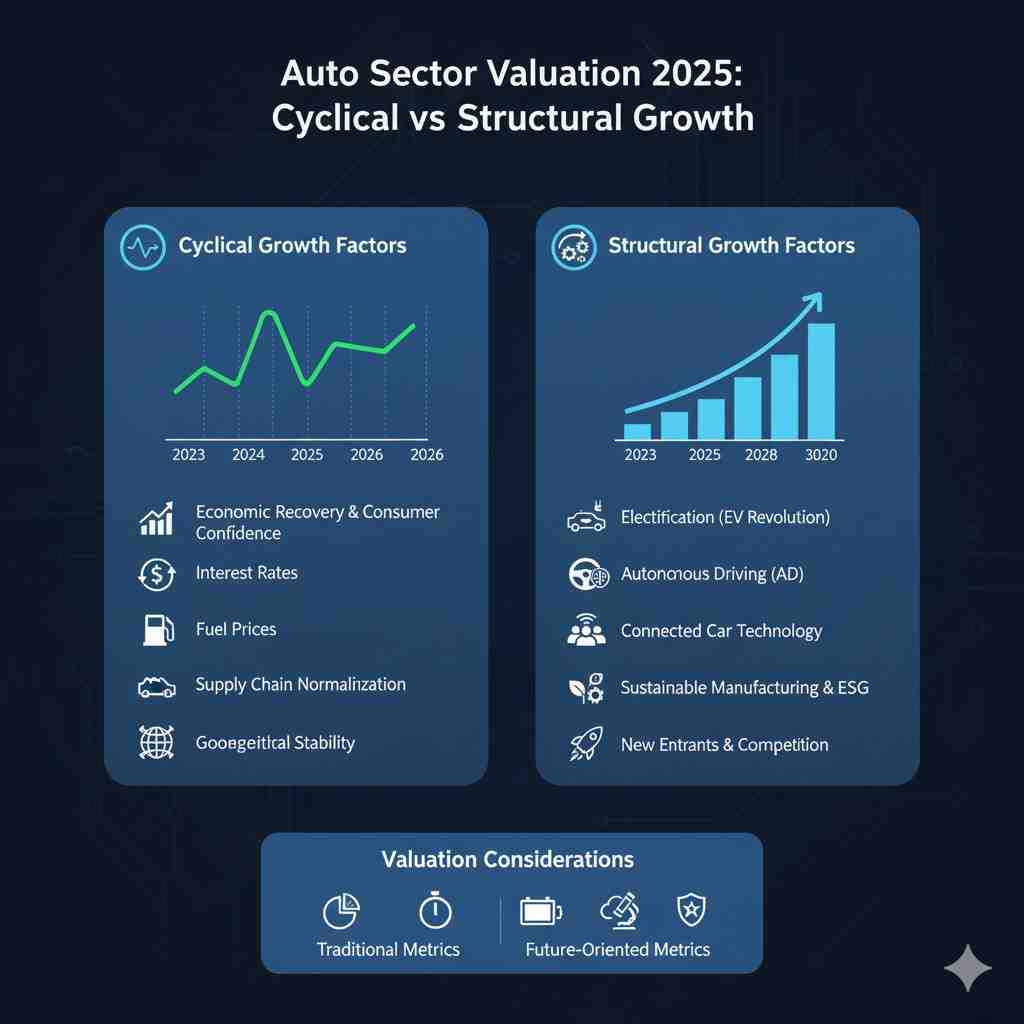
Automobiles, especially passenger vehicles and two-wheelers, are identified as key beneficiaries of GST rationalisation and tax changes, with some research expecting quarterly earnings growth upwards of 20–25% for the sector in 2026.[1] Capital goods and infrastructure-led plays stand to gain from continued government capex and a nascent private capex revival, boosting order books and operating leverage. In IT services, after a period of slower global demand and margin pressures, there is an emerging case for selective overweight positioning as deal pipelines stabilise and the sector benefits from a weaker currency and cost optimisation trends.[1][2]

An illustrative sector valuation and growth snapshot is below:

Click on any column header to sort by that metric. Click again to reverse the order.
Sector
FY26E P/E (x)
5Y Avg P/E (x)
FY26E Earnings Growth (%)
Dividend Yield (%)
Banks (Private + PSU)15.017.014–161.2
NBFCs18.019.513–150.8
Automobiles22.020.020–221.0
Capital Goods24.021.018–200.7
IT Services25.022.011–132.0
Consumer Staples40.038.09–101.5

(Indicative, to illustrate relative positioning)

Investors should combine top-down and bottom-up thinking: start with sectors where policy and macro tailwinds support multi-year earnings, then identify companies with strong managements, cash flows and capital discipline.

Click on any column header to sort by that metric. Click again to reverse the order.
Pros
Cons
Focused sector allocation can significantly enhance portfolio earnings growth.Sector calls can go wrong if macro or regulatory assumptions change abruptly.
Allows investors to benefit from government policy priorities (infra, manufacturing, digitalisation).Higher concentration risk versus broad market exposure.
Facilitates targeted use of sector/thematic funds to complement core large-cap holdings.Greater need for monitoring sector-specific news, results and valuations.

Financials and Autos: Twin Engines of Earnings Acceleration

Financials and automobiles are expected to be among the strongest contributors to India’s earnings growth in 2026. On the financials side, system credit growth remains healthy in high single to low double digits, supported by retail and SME lending, even after some moderation due to regulatory tightening in select segments.[2][3] Asset quality has improved meaningfully over the last few years, with lower slippages and higher provision coverage ratios for large banks. This sets up the sector for operating leverage as loan growth outpaces cost growth.

Within financials, the trade-off between PSU and private banks is noteworthy:

Click on any column header to sort by that metric. Click again to reverse the order.
Category
FY26E P/B (x)
ROE (%)
GNPA (%)
Dividend Yield (%)
Top PSU Banks (Basket)1.215–163.0–3.52.5
Top Private Banks (Basket)2.516–181.5–2.00.8

(Indicative, based on typical market positioning)

Autos, on the other hand, benefit from multiple structural and cyclical drivers. GST and tax rationalisation have lowered the overall taxation burden on some categories, while income growth, improving rural sentiment (linked to agri output and government spending), and product upgrades (EVs, premiumisation) support unit volume growth.[1] Earnings leverage in the sector is significant because modest volume improvements and stable commodity costs can translate into outsized profit growth.

A stylised comparison of auto companies:

Click on any column header to sort by that metric. Click again to reverse the order.
Company
Segment
FY26E Volume Growth (%)
FY26E Earnings Growth (%)
FY26E P/E (x)
Maruti SuzukiPV8–1018–2025.0
Tata Motors (India)PV & CV7–920–2221.0
Hero MotoCorp2W6–816–1819.0
Bajaj Auto2W & 3W7–917–1920.0

(Indicative ranges)

Actionable takeaways:

- For financials, blend exposure across 1–2 large private banks and a basket of PSU banks, or use banking sector funds with diversified portfolios. - For autos, prefer companies with strong brands, export exposure, and clear EV strategies. - Monitor RBI policy, fuel prices, and rural indicators (monsoon, MSPs, agri credit) as key variables for these sectors.

Implementable Portfolio Strategies: Blending Large-Cap Core with Sector Opportunities

To translate the 2026 earnings outlook into a practical portfolio, investors should focus on building a robust core of large-cap exposure, complemented by targeted sector and factor tilts. A structured approach is to treat large-cap index and diversified funds as the core, and use sector/thematic funds and select mid/small caps as satellite positions.

A sample allocation framework for a moderate risk investor could look like this (illustrative):

Click on any column header to sort by that metric. Click again to reverse the order.
Portfolio Component
Instrument Type
Allocation (%)
Objective
Core Large CapNifty 50 / Large-cap Funds40–45Stable compounding, market-like returns
Flexi / Multi-CapActively Managed Funds20–25Alpha generation across market caps
Sectoral / ThematicBanking, Auto, Capex/Infra, IT Funds15–20Capture sector earnings leadership
Mid & Small CapsDiversified Mid/Small-Cap Funds10–15Long-term high growth potential
Debt / HybridShort-Term Debt, Balanced Advantage10–15Volatility management, liquidity

For more conservative investors, the allocation to debt/hybrid products can be raised to 25–35%, while aggressive investors can tilt more towards mid/small caps and sectors. The key is to align allocation with time horizon and risk tolerance, not with market noise.

In addition, investors can consider factor-based strategies like low-volatility or quality indices for smoother return profiles. As valuations remain above long-term averages, entry strategy matters: systematic investment plans (SIPs), systematic transfer plans (STPs) from debt to equity, and staggered lump-sum deployment over 6–12 months can help reduce timing risk.

Pros vs cons of a core-satellite approach in the 2026 context:

Click on any column header to sort by that metric. Click again to reverse the order.
Pros
Cons
Provides a stable core that tracks overall market earnings growth.Requires periodic rebalancing to maintain target allocations.
Allows targeted bets on sectors expected to outperform in the earnings cycle.Sector/thematic calls can underperform if timing is off.
Flexibility to adjust satellite allocations as macro and valuations evolve.Complexity may increase for first-time or less-engaged investors.

Comparing Strategy Vehicles: Index Funds vs Active Funds vs Sector Funds

Choosing the right investment vehicle is as important as sector and stock selection. For 2026, where earnings dispersion across sectors and stocks is likely to be high, a blend of index funds, actively managed diversified funds, and sector/thematic funds can be effective.

An illustrative comparison of these vehicles:

Click on any column header to sort by that metric. Click again to reverse the order.
Vehicle Type
Typical Expense Ratio (%)
Alpha Potential
Risk Level
Ideal Use Case
Nifty 50 / Sensex Index Fund0.10–0.30LowModerateCore market exposure
Active Large-Cap Fund0.80–1.20 (direct)Low–MediumModerateCore + selective alpha
Flexi-Cap Fund0.90–1.40 (direct)MediumModerate–HighDynamic allocation across caps
Sector/Thematic Fund1.00–1.80 (direct)High (both ways)HighSatellite, tactical bets

Investors can also examine historical performance and risk metrics of representative funds before deciding. A stylised comparison (not recommendations):

Click on any column header to sort by that metric. Click again to reverse the order.
Fund / Category
3-Year CAGR (%)
Standard Deviation (%)
Sharpe Ratio
Nifty 50 Index Fund (Category Average)13.015.00.70
Large-Cap Active Fund (Top Quartile)14.516.00.75
Flexi-Cap Fund (Top Quartile)15.518.50.78
Banking Sector Fund16.022.00.65

Action points:

- Use index funds/ETFs as the building block if you prefer low cost and predictable style. - Add 1–2 active funds where fund manager skill and process are demonstrable over at least one full market cycle. - Limit sector/thematic funds to 10–20% of equity allocation, with a minimum 3–5 year horizon, given higher volatility and cyclicality.

Risk Management, Regulatory Landscape and Monitoring Framework

Despite a constructive outlook on earnings growth, risk management must remain central to any 2026 investment strategy. Elevated valuations, global macro uncertainty, currency volatility, and domestic policy changes can all affect sector earnings and market sentiment. For instance, delayed rate cuts or regulatory tightening in consumer lending can moderate financial sector earnings, while changes in GST rates or auto emission norms can impact consumption and auto companies.[1][3]

On the regulatory side, SEBI continues to focus on investor protection, transparency and risk-based supervision. For mutual fund investors, this translates into clearer risk-o-meters, scheme categorisation, and disclosure standards, enabling more informed decision-making. RBI’s approach to monetary policy and macro-prudential measures directly influences credit growth, funding costs, and thereby earnings for banks and NBFCs.

Investors should adopt a structured monitoring framework that tracks:

- Quarterly earnings vs consensus estimates for key holdings and sectors. - Macro indicators like inflation, GDP growth, credit growth, and fiscal deficit. - Regulatory announcements from RBI, SEBI, IRDAI and sector-specific ministries. - Valuation metrics (P/E, P/B, EV/EBITDA) vs own historical bands.

A simple historical perspective on earnings and returns (illustrative) underscores why monitoring matters:

Click on any column header to sort by that metric. Click again to reverse the order.
Fiscal Year
Nifty EPS Growth (%)
Nifty Total Return (%)
Comment
FY223219Post-Covid recovery, strong earnings + some P/E compression
FY23124Moderate earnings, limited P/E change
FY2499Returns broadly in line with earnings
FY25 (E)11Consensus estimate
FY26 (E)14–16Consensus estimate, upside if execution strong

Investors should also define risk thresholds (e.g., maximum drawdown tolerance, sector max weights, single-stock exposure limits) and review portfolios at least annually.

Click on any column header to sort by that metric. Click again to reverse the order.
Pros
Cons
Structured monitoring improves decision quality and reduces emotional reactions.Requires time, discipline and some comfort with financial data.
Helps align portfolio with evolving earnings and valuation realities.Over-monitoring can lead to over-trading and higher transaction costs.
Facilitates early risk identification in concentrated sector/thematic bets.Macro data and consensus estimates can still be wrong or revised sharply.

Practical Risk Controls and Review Checklist for 2026

To navigate 2026’s earnings-led market, investors can benefit from codifying a few practical risk controls and a recurring review checklist. This need not be overly complex but should be applied consistently.

Key risk controls (suggested ranges; to be tailored to individual profiles):

Click on any column header to sort by that metric. Click again to reverse the order.
Risk Parameter
Suggested Limit
Rationale
Single Stock Exposure≤ 5% of portfolioMitigates idiosyncratic risk from earnings or governance shocks
Single Sector Exposure≤ 30–35% of equity allocationPrevents over-concentration even in favored sectors like financials
Mid/Small Cap Allocation≤ 40% of equity allocation for moderate-risk investorsBalances growth potential with volatility
International AllocationUp to 10–20% (where permitted)Hedges country-specific and currency risks

A simple quarterly review checklist:

- Compare fund/stock performance against appropriate benchmarks and peer group. - Check whether earnings trends for key holdings align with your original thesis. - Rebalance to restore target asset allocation if deviations exceed 5 percentage points. - Reassess sectoral exposures in light of major regulatory or macro developments.

Investors using mutual funds can also review:

- Changes in fund manager or investment process. - Significant style drift (e.g., large-cap fund taking excess mid-cap exposure). - Expense ratios and category ranking over 3–5 years.

By combining disciplined risk limits with an earnings-focused monitoring framework, investors can position more effectively for India’s 2026 earnings acceleration while staying prepared for inevitable bouts of volatility.

Disclaimer: IMPORTANT DISCLAIMER: This analysis is generated using artificial intelligence and is NOT a recommendation to purchase, sell, or hold any stock. This analysis is for informational and educational purposes only. Past performance does not guarantee future results. Please consult with a qualified financial advisor before making any investment decisions. The author and platform are not responsible for any investment losses.

Share this article: