India's Market Breadth Crisis 2025: Why Benchmark Gains Are Masking Widespread Stock Weakness for Retail Investors
India's stock market presents a paradoxical picture in 2025: while benchmark indices like the Sensex and Nifty50 have reached all-time highs, the underlying market structure reveals a deeply concer...
India's Market Breadth Crisis 2025: Why Benchmark Gains Are Masking Widespread Stock Weakness for Retail Investors
What You Can Do Next
- Read the full article for complete insights
- Save for later reference
- Share with others learning about this topic
Image not available
India's stock market presents a paradoxical picture in 2025: while benchmark indices like the Sensex and Nifty50 have reached all-time highs, the underlying market structure reveals a deeply concerning reality for retail investors. This phenomenon, known as market breadth deterioration, occurs when index gains are driven by a narrow group of large-cap stocks while the broader market languishes. Through 2025, approximately 49% of Nifty500 stocks trade below their 200-day simple moving averages, signaling structural weakness. The Advance-Decline Ratio has sunk to 10-month lows, and foreign portfolio investors have withdrawn USD 13-15 billion (₹1.1-1.2 lakh crore) year-to-date. For retail investors who allocated capital to mid-cap and small-cap segments during 2024's inclusive rally, 2025 has delivered disappointment, with many holdings down 20-30% from prior peaks despite headline index records. This comprehensive analysis explores why benchmark gains are masking widespread stock weakness and provides actionable strategies for navigating this challenging market environment.

The Illusion of Market Strength: Understanding Market Breadth Deterioration
Market breadth refers to the number of stocks participating in an index's rally. When an index rises but breadth deteriorates, it indicates that gains are concentrated in a handful of stocks rather than being distributed across the market. In 2025, this dynamic has created a dangerous illusion of market health. The Sensex and Nifty50 indices have touched new all-time highs, primarily in late November 2025, yet this masks a troubling underlying reality: most stocks in the broader market are underperforming.
The Big 5 stocks—primarily large-cap heavyweights—have disproportionately influenced index movements. During market declines, these five stocks accounted for 44% of the index loss, demonstrating their outsized influence. Conversely, during rallies, their contribution to gains has been significantly lower at 28%, indicating that when the market recovers, it does so without broad participation.
Retail investors who diversified across small-cap and mid-cap segments during 2024's inclusive bull market have experienced substantial losses. The majority of mid-cap and small-cap stocks remain 20-30% below their prior peaks set in 2024, creating a divergence between index performance and portfolio performance for most retail investors. This divergence is not merely statistical noise—it represents real capital destruction and opportunity cost for millions of Indian investors.
Market breadth indicators provide early warning signals of potential market reversals. When the Advance-Decline Ratio—which measures the number of advancing stocks versus declining stocks—reaches 10-month lows despite index strength, it suggests that the rally lacks conviction and sustainability. Technical analysts note that the BSE-30 Index, trading below its 30-day moving average of 16,805, indicates technical weakness despite absolute price levels reaching new highs.
Sector-Specific Breadth Weakness
Sector analysis reveals that breadth weakness is not uniform across the market but concentrated in specific industries. Power, FMCG, Infrastructure, Construction Materials, Chemicals, and Retailing sectors show particularly weak breadth, with fewer than 30% of stocks in these sectors trading above their 50-day moving averages. This means that in these six sectors alone, more than 70% of stocks are in downtrends despite the overall index being at all-time highs.
This sector-specific weakness creates a false sense of security for investors concentrated in the Big 5 stocks and IT/Financials sectors, which have outperformed. However, for diversified retail portfolios and those with exposure to defensive or infrastructure-related stocks, 2025 has been disappointing. The table below illustrates the performance divergence across sectors:
Sector | % Stocks Above 50-Day SMA | Breadth Status | Typical Investor Exposure |
|---|---|---|---|
| Power | <30% | Very Weak | High (Infrastructure focus) |
| FMCG | <30% | Very Weak | High (Defensive portfolios) |
| Infrastructure | <30% | Very Weak | High (Growth + dividend) |
| Construction Materials | <30% | Very Weak | Medium (Cyclical exposure) |
| Chemicals | <30% | Very Weak | Medium (Export-oriented) |
| Retailing | <30% | Very Weak | Medium (Growth exposure) |
| IT/Financials | >70% | Strong | High (Index concentration) |
The Foreign Portfolio Investor Exodus: Capital Flight and Market Implications
Foreign portfolio investors (FPIs) have been consistent net sellers throughout 2025, withdrawing approximately USD 13-15 billion (₹1.1-1.2 lakh crore) year-to-date. This capital flight represents one of the most significant headwinds for Indian equity markets and has directly contributed to the market breadth crisis affecting retail investors.
The reasons for FPI outflows are multifaceted and interconnected. First, the Federal Reserve's policy stance in 2025 was interpreted as risk management rather than dovish accommodation, keeping U.S. Treasury yields volatile and making emerging market investments less attractive relative to safe-haven U.S. assets. Second, U.S. tariff decisions announced in 2025 materially raised risk premiums for India, particularly affecting export-oriented sectors like IT, chemicals, and pharmaceuticals. Third, the rupee depreciation against the U.S. dollar created additional headwinds for FPI returns when converted back to dollars.
The timing and magnitude of FPI outflows have created a liquidity crisis in mid-cap and small-cap segments. When FPIs reduce exposure, they typically exit large-cap positions first due to higher liquidity, but the cascading effect hits mid-caps and small-caps disproportionately. This explains why mid-cap and small-cap indices have significantly underperformed large-cap indices despite the broader market being at all-time highs.
Retail investors who accumulated mid-cap and small-cap positions during 2024—when FPIs were net buyers and inclusive rallies were the norm—have borne the brunt of this reversal. The table below illustrates the FPI flow dynamics and their market impact:
Period | FPI Flows (USD Billion) | Impact on Market Breadth | Typical Retail Investor Impact |
|---|---|---|---|
| 2024 (Full Year) | +8 to +12 | Positive (Inclusive rallies) | Gains across portfolio segments |
| Jan-Mar 2025 | -3 to -4 | Neutral to Negative | Mid-cap weakness begins |
| Apr-Jun 2025 | -4 to -5 | Negative (Breadth deteriorates) | 20-30% drawdowns in holdings |
| Jul-Sep 2025 | -5 to -6 | Negative (Continued weakness) | Further deterioration |
| Oct-Dec 2025 | -1 to -2 | Stabilizing | Stabilization expected |
Tariff Shock and Export Sector Vulnerability
U.S. tariff announcements in 2025 created a structural headwind for Indian export-dependent sectors. IT services, which represent a significant portion of Indian equity market capitalization and FPI holdings, faced uncertainty regarding client spending and margin pressures. Chemical exporters, pharmaceutical companies, and auto component manufacturers all faced tariff-related headwinds that triggered analyst downgrades and stop-loss cascades.
The tariff shock was particularly damaging because it coincided with disappointing earnings guidance from large-cap companies. When major IT companies and financial institutions disappointed on guidance or received downgrades, it triggered momentum selling that accelerated the market breadth deterioration. Retail investors holding these stocks experienced sharp declines, and the psychological impact of guidance misses further dampened investor confidence and risk appetite.
Retail Investor Positioning: Why Mid-Cap and Small-Cap Investors Are Suffering
Retail investor flows into Indian equities during 2024 were heavily concentrated in mid-cap and small-cap mutual funds and direct stock purchases. This concentration reflected the inclusive nature of the 2024 rally, where smaller companies outperformed large-caps and offered higher growth potential. However, 2025 has reversed this dynamic, and retail investors who followed this trend have experienced significant losses.
The data reveals a stark contrast between retail investor sentiment and market reality. Despite benchmark indices hitting all-time highs in late November 2025, retail investors remain cautious and are not showing the same level of enthusiasm as in 2024. This caution reflects the reality that most retail portfolios have underperformed the indices significantly. For investors with higher exposure to small-cap and mid-cap segments, returns have been muted or negative despite the headline indices reaching record levels.
This phenomenon creates a dangerous psychological trap. Retail investors see news headlines about record index levels but experience losses in their actual portfolios. This disconnect erodes confidence in equity investing and may lead to panic selling at the worst possible times. The comparison table below illustrates the performance divergence:
Market Segment | 2024 Performance | 2025 YTD Performance | Distance from 52-Week High | Typical Retail Exposure |
|---|---|---|---|---|
| Nifty50 (Large-Cap) | +28% to +32% | +8% to +12% | -5% to -8% | 40-50% |
| Nifty Midcap 50 | +35% to +42% | -12% to -15% | -25% to -30% | 30-40% |
| Nifty Smallcap 50 | +45% to +55% | -18% to -22% | -30% to -35% | 10-20% |
| Nifty500 | +20% to +25% | -5% to -8% | -20% to -25% | Diversified |
The Retail Investor Caution Paradox
Despite benchmark indices hitting all-time highs, retail investors remain cautious. This apparent paradox reflects sophisticated market understanding: retail investors recognize that their actual portfolio performance diverges significantly from index performance. When a retail investor with 35% exposure to mid-caps and small-caps sees their portfolio down 10-15% year-to-date while the Nifty50 is up 10%, they correctly understand that the index is not representative of their actual investment experience.
This caution is rational and reflects learning from 2024's inclusive rally. Retail investors who chased mid-cap and small-cap outperformance in 2024 are now experiencing the reverse: they are underperforming as these segments correct. This creates a powerful headwind for equity market participation and explains why despite record index levels, retail investor enthusiasm remains muted.
Risk Management Strategies for Navigating Market Breadth Crisis
Given the market breadth crisis and the divergence between index performance and actual portfolio performance, retail investors must adopt defensive risk management strategies. The following framework provides actionable approaches for protecting capital while maintaining equity exposure:
Position Sizing and Concentration Risk**: Reduce position sizes in volatile mid-cap and small-cap holdings. Concentrate portfolio exposure in stocks with strong fundamentals, consistent earnings, and lower volatility. The Big 5 stocks, while concentrated, offer lower volatility and better liquidity than mid-cap alternatives.
Stop-Loss Implementation**: Implement disciplined stop-loss orders at 8-12% below entry prices for mid-cap and small-cap positions. This prevents catastrophic losses from cascading as momentum selling accelerates. During periods of high volatility (as evidenced by the 10-month low in the Advance-Decline Ratio), stop-losses are particularly important.
Leverage Avoidance**: Refrain from increasing leverage when spreads widen and volatility increases. Margin calls during market stress can force liquidation of positions at the worst possible prices. Conservative investors should eliminate leverage entirely until breadth indicators improve.
Sector Rotation**: Rotate exposure away from sectors with weak breadth (Power, FMCG, Infrastructure, Construction Materials, Chemicals, Retailing) toward sectors with stronger participation. IT and Financial sectors, while expensive, offer better breadth characteristics and lower downside risk in a market breadth crisis.
The risk management framework table below provides specific guidance:
Risk Factor | Current Status (2025) | Recommended Action | Target Portfolio Impact |
|---|---|---|---|
| FPI Flows | Negative (-$13-15B YTD) | Reduce mid-cap/small-cap exposure | -15% to -20% reduction |
| Market Breadth | Deteriorating (49% below 200-day SMA) | Concentrate in large-caps | Increase large-cap to 60-70% |
| Sector Breadth | Weak in 6 major sectors | Rotate away from weak sectors | Reduce weak sector exposure by 50% |
| Volatility | Elevated (ADR at 10-month low) | Implement stop-losses | Limit single-stock loss to <10% |
| Leverage | Risk of margin calls | Eliminate or reduce leverage | Move to 100% cash backing |
Sector-Specific Recommendations
Given the sector-specific breadth weakness, retail investors should consider the following sector-specific strategies:
Outlook and Scenarios: What Happens Next?
The 2025 market breadth crisis presents multiple potential scenarios with different implications for retail investors. Understanding these scenarios helps investors prepare contingency plans and position portfolios defensively.
Base Case: Range-Bound Market with Continued Breadth Weakness (Probability: 50%)
In this scenario, the market remains range-bound with lower highs and higher volatility. The Nifty50 and Sensex continue to trade in 5-8% ranges around current levels, while mid-caps and small-caps remain under pressure. FPI flows stabilize but do not turn positive. This scenario is most likely given current conditions: net FPI outflows year-to-date are substantial (USD 13-15 billion), and policy uncertainty regarding U.S. tariffs remains elevated. In this scenario, retail investors with concentrated mid-cap/small-cap exposure experience continued underperformance, while large-cap investors enjoy relative stability.
Bull Case: Breadth Improvement and Inclusive Rally (Probability: 30%)
In this scenario, policy clarity emerges regarding U.S. tariffs, FPI flows turn positive, and market breadth improves. The Advance-Decline Ratio recovers above 10-month averages, and mid-cap/small-cap stocks participate in a new rally. This would likely require: (1) Resolution of U.S. tariff uncertainty, (2) RBI rate cuts supporting growth, (3) Positive earnings revisions across sectors, and (4) Return of FPI flows. If this scenario materializes, retail investors who maintained or increased mid-cap/small-cap exposure during the breadth crisis would be significantly rewarded.
Bear Case: Panic and Deep Drawdown (Probability: 20%)
In this scenario, a major geopolitical shock, unexpected credit event, or materially worse trade policy triggers panic and large further FPI outflows. Liquidity freezes in mid-caps, and indices fall 15-30% from current levels. This scenario would be devastating for retail investors with leveraged positions or concentrated mid-cap/small-cap exposure. However, it would create significant buying opportunities for patient investors with dry powder.
The scenario analysis table below provides specific metrics for each scenario:
Scenario | Probability | Nifty50 Target | Mid-Cap Impact | FPI Flows | Retail Investor Action |
|---|---|---|---|---|---|
| Base Case (Range-bound) | 50% | 23,000-24,500 | -10% to -15% | Stabilize near zero | Maintain defensive positioning |
| Bull Case (Breadth recovery) | 30% | 26,000-27,500 | +15% to +25% | Turn positive (+$5-8B) | Gradually increase mid-cap exposure |
| Bear Case (Panic/drawdown) | 20% | 19,500-21,000 | -30% to -40% | Accelerate outflows (-$20-25B) | Implement stop-losses, accumulate on weakness |
Catalyst Watch: Events That Could Trigger Scenario Shifts
Several catalysts could shift market dynamics and move the market from the base case toward either the bull or bear case scenarios:
Retail investors should monitor these catalysts closely and adjust portfolio positioning accordingly.
Actionable Recommendations for Retail Investors
Based on the comprehensive analysis of India's market breadth crisis in 2025, retail investors should consider the following actionable recommendations:
Immediate Actions (Next 1-3 Months)
1. Portfolio Audit: Conduct a detailed audit of your portfolio to identify concentration in mid-cap and small-cap segments. Calculate the actual performance of your portfolio versus the Nifty50 to understand your true performance.
2. Position Reduction: Reduce position sizes in mid-cap and small-cap holdings that are down 20-30% from peaks. Use rallies to trim positions rather than averaging down.
3. Stop-Loss Implementation: Implement stop-loss orders at 8-12% below current prices for volatile holdings. This prevents catastrophic losses if momentum selling accelerates.
4. Leverage Elimination: If you have borrowed funds invested in equities, prioritize repayment to eliminate margin call risk.
Medium-Term Actions (3-6 Months)
1. Sector Rotation: Rotate exposure away from weak-breadth sectors (Power, FMCG, Infrastructure, Construction Materials, Chemicals, Retailing) toward stronger-breadth sectors (IT, Financials, Auto).
2. Quality Focus: Concentrate on large-cap stocks with strong fundamentals, consistent earnings growth, and lower volatility. The Big 5 stocks, while concentrated, offer better risk-adjusted returns in a breadth crisis.
3. Dry Powder Accumulation: Build cash reserves to deploy during potential drawdowns. If the bear case scenario materializes, investors with dry powder will have significant buying opportunities.
4. Mutual Fund Optimization: Review mutual fund holdings for expense ratios and performance. Consider switching from underperforming mid-cap/small-cap funds to large-cap or balanced funds.
Long-Term Actions (6+ Months)
1. Breadth Monitoring: Continue monitoring market breadth indicators (Advance-Decline Ratio, percentage of stocks above 200-day SMA) before increasing mid-cap/small-cap exposure.
2. FPI Flow Tracking: Track FPI flows closely. Positive FPI flows combined with improving breadth would signal a shift toward the bull case scenario.
3. Earnings Revision Tracking: Monitor earnings revision breadth across sectors. Improving earnings revisions combined with positive breadth would justify increased equity allocation.
4. Rebalancing: Once breadth indicators improve, gradually rebalance back toward your target asset allocation. Avoid trying to time the exact bottom.
The recommendation summary table below provides a quick reference:
Time Horizon | Primary Risk | Key Action | Portfolio Adjustment | Expected Outcome |
|---|---|---|---|---|
| 1-3 Months | Momentum selling, margin calls | Reduce mid-cap/small-cap, implement stop-losses | Increase large-cap to 65-75% | Limit downside to 5-10% |
| 3-6 Months | Continued breadth weakness | Sector rotation, quality focus | Concentrate in IT, Financials, Auto | Outperform indices by 2-4% |
| 6+ Months | Missing recovery rally | Monitor breadth, accumulate on weakness | Gradually increase mid-cap exposure | Participate in recovery with lower risk |
Conclusion: The Path Forward
India's market breadth crisis of 2025 represents a significant challenge for retail investors, particularly those who accumulated mid-cap and small-cap positions during 2024's inclusive rally. The divergence between record index levels and widespread stock weakness is not a temporary phenomenon but reflects structural headwinds: sustained FPI outflows (USD 13-15 billion year-to-date), U.S. tariff shocks affecting export sectors, and disappointing earnings guidance from large-cap companies.
The data is unambiguous: 49% of Nifty500 stocks trade below their 200-day moving averages, the Advance-Decline Ratio has reached 10-month lows, and the majority of mid-cap and small-cap stocks remain 20-30% below prior peaks. These are not minor technical concerns but indicators of significant structural weakness in the broader market.
However, this crisis also presents opportunities. Investors who recognize the breadth crisis and adjust their portfolios defensively will be better positioned to weather further downside and participate in the eventual recovery. The base case scenario (50% probability) suggests continued range-bound trading with muted returns, while the bull case (30% probability) could deliver significant upside if FPI flows stabilize and earnings revisions improve.
Retail investors should prioritize capital preservation over growth in the near term, implement disciplined risk management through stop-losses and position sizing, and maintain dry powder for potential buying opportunities. By following the actionable recommendations outlined above—reducing mid-cap/small-cap exposure, rotating toward quality large-caps, and eliminating leverage—retail investors can navigate this challenging environment and position themselves for the eventual recovery.
The market breadth crisis of 2025 is a reminder that index performance and portfolio performance are not synonymous. Investors who understand this distinction and adjust their strategies accordingly will emerge from this period with capital intact and positioned for long-term wealth creation.
Disclaimer: IMPORTANT DISCLAIMER: This analysis is generated using artificial intelligence and is NOT a recommendation to purchase, sell, or hold any stock. This analysis is for informational and educational purposes only. Past performance does not guarantee future results. Please consult with a qualified financial advisor before making any investment decisions. The author and platform are not responsible for any investment losses.

Continue Your Investment Journey
Discover more insights that match your interests

Bajaj Finance Stock Analysis 2025: Q3 Earnings Beat & Record AUM Growth Amid Rising Retail Credit Demand

Bajaj Finance Limited, a flagship non-banking financial company (NBFC) under the Bajaj Finserv umbrella, continues to capture investor attention with its robust Q3 FY25 earnings and record Assets U...

Reliance Industries Stock Analysis 2025: Q3 Earnings Beat & Green Energy Push Drive Investor Interest

Reliance Industries Limited (RIL) continues to be a pivotal force in the Indian corporate landscape, demonstrating resilience and strategic agility in its Q3 FY2025 earnings.

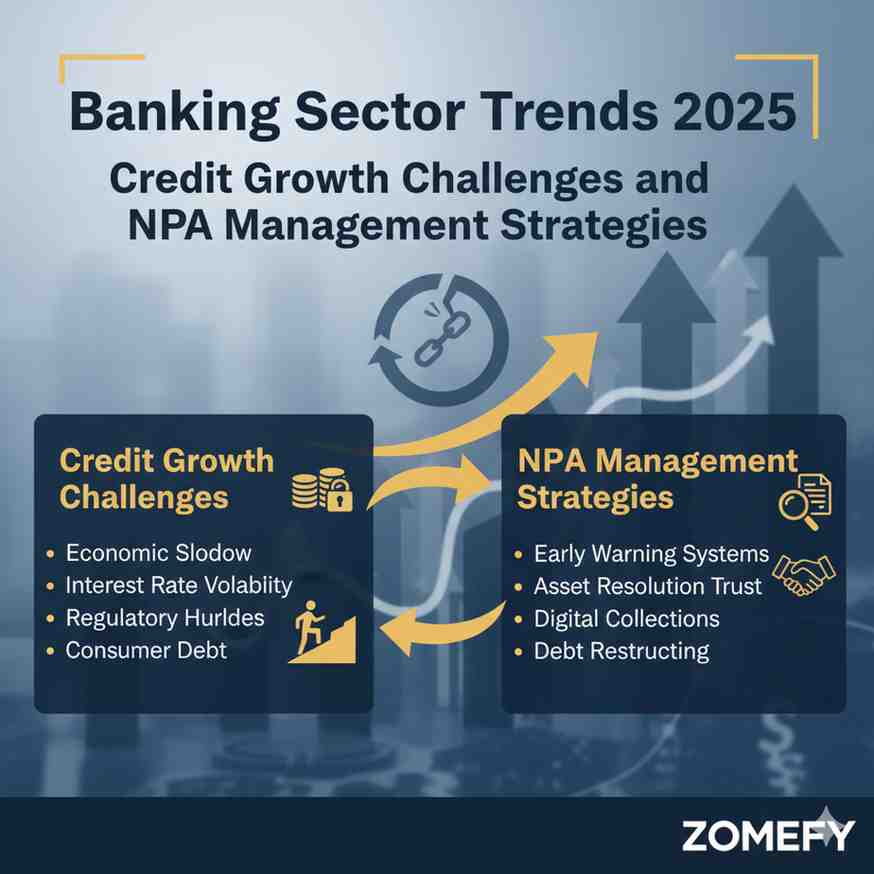
Banking Sector Trends 2025: Credit Growth Challenges and NPA Management Strategies
The Indian banking sector in 2025 stands at a critical juncture characterized by evolving credit growth dynamics, asset quality challenges, and strategic shifts in non-performing asset (NPA) manage...
HDFC Bank Stock Analysis 2025: Q3 Earnings Beat & Credit Growth Momentum Amid Regulatory Clarity
HDFC Bank, India’s largest private sector lender, has once again grabbed headlines with its Q3 FY25 earnings, reporting a net profit of ₹16,736 crore—a 2.
Explore More Insights
Continue your financial education journey