← Back to Articles
Published on 10-Jan-2026

India’s Digital Rupee Shift 2025: How RBI’s CBDC Rollout Could Transform UPI, Banking Liquidity and Retail Portfolios

India’s financial system is entering a pivotal phase as the Reserve Bank of India (RBI) accelerates its central bank digital currency (CBDC) journey with the digital rupee (e₹).

By Zomefy Research Team
19 min read
financial-insightsIntermediate

India’s Digital Rupee Shift 2025: How RBI’s CBDC Rollout Could Transform UPI, Banking Liquidity and Retail Portfolios

2025:india’sindian markets
Reading time: 19 minutes
Level: Intermediate
Category: FINANCIAL INSIGHTS

What You Can Do Next

  • Read the full article for complete insights
  • Save for later reference
  • Share with others learning about this topic

Image not available

India’s financial system is entering a pivotal phase as the Reserve Bank of India (RBI) accelerates its central bank digital currency (CBDC) journey with the digital rupee (e₹). Designed as a sovereign, programmable, and interoperable form of money, the e₹ aims to complement—not replace—cash and UPI, while reshaping how liquidity flows across banks, fintechs, and capital markets.[1][2][5] For Indian retail investors and financial professionals, the potential shift in 2025–26 is not just about another payment option; it touches core questions on bank deposit growth, money market structure, and how households allocate savings between cash, bank FDs, debt funds, and equities. With pilots already covering millions of users and hundreds of thousands of merchants, and e₹ balances crossing ₹10,000 crore equivalent by early 2025, the next wave of innovation will include programmability, tokenised deposits, offline payments, and UPI integration.[3][4][7] Understanding how these changes could alter UPI economics, banking liquidity, and retail portfolios is now a critical strategic requirement for investors, wealth managers, and treasury professionals planning for the next 3–5 years.

RBI’s Digital Rupee Architecture and 2025 Rollout Path

RBI’s digital rupee is a token-based form of central bank money, equivalent in value to physical cash but existing only as regulated digital tokens on RBI-managed infrastructure.[1][2] It is distinct from bank deposits and private wallets because it is a direct claim on the central bank, not on a commercial bank.

Key design elements relevant to 2025–26:

- Two-tier model: RBI issues e₹ to banks; banks distribute to users via wallets and apps.[1][5] - Separate wholesale (e₹-W) and retail (e₹-R) pilots for interbank settlement and consumer/merchant use.[1][4] - Non-interest bearing: CBDC itself does not pay interest but can be converted into deposits.[1] - Emphasis on programmability, cross-border use, and offline capability in next phases.[2][3][4]

Pilot scale and trajectory (indicative, based on public disclosures and trackers):

Click on any column header to sort by that metric. Click again to reverse the order.
Metric
2023
2024
Early 2025
Source
Participating Banks (no.)915+19RBI / HRF CBDC Tracker[4]
Retail Users (million)<1~3–4~7RBI & Deputy Governor statements[3][4]
Merchants Onboarded (lakh)<12+3+RBI pilot updates[2][5]
Value in Circulation (₹ crore)~234~7001,016+CBDC trackers (₹10.16 bn)[7]

This cautious approach reflects RBI’s priority to avoid destabilising UPI and bank deposits while gathering robust data on user behaviour, cyber risk, and operational resilience.[2][5] In practice, 2025–26 is likely to see:

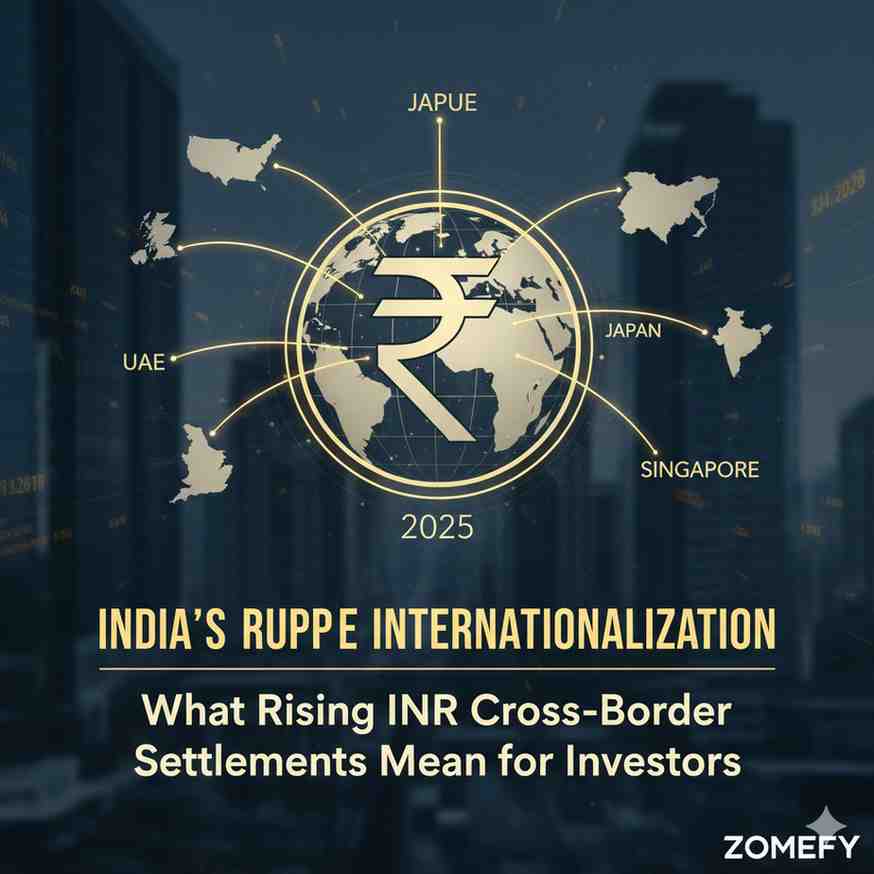
- Integration of CBDC wallets with UPI QR rails and RuPay cards for seamless acceptance.[2] - Wider use in government payments (DBT, subsidies, GST refunds) leveraging programmability.[4][5] - Pilots in cross-border trade with Singapore and UAE corridors.[2][6]

Pros and cons of this architecture for the financial system:

Click on any column header to sort by that metric. Click again to reverse the order.
Pros for System
Key Concerns
Stronger settlement finality and reduced counterparty risk in interbank transfersPotential disintermediation of bank deposits if large balances move to e₹
24x7 programmable money for DBT, subsidies, and targeted credit[4]Privacy and data concentration concerns given high traceability[5][6]
Improved anti-money laundering (AML) and tax compliance[1]Technology, cyber, and operational risk concentration at RBI core

For investors, the key takeaway is that e₹ is being designed as core monetary infrastructure, not a speculative asset. The bigger impact will be indirect: on bank funding models, payment economics, and risk-free yield curves, which in turn will influence valuations of banks, fintechs, and NBFCs.

Click on any column header to sort by that metric. Click again to reverse the order.
Aspect
Cash
Bank Deposit
UPI Balance
e₹ Wallet
IssuerRBICommercial BankCommercial Bank / WalletRBI
InterestNoYes (FD/SA rates)NoNo[1]
Default RiskNil (sovereign)Bank credit riskBank/wallet riskNil (sovereign)
TraceabilityLowHighHighVery High[1][5]
ProgrammabilityNoLimitedLimitedHigh[3][4]

Regulatory and Policy Context for CBDC Adoption

The legal foundation for the digital rupee was laid through amendments to the Reserve Bank of India Act, 1934 via the Finance Bill 2022, empowering RBI to issue CBDC as legal tender.[1][5] Policy documents such as the RBI Payments Vision 2025 explicitly position CBDC as a tool to enhance domestic and cross-border payment efficiency, reduce currency management costs, and strengthen financial inclusion.[1]

Key regulatory priorities guiding 2025 implementation:

- Non-anonymity and compliance: CBDC must support AML/CFT norms and tax compliance, with limited anonymity only for low-value transactions.[1][2] - Interoperability with UPI, IMPS, RTGS: Ensuring that e₹ payment flows can plug into existing rails without fragmenting the ecosystem.[1][2][5] - Data governance: Clear policies around who can access transaction-level data (RBI, NPCI, banks, government agencies) and under what safeguards.[5][6] - Limits and caps: Transaction and wallet size caps to manage transition risk and limit rapid migration of deposits during stress periods (RBI has signalled a cautious stance here, though specific thresholds may evolve).

Structured view of regulatory focus areas:

Click on any column header to sort by that metric. Click again to reverse the order.
Regulatory Area
Objective
Likely Tools in 2025–26
Financial StabilityPrevent sudden deposit outflows from banksWallet limits, tiered KYC, interest-free design
Consumer ProtectionReduce fraud, mis-selling, and operational riskStandardised wallet UX, grievance redressal rules
Competition & InnovationLevel playing field for banks and fintechsOpen APIs, participation criteria for non-banks
Data & PrivacyBalance traceability with user privacyPseudonymous IDs, value thresholds for detailed reporting

For practitioners, an important nuance is the government’s consistent opposition to unbacked private cryptocurrencies while explicitly backing a sovereign digital rupee as a safer, traceable alternative.[1][3] This suggests that future digital-asset regulation will likely favour tokenised versions of regulated instruments (deposits, government securities, funds) built on CBDC rails rather than permissionless crypto instruments.

Implications for market participants:

- Banks and NBFCs need to align treasury and ALM frameworks with potential CBDC-related liquidity flows. - Wealth managers should anticipate tokenised products (e.g., tokenised G-Secs) settled in e₹-W. - Fintechs will likely compete more on UX, analytics, and value-added services than on pure payment processing margins once CBDC rails become widely available.

Impact on UPI, Payment Economics and Fintech Business Models

UPI currently dominates India’s retail digital payments, contributing a major share of transaction volume and value.[5] CBDC introduces another form of digital settlement asset, but RBI has repeatedly emphasised complementarity: e₹ is meant to ride on—or alongside—UPI rails, not displace them.[1][2][5]

Expected interactions between UPI and e₹ in 2025–26:

- CBDC wallets linked to UPI handles (e.g., mobile number@bank) enabling UPI-CBDC interoperability. - Merchants accepting the same UPI QR code for both bank-account-based UPI and CBDC-based payments. - Government and large enterprises using e₹-W for wholesale settlement and UPI for invoice-level reconciliation and reporting.

Comparison of UPI vs CBDC features from a payments standpoint:

Click on any column header to sort by that metric. Click again to reverse the order.
Parameter
UPI (Current)
e₹-R via UPI (Likely 2025)
Settlement AssetBank depositsCentral bank money (tokens)
Settlement FinalityNear-real time, via NPCI switchOn-ledger finality at RBI layer
Merchant ChargesZero MDR in most cases, indirect bank costsLikely low direct cost; infra funded by RBI
ProgrammabilityLimited (mostly at app level)Embedded in token logic (expiry, usage constraints)
Offline CapabilityLimited, reliant on networkOffline via NFC/QR pilots[2]

Fintech and payment processor impact:

- UPI-first fintechs (PhonePe, Google Pay, Paytm, Cred) may need to integrate CBDC wallets to stay relevant as government and corporate use-cases move to e₹. - MDR-free UPI already compresses monetisation; CBDC could further reduce pure payment economics, pushing fintechs towards lending, wealth, and insurance cross-sell. - Payment gateways and POS providers may see: - Lower settlement risk when merchants opt for same-day e₹ settlement. - Reduced reconciliation disputes due to token-based traceability.

Pros vs cons for merchants adopting CBDC in parallel with UPI:

Click on any column header to sort by that metric. Click again to reverse the order.
Pros
Cons
Instant final settlement in central bank money, lowering chargeback riskNeed to manage additional wallet/ledger and back-office integration
Potentially faster government refunds, subsidies, and tax credits in e₹Staff training and new reconciliation processes
Reduced dependency on one or two acquiring banksUncertainty on future fee structures and tax treatment

For listed companies in payments and fintech, investors should monitor:

- Disclosures on CBDC integration timelines and capex. - New revenue lines around CBDC-based value-added services (e.g., programmable payroll, subsidy distribution for enterprises). - Any regulatory shift in MDR or wallet regulation linked to CBDC interoperability.

Actionable Strategies for Banks, Fintechs and Investors

For banks and payment players, CBDC is both a risk and an opportunity. For investors, early identification of winners and laggards can create alpha.

Key strategic levers for banks and fintechs:

- Banks: - Build CBDC wallet capabilities inside existing apps (e.g., SBI YONO, HDFC Bank app) with seamless UPI integration. - Develop programmable solutions for corporate clients: e₹-based salary disbursement with automated savings, tax, and investment splits. - Leverage e₹-W for intraday liquidity and collateral management in money markets.

- Fintechs: - Offer white-labelled CBDC wallets and APIs to SMEs and NBFCs. - Create analytics tools for corporates using CBDC-based invoices and supply-chain payments. - Innovate offline CBDC solutions for Bharat segments (kirana, rural mandis).

Structured view of listed players’ exposure (illustrative, not exhaustive):

Click on any column header to sort by that metric. Click again to reverse the order.
Company
Segment
CBDC Relevance (High/Medium/Low)
Potential 3–5 Year Themes
State Bank of IndiaUniversal BankHighRetail CBDC distribution, government DBT, interbank settlement
HDFC BankRetail/Corporate BankHighProgrammable cash management for corporates, SME solutions
ICICI BankDigital-first BankHighAPIs for fintechs, cross-border CBDC corridors
Paytm (One97)Fintech/WalletMedium–HighCBDC wallet layer, merchant acquisition
Infosys / TCSIT ServicesMediumCore-banking and CBDC infra projects for banks

Investor-oriented watchpoints:

- Track RBI, NPCI circulars around UPI–CBDC interoperability. - Examine quarterly commentary from banks and fintechs on CBDC pilots and revenue models. - Evaluate whether payment-heavy fintechs are successfully pivoting to higher-margin businesses (lending, wealth, SaaS) that can benefit from CBDC-native data and settlement.

Banking Liquidity, Deposit Flows and Money Market Structure

One of the biggest medium-term questions is how widespread CBDC adoption will affect bank deposits, which are the primary funding source for Indian banks and a key driver of net interest margins (NIMs). Since e₹ does not carry interest and is a direct liability of RBI, large-scale migration of balances from deposits to e₹ could, in theory, shrink the deposit base, forcing banks to raise costlier wholesale funding.[1][5]

However, RBI’s design choices and phased rollout aim to limit disruptive migration:

- No interest on CBDC to preserve the attractiveness of bank deposits.[1] - Likely caps on CBDC wallet size and transaction limits. - Targeted use-cases (DBT, subsidies, specific programmes) rather than universal, unconstrained usage in the early years.[2][4]

Potential liquidity impact channels:

- Retail: Households may keep 1–5% of liquid balances in CBDC for convenience, while the bulk stays in savings/FDs. - Corporate: Large firms could use e₹-W for intraday settlement, but park end-of-day surpluses in deposits, T-bills, or overnight mutual funds. - Government: Direct benefit transfers in e₹ could temporarily lift CBDC balances before they are spent back into bank deposits.

Illustrative comparison of funding mix pre- and post-CBDC adoption (stylised):

Click on any column header to sort by that metric. Click again to reverse the order.
Funding Source
Pre-CBDC Share (%)
Potential Share Post-CBDC (%)
Comment
Retail Deposits55–6052–58Slight erosion if CBDC grows but still dominant
Wholesale Funding (CDs, Bonds)15–2018–22Could rise if deposits slow
Current Account Balances10–128–11Some migration to CBDC for settlement
CBDC Balances02–5New channel, depending on adoption

For money markets, tokenised wholesale CBDC (e₹-W) combined with deposit tokenisation pilots can:

- Shorten settlement cycles for corporate bonds, CP, and CDs.[3] - Reduce settlement risk and collateral requirements in RBI’s liquidity operations. - Enable intraday liquidity trading in near real time.

Pros vs cons for banks’ liquidity management:

Click on any column header to sort by that metric. Click again to reverse the order.
Pros
Cons
Faster, low-risk settlement in interbank and securities marketsMore volatile transaction flows if CBDC usage spikes intraday
Programmable collateral and margin callsPotential need for higher liquid-asset buffers
Improved transparency of cash-flow patternsPressure on NIMs if deposits grow slower

For bank stocks, investors should pay attention to:

- CASA ratio trends vs CBDC adoption data. - Management commentary on CBDC-related liquidity planning. - IT and capex investments in CBDC integration and tokenisation infrastructure.

Case Study: Government Payments, DBT and Bank Balance Sheets

RBI and the government are increasingly exploring programmable CBDC for direct benefit transfers (DBT), subsidies, and targeted lending.[4] In a fully implemented scenario, schemes like PM-KISAN, LPG subsidies, or state welfare payments could be credited in e₹ with conditions on usage (e.g., geofencing, time-limited validity, or category-specific spending).[3][4]

How this could work in practice:

- Government treasury holds an account in e₹-W at RBI. - On payout dates, tokens are pushed to beneficiaries’ e₹-R wallets, possibly via partner banks. - Beneficiaries spend e₹ at merchants or convert to bank deposits.

Illustrative flow and balance-sheet impact (simplified):

Click on any column header to sort by that metric. Click again to reverse the order.
Step
Government
RBI
Banks
Households
1. FundingReduces balance at RBIIssues e₹ tokensNo changeNo change
2. DBT CreditLiability to citizens fallse₹ outstanding risesNo change initiallye₹ balances increase
3. SpendingNo changeNo change in total e₹Merchants’ bank deposits rise as e₹ convertedHousehold e₹ falls; goods/services received
4. Conversion to DepositsNo changeReduces e₹; credits banks’ RBI balancesDeposits increasee₹ replaced by deposits

Key implications:

- Short-term: Higher velocity of government money as frictions reduce, but banks ultimately still capture a large share of flows as deposits if users convert. - Medium-term: Banks with strong CBDC integration and outreach (PSBs with large rural presence, leading private banks) may benefit most from capturing DBT-related inflows.

For investors:

- Track which banks are named in RBI/government CBDC DBT pilots. - Evaluate how banks are using transaction data from CBDC-linked flows to underwrite credit (Agri, MSME) and cross-sell products, which can support fee income and asset growth.

Retail Portfolios: Cash, Debt, Equity and Digital Rupee Allocation

For Indian households, CBDC will function primarily as a transactional and safety asset, not a return-generating instrument. It will sit conceptually between physical cash and savings accounts in the liquidity spectrum.

Indicative comparison of major retail asset classes in a CBDC world:

Click on any column header to sort by that metric. Click again to reverse the order.
Asset Type
Return Potential
Liquidity
Risk Level
CBDC Interaction
Cash (Physical)0%HighLow (theft risk)Can be replaced by e₹ for convenience
CBDC (e₹-R)0%Very HighLow (sovereign)Used for daily spends, DBT, small savings
Savings A/c & FDsLow–ModerateHighLow–ModerateFunded partly by CBDC inflows converted to deposits
Debt FundsModerateModerate–HighLow–ModeratePotential tokenised units settled via e₹-W
Equity / Equity FundsHigh (long term)ModerateHighTrading/settlement could use CBDC in future

A practical framework for a typical urban retail investor (age 30–45, moderate risk):

- Emergency/cash bucket (6 months’ expenses): - 5–10% in e₹ for instant access and digital payments. - 90–95% in high-quality savings/overnight funds or sweep FDs. - Short-term goals (1–3 years): - Predominantly in short-duration debt funds, FDs, or RBI bonds; CBDC primarily as a transaction layer. - Long-term wealth (5+ years): - Dominated by equity mutual funds, direct equity, and NPS; CBDC plays negligible allocation role.

Pros vs cons of holding CBDC in retail portfolios:

Click on any column header to sort by that metric. Click again to reverse the order.
Pros
Cons
Zero default risk and instant liquidityNo interest or capital gains; negative real return after inflation
Improved payment convenience and programmable budgeting (e.g., tagged spends)High traceability may concern some users
Potentially lower reliance on cash, safer than physical notesTechnology and access barriers for some segments

For financial planners and RIAs, a key task will be to re-bucket liquidity: shift some physical cash and wallet balances into CBDC, while ensuring that opportunity cost (lost interest) remains minimal by not parking too much in e₹.

Illustrative Portfolio Strategies in a CBDC-Enabled Environment

To make the impact tangible, consider three model profiles and how CBDC might feature in each. These are illustrative only, not recommendations.

1) **Conservative Saver (60-year-old retiree)

- Before CBDC: - 10% cash, 60% FDs, 20% debt funds, 10% equity. - After CBDC adoption: - 3–5% CBDC for pensions and monthly expenses. - Cash reduces to 3–5%; FDs and debt funds broadly unchanged.

2) **Salaried Millennial (age 30–35)

- Before CBDC: - 5% cash, 20% savings account, 25% debt funds, 50% equity funds/stocks. - After CBDC: - 5–7% CBDC for monthly spending and emergency buffer. - Savings account share reduces slightly, reallocated between CBDC and short-term funds.

3) **Mass-Affluent Professional (age 35–45)

- CBDC plays a role mainly as transaction and working-capital layer between salary credits, bill payments, and systematic investment plans (SIPs).

Illustrative allocation shift (stylised, for a growth investor):

Click on any column header to sort by that metric. Click again to reverse the order.
Asset Bucket
Pre-CBDC Allocation (%)
Post-CBDC Allocation (%)
Comment
Physical Cash52Replaced by CBDC and digital payments
CBDC (e₹)03–5Daily transactions and micro-savings
Savings/FDs2523–25Slight reduction, still core for stability
Debt Mutual Funds2020Unchanged, may benefit from tokenised settlement
Equity & Equity Funds5050Unchanged allocation target

Actionable steps for investors and advisors:

- Define a maximum CBDC holding limit (for example, 1–2 months of expenses) to avoid idle, non-interest-bearing balances. - Use CBDC-linked apps for disciplined budgeting (category-tagged spends, automated sweeps to investments when balances exceed thresholds). - Monitor new tokenised products (e.g., tokenised G-Secs) that could be more easily accessed and settled with CBDC, potentially lowering transaction costs for small-ticket investors over time.

Sector and Instrument-Level Opportunities and Risks

CBDC adoption will create winners and losers across listed sectors. While exact outcomes depend on regulatory choices and technology execution, investors can frame sector exposure using a structured lens.

Indicative sector impact matrix:

Click on any column header to sort by that metric. Click again to reverse the order.
Sector
Impact Level
Key Drivers
Banks (PSU & Private)HighDeposit dynamics, transaction data, CBDC distribution role
Fintech & PaymentsHighUPI–CBDC integration, monetisation shift to value-added services
IT ServicesMediumCBDC infra and tokenisation projects for banks and governments
NBFCsMediumAccess to richer transaction data via CBDC-linked flows
Capital Markets / ExchangesMediumFuture potential for CBDC-based settlement of securities
Consumer & RetailLow–MediumFaster settlement, lower cash handling, DBT-linked consumption

Within banking, relative positioning (illustrative assessment):

Click on any column header to sort by that metric. Click again to reverse the order.
Bank
Type
Digital Capability
CBDC Opportunity (Qualitative)
HDFC BankLarge PrivateHighCorporate cash management, programmable solutions
ICICI BankLarge PrivateHighFintech partnerships, API-based CBDC services
State Bank of IndiaPSUMedium–HighGovernment DBT, rural outreach, retail CBDC distribution
Axis BankPrivateHighMerchant and SME CBDC solutions
Regional PSBsPSUMediumBenefit from mandates but may lag on tech

Risk-return considerations for equity investors:

- Near term (1–2 years): - Capex and opex for CBDC integration could pressure cost-income ratios, particularly for smaller banks and fintechs. - Valuations may reflect uncertainty around deposit growth and payment fee income. - Medium term (3–5 years): - Banks that effectively leverage CBDC for analytics-driven lending and cross-sell could expand ROE. - IT and infra providers with strong CBDC project pipelines might see more stable annuity revenue.

Pros vs cons for sector investors:

Click on any column header to sort by that metric. Click again to reverse the order.
Pros
Cons / Risks
New addressable markets in tokenisation, smart contracts, and programmable moneyRegulatory uncertainty on data use, privacy and pricing
Deeper financial inclusion and formalisation of the economyCybersecurity incidents or operational failures could hurt sentiment
Improved efficiency and lower settlement risk across asset classesMargin compression in plain-vanilla payment processing

Debt Markets, Mutual Funds and Tokenisation Themes

CBDC is closely linked to RBI’s exploration of deposit tokenisation and broader asset tokenisation initiatives, especially in wholesale markets.[3][4][5] Over time, this could materially influence how Indian debt markets and mutual funds operate.

Potential developments over the next few years:

- Tokenised bank deposits used as collateral or settlement assets in money markets. - Tokenised G-Secs and T-bills held by mutual funds, settled in e₹-W, reducing settlement cycles and operational risk. - Near real-time NAV and unit transfer for money-market and short-duration funds.

Illustrative comparison: current vs potential future state for a liquid fund investor.

Click on any column header to sort by that metric. Click again to reverse the order.
Feature
Today
With CBDC & Tokenisation
Subscription/Redemption CycleT+1 / same-day cut-offNear real time for small tickets
Settlement RiskModerate (bank RTGS/NEFT reliance)Low (on-ledger, central bank money)
TransparencyEnd-of-day NAV and holdingsMore frequent data possible
Minimum Investment Size₹500–₹1,000+Could reduce if infra costs fall

For debt mutual fund investors, CBDC-linked evolution may:

- Lower operational and settlement risk, especially for institutional investors. - Improve liquidity management in overnight and liquid funds. - Potentially compress yields marginally if efficiency gains reduce risk premia.

Actionable angles:

- Monitor AMCs and fund platforms that participate in early tokenisation pilots. - For fixed-income-heavy portfolios, evaluate whether funds disclose any infra advantages from CBDC-based settlement (e.g., lower tracking error, fewer failed trades). - Over time, tokenised public debt could make it easier for retail investors to directly hold short-dated G-Secs alongside or instead of some debt-fund exposure.

Key Risks, Safeguards and Practical Checklist for Investors

While CBDC presents significant efficiency and inclusion benefits, it also introduces new categories of risk. Retail investors and financial professionals should approach the digital rupee with a balanced, risk-aware mindset.

Major risk categories:

- Technology and cyber risk: Concentration of critical infrastructure at RBI and a few tech providers increases the systemic importance of cyber defences. - Operational risk: Outages or glitches in CBDC rails could disrupt payments, especially if adoption becomes high. - Privacy and data: High traceability of transactions may raise concerns if governance is weak.[5][6] - Financial stability: In stress scenarios, CBDC could accelerate digital “bank runs” if large depositors rush to move from banks to e₹ without strong safeguards.

Comparison of risk profile: traditional vs CBDC channels.

Click on any column header to sort by that metric. Click again to reverse the order.
Risk Type
Traditional Banking
UPI / Wallets
CBDC (e₹)
Credit/Default RiskBank-level riskBank/wallet provider riskMinimal (sovereign)
Operational RiskBank systemsBank + NPCI + appRBI core + distributors
Cyber RiskModerateHigh (many attack points)High impact if compromised
Privacy RiskHigh (centralised data)Very high (multiple entities)High, depends on regulation[5]

RBI’s mitigating strategies include phased pilots, wallet limits, offline modes, and a strong emphasis on learning before mass rollout.[2][5] However, from an investor perspective, it is prudent to:

- Avoid over-concentration of liquid assets in any single digital channel. - Maintain backup payment options (cards, cash reserves) during the transition years. - Track evolving guidelines on CBDC dispute resolution, fraud handling, and consumer protection.

For equity and debt investors, risk analysis should incorporate:
- How well individual banks/fintechs manage cyber and operational risk around CBDC. - Whether governance standards and board oversight appear robust for firms investing heavily in CBDC infra. - Systemic risk assessments and stress tests published by RBI and international bodies.

Practical Investor Checklist and 3–5 Year Outlook

To navigate India’s digital rupee shift effectively, investors can use a simple checklist approach and align it with a medium-term outlook.

Practical checklist for the next 12–24 months:

- For individuals: - Open CBDC access through a trusted bank app once available and test with small amounts. - Decide a personal CBDC holding range (e.g., 1–2 months’ expenses) and automate sweeps to interest-bearing accounts or SIPs when exceeded. - Keep physical cash and non-CBDC digital options as backup.

- For professionals (RIAs, wealth managers, treasurers): - Update investment policy statements (IPS) and treasury policies to explicitly include CBDC. - Educate clients and internal teams on CBDC’s non-interest-bearing nature and role as a transaction asset. - Engage with banking partners on CBDC-linked products (programmable payouts, tokenised G-Secs, real-time settlements).

Outlook for 2025–30 (indicative, not predictive):

Click on any column header to sort by that metric. Click again to reverse the order.
Theme
Short Term (1–2 Years)
Medium Term (3–5 Years)
Retail CBDC AdoptionMillions of users; limited balancesGradual mainstreaming as a standard payment option
Banking LiquidityMarginal impact; focus on pilotsMore visible in ALM and treasury management
UPI and PaymentsInteroperability pilots; UX experimentationUPI–CBDC convergence as default experience
Debt & Capital MarketsInitial tokenisation pilotsBroader use of e₹-W for securities settlement
Portfolio ConstructionCautious CBDC inclusion in cash bucketsTokenised instruments integrated in mainstream portfolios

From an allocation standpoint, the digital rupee is unlikely to change the core principles of diversification and long-term investing. Its main role will be to reshape the pipes through which money moves, not the fundamental risk–return characteristics of equity, debt, or alternative assets. Investors who understand these new pipes early—and choose institutions and products that use them efficiently—may gain a structural edge in both risk management and cost efficiency over the coming decade.

Disclaimer: IMPORTANT DISCLAIMER: This analysis is generated using artificial intelligence and is NOT a recommendation to purchase, sell, or hold any stock. This analysis is for informational and educational purposes only. Past performance does not guarantee future results. Please consult with a qualified financial advisor before making any investment decisions. The author and platform are not responsible for any investment losses.

Share this article: