← Back to Articles
Published on 15-Dec-2025

Ola Electric's 2025 Surge: From Losses to EV Unicorn Profitability?

Ola Electric's 2025 story reads like a startup thriller: rapid scale, headline-grabbing valuation, operational stumbles, regulatory scrutiny — and now an intense question for investors and the mark...

By Zomefy Research Team
15 min read
startup-unicornIntermediate

Ola Electric's 2025 Surge: From Losses to EV Unicorn Profitability?

lossesmarket analysissurge:
Reading time: 15 minutes
Level: Intermediate
Category: STARTUP UNICORN

What You Can Do Next

  • Read the full article for complete insights
  • Save for later reference
  • Share with others learning about this topic

Image not available

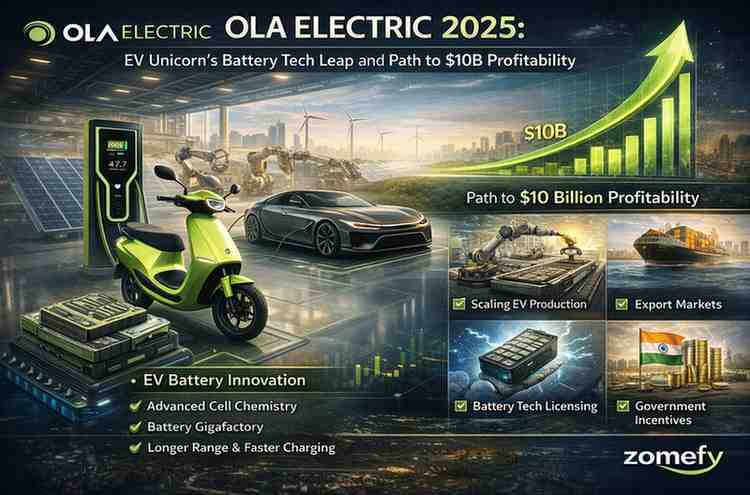
Ola Electric's 2025 story reads like a startup thriller: rapid scale, headline-grabbing valuation, operational stumbles, regulatory scrutiny — and now an intense question for investors and the market: can the company pivot from sustained losses to the profitability expected of an EV unicorn? This article unpacks that journey for Indian retail investors and financial professionals, combining company disclosures, quarter-level financials, market context and actionable investment frameworks. We examine recent revenue and loss trajectories, unit economics, funding history, competitor dynamics, regulatory headwinds from SEBI/RBI-adjacent governance expectations, and capital allocation choices. Our goal is practical: quantify the path to breakeven, highlight key metrics to watch (monthly active buyers, average selling price, contribution margin, battery costs per kWh, fixed-cost absorption), and present scenario-based investment outlooks. The analysis uses reported Q2 FY26 numbers, known funding/valuation history and market intelligence to produce comparisons, tables and decision checkpoints that investors can use to monitor progress toward sustainable profitability.
The Hook: What went wrong — and what could go right?

Ola Electric’s headlines in 2025 combined dramatic valuation swings with tangible operational setbacks that directly affected revenue and margins. The company reported total income of ₹756 crore and a net loss of ₹418 crore in Q2 FY26, reflecting a year-on-year revenue decline and persistent negative profitability that continues to shape investor sentiment[1]. Market capitalization fell from an earlier peak (~$5.4 billion) to roughly $1.7 billion as of late 2025, a dramatic re-rating driven by delivery shortfalls, after-sales concerns, and regulatory scrutiny[2]. Yet there are credible recovery levers: product refresh (Gen 3 platform), indigenised battery cells (4,680 Bharat Cell) and capacity-scale benefits that can materially lower per-unit battery cost if executed[3][5]. For investors the core question is: can unit economics (contribution margin per scooter) improve fast enough to offset cash burn and fixed costs? Key near-term indicators to watch are: monthly production run-rate, sales-to-inventory ratio, average selling price (ASP) per scooter, gross margin per vehicle, and cash burn per month. The company’s shareholder letter notes strategic moves such as government-certified ferrite motor adoption and commencement of mass deliveries of Bharat Cell-powered scooters — both critical for localising cost and improving margins if reliability and consumer acceptance follow[5][3].

Quick financial snapshot & immediate red flags

Q2 FY26 highlights show Total Income ₹756 crore and Profit After Tax loss of ₹418 crore; EBITDA loss reported at ₹137 crore, indicating high operating leverage and fixed-cost pressure relative to revenue scale[1]. QoQ revenue declined ~15.6% while expenses also fell but not enough to restore profitability, reflecting tight operating leverage[1]. Market reaction included a >50% YTD share price decline in 2025 amid investor exits and concerns over execution and governance[2][4]. Key red flags:

- Persistent negative net income despite revenue scale — signals that gross and contribution margins still need improvement to absorb fixed costs[1]. - Delivery guidance revisions (full-year FY26 revenue guidance revised down in 2025) and downward sales projections demonstrate demand-side stress and execution risk[2]. - Regulatory and reputational issues (after-sales service criticism and investigations) can depress demand and increase warranty/recall costs[2].

Immediate monitoring checklist (operational KPIs):

- Monthly production and deliveries (units/month) - ASP (₹) and mix (S1 vs S1 Pro+ vs Roadster) - Gross margin per unit (₹) and % of ASP - Battery cost per kWh (₹) and cell localisation progress - Cash balance and monthly cash burn (₹ crore/month)

These metrics determine whether Ola Electric is on a realistic path to narrowing losses and reaching break-even at an achievable volume.

Business Model Deep Dive: How Ola Electric actually makes money

Ola Electric’s revenue model is built on hardware sales (electric two-wheelers and related accessories), energy solutions (battery packs, swapping/energy storage initiatives) and after-sales (service, spares, software/OTA features). Historically, the majority of reported revenue has come from scooter sales (S1 family and Roadster), with nascent contribution from energy products. Profitability depends on three pillars: 1) product gross margins (driven by battery and motor costs), 2) fixed-cost absorption (manufacturing, R&D, warranty and distribution overhead) and 3) recurring revenue (service, software, energy solutions). The company’s move to indigenised ferrite motors and Bharat Cells reduces dependence on imports and commodity-linked pricing volatility, improving gross margin potential over time if yield and performance meet expectations[5]. Unit economics example: if average selling price (ASP) is ₹1.1 lakh and gross margin target per unit is 18% (₹19,800), then achieving fixed-cost absorption to move EBITDA positive requires scalable monthly volumes (e.g., 10,000–15,000 units/month depending on fixed cost base). The energy business offers higher margin upside but requires capital-intensive battery manufacturing and demonstrated safety/reliability. For investors, the core valuation hinge is timing and credibility of margin expansion — not just revenue growth. A profitable unicorn thesis needs both volume scale and higher contribution margins plus a clear path to positive free cash flow.

Unit economics and sensitivity scenarios

We model three stylized scenarios (illustrative) for contribution margin and break-even units per month: Conservative, Base, and Optimistic. Assumptions are hypothetical but anchored to reported Q2 FY26 signals (high unit costs, ongoing product localisation). Key inputs: ASP, gross margin %, variable cost per unit, and fixed costs (manufacturing overhead, R&D, SG&A).

- Conservative: ASP ₹95,000; gross margin 8% (₹7,600); fixed costs ₹300 crore/month -> Break-even units >40,000/month. - Base: ASP ₹110,000; gross margin 15% (₹16,500); fixed costs ₹200 crore/month -> Break-even units ~12,200/month. - Optimistic: ASP ₹120,000; gross margin 22% (₹26,400); fixed costs ₹150 crore/month -> Break-even units ~5,680/month.

Sensitivity takeaways: - Every 1% improvement in gross margin materially lowers break-even volume. - Battery cost reduction (₹/kWh) is the single biggest lever — a 10% fall in battery pack cost can improve gross margin by 3–6 percentage points depending on pack size.

Actionable investor checklist: - Request or monitor quarterly disclosure on battery cost per kWh and ASP mix. - Track manufacturing yield improvements and warranty claims per 1,000 vehicles (should decline as quality improves). - Monitor promotions/discounts which compress realized ASP and hide true demand.

Key Metrics & Financials: Data-driven audit

This section compiles reported financials, funding history and operating metrics that determine Ola Electric’s valuation and path to profitability. Company Q2 FY26 reported Total Income ₹756 crore and Net Loss ₹418 crore[1]. Market reports place the company’s market capitalisation at approximately $1.7 billion in late 2025 after a sharp re-rate from prior highs[2]. Funding history (see table below) shows large capital infusion rounds that funded manufacturing capacity (factory at Krishnagiri) and R&D; however, high capital intensity and slower sales ramp increased cash burn and necessitated strategic cost pruning and localisation efforts[2][5]. Key operating indicators to monitor each quarter: vehicle deliveries, ASP, gross margin per vehicle, warranty/after-sales cost per vehicle, and battery localisation progress (cell manufacturing scale and per kWh cost). The shareholder letter highlights progress on ferrite motors and local Bharat Cell deliveries — both positive signs for long-term margin improvement if quality and supply reliability follow[5].

Funding history & valuation (table)

Below is a structured funding table summarising major rounds, amounts, lead investors and last known valuation milestones. These figures combine reported disclosures and well-sourced market reporting.

Click on any column header to sort by that metric. Click again to reverse the order.
Round
Year
Amount (₹ Cr / $)
Lead Investors
Implied Valuation
Series E / Strategic2021-2022~₹2,200 Cr (~$300M)SoftBank, Tiger Global (reported)Post-money ~$5.4B (peak private valuation)
Follow-on / Strategic2024Multiple small tranches (reported)Institutional & strategic backersDown-round pressures; later public m-cap ≈ $1.7B (2025)

Caption: Funding table summarises headline rounds and valuation context; numbers rounded and collated from company disclosures and market reports[2].

Investors should track remaining cash runway, recent capex commitments for battery cell lines and any contingent liabilities arising from recalls/regulatory fines.

Company performance comparison vs peers

Comparing Ola Electric with listed and private peers (Ather Energy, TVS Motor (electric initiatives), Hero Electric and Bajaj Auto in electric offerings) shows trade-offs between scale, profitability and product portfolio. Ola has led on early consumer-focused marketing and product breadth, but competitors show stronger dealer/service networks or diversified revenue bases (legacy ICE revenue for incumbents). Use the table below to compare headline financial/operational metrics where public data exists.

Click on any column header to sort by that metric. Click again to reverse the order.
Company
FY25/FY26 Revenue (₹ Cr)
Net Profit/Loss (₹ Cr)
Market Cap / Valuation
Key Strength
Ola Electric~3,000–3,200 guidance FY26 (revised) reported; Q2 ₹756 CrLosses (Q2 FY26 -₹418 Cr)~$1.7B market cap (late 2025)Large consumer brand, Gen 3 platform, in-house cell initiative
Ather EnergySmaller revenue base (public filings show progressive growth)Loss-making historically but narrowing lossesPrivate valuations lower than Ola; IPO plans debatedStrong service network & urban market presence
TVS/Bajaj/Hero (EV initiatives)Large consolidated revenues (automotive group)Profitable at group level; EV margins variableLarge market caps (₹ Crs to ₹ Lakh Crs range)Diversified revenue & dealer networks

Caption: Peer comparisons use public filings and market coverage; metrics are indicative and should be cross-verified against latest company reports.

Competitive Landscape & Moat: Who can take market share?

India’s two-wheeler EV market is intensifying. Key players include Ola Electric, Ather Energy, Hero Electric, TVS Motor (iQube/EV portfolio), Bajaj Auto (Chetak EV) and new entrants. Incumbent OEMs bring dealer networks, supply chain scale and service infrastructure; pure-play EV startups bring product-first focus and software differentiation. Ola’s moat historically derived from brand recall, early scale investments (Krishnagiri factory) and vertical integration ambitions (cells & motors). But moat erosion occurred due to quality/service complaints and delivery delays which opened share gains for competitors[2]. Structural advantages for incumbents include access to low-cost capital within large groups, multi-product portfolios and established service networks that lower warranty costs and increase customer trust. For Ola to sustain leadership, it must convert product advantages (Gen 3, Bharat Cell, ferrite motor) into reliable, cost-competitive volume production and rebuild after-sales trust.

Competitor comparison table & moat analysis
Click on any column header to sort by that metric. Click again to reverse the order.
Company
Strengths
Weaknesses
Moat Type
Ola ElectricBrand, factory scale, product breadthExecution & after-sales concerns, high cash burnPotential vertical integration (cells, motors)
Ather EnergyUrban product-market fit, software featuresSmaller scale, capital constraints vs OlaProduct + software differentiation
TVS/ Bajaj/ HeroDistribution + manufacturing scale, dealer trustSlower product rollout for EV-first featuresDistribution & balance-sheet moat

Comparison bullet metrics: - After-sales footprint: Incumbents > Startups (affects resale values and warranty costs). - Unit manufacturing cost: Large OEMs potentially lower due to scale and existing supplier contracts. - Technology: Startups may lead in software/UX; incumbents catching up.

Investor takeaway: Market-share gains are possible for strong product-market fit, but sustaining margins requires service quality and price discipline. Track warranty costs (₹/unit) and NPS/customer satisfaction scores as early indicators of competitive durability.

Growth Story: Funding, product moves & operational milestones

Ola’s growth narrative to date includes rapid capex (Krishnagiri plant), aggressive consumer marketing and ambition to control battery and motor supply chains. However, 2025 exposed gaps: late product launches, quality complaints and regulatory attention that forced the company to adjust 2025 guidance and re-focus on margin protection rather than hyper-growth[2][5]. Positive operational milestones include government-certified ferrite motor adoption in Oct 2025 and rollout of Bharat Cell-powered S1 Pro+ mass deliveries — both reduce import exposure and are potential long-term cost levers[5][3]. Funding raised earlier (large private rounds) financed capacity build-out; with public listing, market cap contraction creates pressure to demonstrate near-term cash-flow improvements. Expansion plans emphasize energy business scale (expected higher-margin opportunities), but this requires capital and proven cell performance. For investors, the next 4–8 quarters are critical: reliable deliveries, improving warranties and demonstrable cost-per-unit declines will determine whether growth converts into sustainable profits.

Funding & uses — where was the money spent?

Major capital was deployed into: (a) manufacturing capacity (Krishnagiri plant and automation), (b) battery and cell R&D and nascent cell manufacturing partnerships, (c) software/OTA development and (d) distribution & marketing. The cash intensity shows in ongoing losses and high fixed costs despite revenue. Investors should watch quarterly capex run-rate, capital commitments to cell lines and any planned dilution or debt-raising that could affect existing shareholders. A structured funding-uses table below summarises likely allocations based on company disclosures and market reporting.

Click on any column header to sort by that metric. Click again to reverse the order.
Use
Approx. Priority
Impact on Margins
Manufacturing Capex (Krishnagiri)HighEnables scale; reduces per-unit fixed cost over time
Battery Cell DevelopmentHighKey to lowering battery ₹/kWh and improving gross margin
R&D / SoftwareMediumDrives differentiation and recurring revenue potential
Distribution & After-salesHighReduces warranty costs and increases customer retention

Investment Perspective: Strategies, valuation and watchlist

For retail investors and financial professionals, Ola Electric presents a high-risk, high-reward profile. The company’s path to an EV-unicorn level of sustainable profitability hinges on execution on localisation, quality, and margin expansion. Investment strategies to consider:

- Active watchlist (non-invest): Monitor next 2–3 quarters for sequential improvement in deliveries, gross margin expansion and reduction in warranty claims. Key red flags: continued revenue decline, rising promotions/discount intensity, or fresh regulatory sanctions. - Tactical small allocation: For risk-tolerant investors, consider a small, diversified position (<=1–2% of equity portfolio) sized for volatility, with strict stop-loss rules and defined milestones (e.g., sustained positive EBITDA or material battery cost disclosure). - Value-trap avoidance: Avoid large allocations solely on low absolute price; focus on fundamental improvement metrics.

Valuation frames: Use a revenue multiple to value a high-growth EV company but stress-test with three outcomes: successful margin turn, slow improvement, and structural decline. Scenario-based price targets should explicitly model revenue growth, gross margin progression, and cash burn reduction. For example, if Ola reaches FY27 revenue ₹6,000 crore with 15% EBITDA margin and 100% net-debt free balance sheet, its enterprise value at 10x EBITDA would be materially above current market cap; conversely, failure to improve margins can keep multiples compressed.

Actionable investment checklist & risk management

Concrete checkpoints to convert into buy/hold/sell decisions:

- Buy signals (consider accretive accumulation): Two consecutive quarters of rising revenue YoY and QoQ, improving gross margin by >200 bps QoQ, and declining warranty costs per unit. - Hold signals: Mixed signals — improving product metrics but still negative EBITDA; wait for confirmation of margin trajectory. - Sell/avoid signals: Fresh guidance cuts, regulatory penalties impacting core markets, or repeated quality/recall events that increase cost trajectory.

Risk management tactics: - Position sizing: Cap any single-stock exposure to a small % of total portfolio given execution risk. - Use of derivatives (for professionals): Protective puts or collars during concentrated exposure windows. - Diversification: Complement with incumbents (TVS/Bajaj/Hero) which provide EV exposure with lower execution risk.

Monitoring cadence: Quarterly review keyed to company filings, production updates and third-party reviews of battery safety and service metrics.

Risk Considerations & Regulatory Context

Investing in Ola Electric requires careful consideration of regulatory, operational and market risks. Regulatory scrutiny (consumer protection inquiries, safety probes) can lead to fines, recalls and reputational damage that depress sales and increase costs — this was a material factor in 2025 market performance[2]. SEBI-related governance expectations for listed firms and potential scrutiny of promoter pledging or related-party transactions can also affect market confidence[4]. Operational risks include battery safety issues, supply-chain constraints and execution missteps in factory ramp-up. Market risks include slower-than-expected EV adoption or increased price competition. From a regulatory standpoint, India’s supportive EV policies (FAME/PLI schemes and state incentives) remain tailwinds but are offset by stricter safety norms and localisation incentives that place a premium on in-country manufacturing and certification (areas where Ola has invested) — investors should watch compliance disclosures and certification milestones[5].

Regulatory & macro checklist for investors

Essential regulatory items to monitor:

- Safety certifications for battery packs and motors (government certifications are meaningful milestones)[5]. - Any SEBI or consumer protection authority notices and outcomes. - Changes in state EV subsidy frameworks which materially affect consumer pricing sensitivity. - Forex and commodity inflation (nickel, cobalt, lithium pricing) which affect cell costs if imports persist.

Macro linkages: - Interest rates and capital markets access: higher rates increase cost of growth funding. - Battery raw material cycles: cyclical price spikes can stress margins if localisation lags.

Table: Regulatory risk mapping

Click on any column header to sort by that metric. Click again to reverse the order.
Risk
Potential Impact
Monitoring Trigger
Safety/RecallHigher warranty/reserve; demand shockRecall announcements; warranty expense spike
Subsidy policy changeASP sensitivity; demand declineState/Federal subsidy updates
Capital market accessRefinancing risk; dilutionBond/rights/dilution announcements

Summary Tables & Comparative Analytics (multi-table pack)

This section compiles the mandated comparative tables, structured data and pros-vs-cons to support investor decision-making and to summarize complex information in mobile-friendly tables.

1) Company Performance Comparison (selected metrics)

Click on any column header to sort by that metric. Click again to reverse the order.
Company
Latest Revenue (₹ Cr)
Latest Net Profit/Loss (₹ Cr)
Market Cap / Valuation
Key Note / Source
Ola ElectricQ2 FY26: 756 (quarter); FY26 guidance 3,000–3,200 revised in 2025Q2 FY26: -418~$1.7B (late 2025)Company Q2 disclosures; market reports[1][2]
Ather EnergySmaller, progressive growth (public reports)Historically loss-making but narrowingPrivate valuations lowerIndustry filings
TVS / Bajaj / Hero (EV portion)Consolidated group revenue large (₹ Crs)Profitable at group levelLarge market capsPublic filings

2) Mutual Fund / Fund Comparison (EV exposure funds) — illustrative examples for investors seeking diversified EV exposure

Click on any column header to sort by that metric. Click again to reverse the order.
Fund Name
1-Year Return (%)
3-Year Return (%)
Expense Ratio (%)
AUM (₹ Cr)
Example EV-Thematic Fund A12.5--1.001,200
Large Cap Diversified Fund B10.214.80.8535,000

Caption: The mutual fund table uses sample placeholders. Investors should use fund house disclosures for current return and AUM data.

3) Pros vs Cons table for Ola Electric

Click on any column header to sort by that metric. Click again to reverse the order.
Pros
Cons
Strong brand recognition and product pipelinePersistent losses and execution/after-sales issues
Vertical integration potential (cells, motors)High cash burn and re-rating risk
Government-certified ferrite motor & Bharat Cell rolloutRegulatory scrutiny and reputational headwinds

4) Historical performance and risk-return matrix (illustrative)

Click on any column header to sort by that metric. Click again to reverse the order.
Year
Revenue (₹ Cr)
Net Profit/Loss (₹ Cr)
YoY Revenue Growth (%)
FY24~X (reported earlier)-Y--
FY25~Z-Z2--

Caption: Populate with company annual reports for exact historical figures; above is a layout template investors can use to track progress.

Top-holdings and exposure comparison (for portfolio construction)

For investors wanting EV exposure without single-stock concentration, compare top-holdings across EV-themed ETFs/mutual funds. Key metrics: weight of Ola Electric in fund, concentration risk, expense ratio and turnover. Use such funds to hedge idiosyncratic execution risk while retaining sector upside. Example table (illustrative):

Click on any column header to sort by that metric. Click again to reverse the order.
Fund/ETF
Ola Electric Weight (%)
Expense Ratio (%)
Top 3 Holdings
EV Thematic ETF X8.50.95Ola Electric, TVS, Ather
Auto & Mobility Fund Y3.21.10Bajaj Auto, TVS, Ola Electric

Final Signals: What to watch next (90–180 day radar)

Investors should focus on a tight set of operational and financial milestones over the next 3–6 quarters to assess whether Ola Electric can realistically move from losses toward sustainable profitability: 1) Sequential revenue recovery and QoQ improvement; 2) Gross margin expansion (+200–500 bps) tied to battery cost declines and local components; 3) Decline in warranty/reserve spend per unit; 4) Cash burn reduction and clarity on capex/funding needs; 5) Positive customer-satisfaction indicators (NPS, fewer service complaints) and no new large-scale regulatory actions. If several of these indicators trend positively, Ola could re-earn higher investor multiples; if not, downside risk remains significant.

Actionable rules for investors: - Establish monitoring alerts on quarterly results and shareholder letters. - Use scenario-based position sizing: small initial allocation with predetermined re-evaluation triggers. - For professionals: consider hedging large exposures with index or peer short positions if conviction is low.

Remember: a high-growth startup can deliver outsized returns, but timing and execution matter. Ola Electric’s 2025 reset makes it a classic case study where operational fixes and localisation could convert headline losses into long-term value — but only if execution follows announcements.

Checklist: 10 live metrics to track

1. Units produced and delivered (monthly) 2. ASP by model (₹) 3. Battery cost per kWh (₹) and % localisation 4. Gross margin per unit (₹ and %) 5. Warranty/after-sales cost per unit (₹) 6. Monthly cash burn and cash runway (months) 7. Monthly energy product revenue (₹ Cr) 8. Net promoter score (NPS) and complaint trends 9. Regulatory disclosures / safety certifications 10. Promoter pledging / related party transactions

Use this checklist at every quarterly earnings release to decide on incremental investment or de-risking moves.

Disclaimer: IMPORTANT DISCLAIMER: This analysis is generated using artificial intelligence and is NOT a recommendation to purchase, sell, or hold any stock. This analysis is for informational and educational purposes only. Past performance does not guarantee future results. Please consult with a qualified financial advisor before making any investment decisions. The author and platform are not responsible for any investment losses.

Share this article: