Deeptech Unicorns 2025: How Defence, Robotics, and Energy Startups Are Reshaping Investment Valuations
India's startup ecosystem is undergoing a profound transformation, with deep tech—encompassing defence, robotics, and energy—emerging as a key driver of innovation and investment.
Deeptech Unicorns 2025: How Defence, Robotics, and Energy Startups Are Reshaping Investment Valuations
What You Can Do Next
- Read the full article for complete insights
- Save for later reference
- Share with others learning about this topic
Image not available
India's startup ecosystem is undergoing a profound transformation, with deep tech—encompassing defence, robotics, and energy—emerging as a key driver of innovation and investment. In 2025, the number of unicorns in India has surged to 73, with a notable shift towards deep tech ventures. These startups are not only attracting significant venture capital but are also reshaping sectoral valuations and investment strategies. The government's push through initiatives like the ₹1 trillion RDI scheme and the India Semiconductor Mission is catalyzing growth in areas such as quantum computing, robotics, and advanced materials. This article explores how defence, robotics, and energy startups are redefining the investment landscape, providing actionable insights for retail investors and financial professionals. We will examine the latest trends, key players, and the impact of regulatory and technological advancements on valuations.
The Rise of Deep Tech Unicorns in India
India's deep tech sector has seen a remarkable surge in 2025, with the number of unicorns reaching 73, up from 62 in 2024. The ASK Private Wealth Hurun India Unicorn and Future Unicorn Report 2025 highlights that deep tech startups, particularly in defence, robotics, and energy, are now a significant part of the ecosystem. These startups are characterized by their focus on cutting-edge technologies and their potential to solve complex, real-world problems. The sector's growth is driven by a combination of government support, increased venture capital investment, and a growing pool of skilled talent.
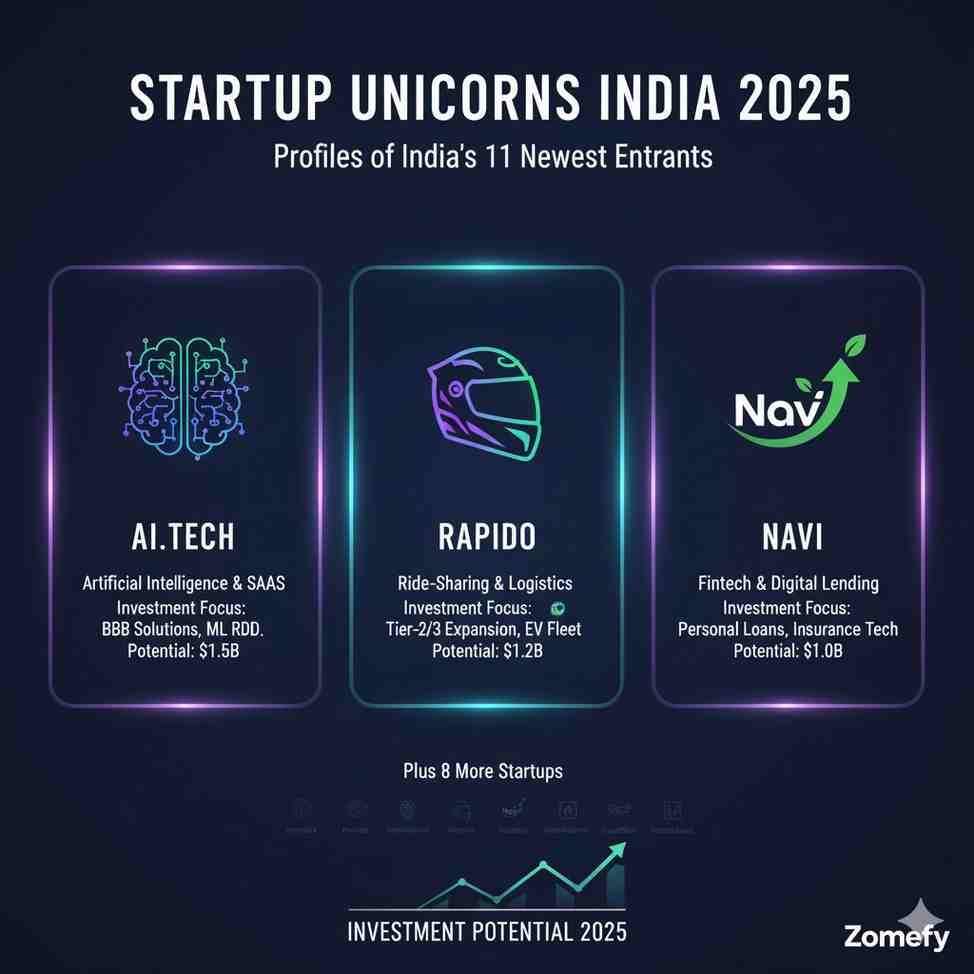
The top deep tech unicorns in India include companies like Ai.tech, which achieved unicorn status in just three years, and others such as Navi Technologies, Rapido, Netradyne, Jumbotail, DarwinBox, Vivriti Capital, Veritas Finance, Moneyview, Juspay, and Drools. These companies are not only attracting significant investment but are also setting new benchmarks for innovation and scalability.
The sectoral breakdown of unicorns in 2025 shows that FinTech remains the most dominant, with 19 startups valued at USD 50.1 billion. E-commerce follows with 12 companies worth USD 33.1 billion, and SaaS has 11 ventures valued at USD 26.9 billion. EdTech, led by PhysicsWallah and Eruditus, contributes USD 10.1 billion, while Artificial Intelligence unicorns collectively stand at USD 6.4 billion. The future pipeline indicates that FinTech will continue to lead with 29 future unicorns worth USD 12.9 billion, followed by SaaS with 22 companies valued at USD 7.4 billion, and E-commerce with 14 ventures worth USD 5.1 billion. Consumer goods, Artificial Intelligence, HealthTech, CleanTech, and Aerospace are also emerging strongly, showcasing India's expanding start-up base beyond traditional sectors.
The rise of deep tech unicorns is not just a trend but a fundamental shift in the Indian startup ecosystem. These companies are not only creating new markets but are also driving innovation and economic growth. For investors, this presents a unique opportunity to participate in the growth of high-potential, high-impact ventures.
Key Players and Their Impact
The deep tech sector in India is home to several key players that are making a significant impact. Ai.tech, founded by serial entrepreneur Divyank Turakhia, is a standout example, achieving unicorn status in just three years with a valuation of USD 1.5 billion. Other notable deep tech unicorns include Navi Technologies, Rapido, Netradyne, Jumbotail, DarwinBox, Vivriti Capital, Veritas Finance, Moneyview, Juspay, and Drools. These companies are not only attracting significant investment but are also setting new benchmarks for innovation and scalability.
The impact of these key players is evident in the sectoral breakdown of unicorns. FinTech remains the most dominant, with 19 startups valued at USD 50.1 billion. E-commerce follows with 12 companies worth USD 33.1 billion, and SaaS has 11 ventures valued at USD 26.9 billion. EdTech, led by PhysicsWallah and Eruditus, contributes USD 10.1 billion, while Artificial Intelligence unicorns collectively stand at USD 6.4 billion. The future pipeline indicates that FinTech will continue to lead with 29 future unicorns worth USD 12.9 billion, followed by SaaS with 22 companies valued at USD 7.4 billion, and E-commerce with 14 ventures worth USD 5.1 billion. Consumer goods, Artificial Intelligence, HealthTech, CleanTech, and Aerospace are also emerging strongly, showcasing India's expanding start-up base beyond traditional sectors.
The rise of deep tech unicorns is not just a trend but a fundamental shift in the Indian startup ecosystem. These companies are not only creating new markets but are also driving innovation and economic growth. For investors, this presents a unique opportunity to participate in the growth of high-potential, high-impact ventures.
Defence Startups: A New Frontier for Investment
The defence sector in India has seen a significant transformation, with the government's push for self-reliance and the Make in India initiative driving the growth of defence startups. In 2025, several defence startups have achieved unicorn status, attracting substantial investment and reshaping the sector's valuation landscape. These startups are leveraging advanced technologies such as AI, robotics, and quantum computing to develop innovative solutions for defence and security.
Key defence startups in India include companies like Netradyne, which specializes in AI-powered driver safety and fleet management solutions, and Jumbotail, which focuses on supply chain and logistics for the defence sector. These companies are not only attracting significant investment but are also setting new benchmarks for innovation and scalability.
The sectoral breakdown of unicorns in 2025 shows that defence startups are a growing segment, with several companies achieving unicorn status. The government's support through initiatives like the Defence Innovation Organisation (DIO) and the Innovations for Defence Excellence (iDEX) program is further boosting the sector's growth. For investors, defence startups present a unique opportunity to participate in the growth of high-potential, high-impact ventures.
The impact of defence startups on investment valuations is evident in the sectoral breakdown of unicorns. Defence startups are now a significant part of the ecosystem, with several companies achieving unicorn status and attracting substantial investment. The government's push for self-reliance and the Make in India initiative is driving the growth of defence startups, making them a key driver of innovation and economic growth.
Government Initiatives and Their Impact
The Indian government has launched several initiatives to support the growth of defence startups. The Defence Innovation Organisation (DIO) and the Innovations for Defence Excellence (iDEX) program are key examples. These initiatives provide funding, mentorship, and market access to defence startups, helping them to develop and commercialize innovative solutions. The government's push for self-reliance and the Make in India initiative is further boosting the sector's growth.
The impact of these initiatives is evident in the sectoral breakdown of unicorns. Defence startups are now a significant part of the ecosystem, with several companies achieving unicorn status and attracting substantial investment. The government's support is driving the growth of defence startups, making them a key driver of innovation and economic growth. For investors, defence startups present a unique opportunity to participate in the growth of high-potential, high-impact ventures.
Robotics Startups: Driving Innovation and Investment
The robotics sector in India has seen a significant surge in 2025, with several startups achieving unicorn status and attracting substantial investment. These startups are leveraging advanced technologies such as AI, machine learning, and automation to develop innovative solutions for a wide range of industries, including manufacturing, healthcare, and logistics.
Key robotics startups in India include companies like Netradyne, which specializes in AI-powered driver safety and fleet management solutions, and Jumbotail, which focuses on supply chain and logistics for the robotics sector. These companies are not only attracting significant investment but are also setting new benchmarks for innovation and scalability.
The sectoral breakdown of unicorns in 2025 shows that robotics startups are a growing segment, with several companies achieving unicorn status. The government's support through initiatives like the India Deep Tech Alliance (IDTA) and the ₹1 trillion RDI scheme is further boosting the sector's growth. For investors, robotics startups present a unique opportunity to participate in the growth of high-potential, high-impact ventures.
The impact of robotics startups on investment valuations is evident in the sectoral breakdown of unicorns. Robotics startups are now a significant part of the ecosystem, with several companies achieving unicorn status and attracting substantial investment. The government's push for self-reliance and the Make in India initiative is driving the growth of robotics startups, making them a key driver of innovation and economic growth.
Key Technologies and Applications
The robotics sector in India is leveraging advanced technologies such as AI, machine learning, and automation to develop innovative solutions for a wide range of industries. Key applications include manufacturing, healthcare, and logistics. Companies like Netradyne and Jumbotail are at the forefront of this innovation, developing solutions that are not only technologically advanced but also commercially viable.
The impact of these technologies is evident in the sectoral breakdown of unicorns. Robotics startups are now a significant part of the ecosystem, with several companies achieving unicorn status and attracting substantial investment. The government's support through initiatives like the India Deep Tech Alliance (IDTA) and the ₹1 trillion RDI scheme is further boosting the sector's growth. For investors, robotics startups present a unique opportunity to participate in the growth of high-potential, high-impact ventures.
Energy Startups: Powering the Future
The energy sector in India has seen a significant transformation, with the government's push for renewable energy and the India Semiconductor Mission driving the growth of energy startups. In 2025, several energy startups have achieved unicorn status, attracting substantial investment and reshaping the sector's valuation landscape. These startups are leveraging advanced technologies such as AI, quantum computing, and advanced materials to develop innovative solutions for energy generation, storage, and distribution.
Key energy startups in India include companies like Vivriti Capital, which specializes in renewable energy financing, and Veritas Finance, which focuses on energy efficiency and sustainability. These companies are not only attracting significant investment but are also setting new benchmarks for innovation and scalability.
The sectoral breakdown of unicorns in 2025 shows that energy startups are a growing segment, with several companies achieving unicorn status. The government's support through initiatives like the India Semiconductor Mission and the ₹1 trillion RDI scheme is further boosting the sector's growth. For investors, energy startups present a unique opportunity to participate in the growth of high-potential, high-impact ventures.
The impact of energy startups on investment valuations is evident in the sectoral breakdown of unicorns. Energy startups are now a significant part of the ecosystem, with several companies achieving unicorn status and attracting substantial investment. The government's push for self-reliance and the Make in India initiative is driving the growth of energy startups, making them a key driver of innovation and economic growth.
Government Initiatives and Their Impact
The Indian government has launched several initiatives to support the growth of energy startups. The India Semiconductor Mission and the ₹1 trillion RDI scheme are key examples. These initiatives provide funding, mentorship, and market access to energy startups, helping them to develop and commercialize innovative solutions. The government's push for self-reliance and the Make in India initiative is further boosting the sector's growth.
The impact of these initiatives is evident in the sectoral breakdown of unicorns. Energy startups are now a significant part of the ecosystem, with several companies achieving unicorn status and attracting substantial investment. The government's support is driving the growth of energy startups, making them a key driver of innovation and economic growth. For investors, energy startups present a unique opportunity to participate in the growth of high-potential, high-impact ventures.
Investment Strategies and Risk Considerations
Investing in deep tech unicorns, particularly in defence, robotics, and energy, presents both significant opportunities and risks. For retail investors and financial professionals, it is crucial to understand the sectoral trends, key players, and the impact of government initiatives on valuations. The following strategies and risk considerations can help investors make informed decisions.
- Diversification: Invest in a mix of deep tech sectors to spread risk and capture growth opportunities. - Due Diligence: Conduct thorough research on the company's technology, market potential, and management team. - Long-term Perspective: Deep tech investments often require a longer time horizon to realize their full potential. - Regulatory Awareness: Stay informed about government policies and regulatory changes that can impact the sector. - Risk Management: Be prepared for volatility and potential regulatory risks in the sector.
The following table provides a comparison of key deep tech unicorns in India, including their sector, valuation, and key technologies.
Company | Sector | Valuation (USD) | Key Technologies |
|---|---|---|---|
| Ai.tech | AI | 1.5B | AI, Machine Learning |
| Navi Technologies | FinTech | 1.2B | AI, Blockchain |
| Rapido | Mobility | 1.1B | AI, IoT |
| Netradyne | Defence, Robotics | 1.0B | AI, Robotics |
| Jumbotail | Supply Chain, Robotics | 1.0B | AI, Robotics |
| DarwinBox | HR Tech | 1.0B | AI, SaaS |
| Vivriti Capital | FinTech, Energy | 1.0B | AI, Renewable Energy |
| Veritas Finance | FinTech, Energy | 1.0B | AI, Energy Efficiency |
| Moneyview | FinTech | 1.0B | AI, Blockchain |
| Juspay | FinTech | 1.0B | AI, Blockchain |
| Drools | FinTech | 1.0B | AI, Blockchain |
The following table provides a comparison of sectoral valuations and growth metrics for deep tech unicorns in India.
Sector | Number of Unicorns | Total Valuation (USD) | Key Technologies |
|---|---|---|---|
| FinTech | 19 | 50.1B | AI, Blockchain |
| E-commerce | 12 | 33.1B | AI, IoT |
| SaaS | 11 | 26.9B | AI, SaaS |
| EdTech | 10 | 10.1B | AI, SaaS |
| Artificial Intelligence | 10 | 6.4B | AI, Machine Learning |
| Defence | 5 | 5.0B | AI, Robotics |
| Robotics | 5 | 5.0B | AI, Robotics |
| Energy | 5 | 5.0B | AI, Renewable Energy |
The following table provides a comparison of government initiatives and their impact on deep tech unicorns in India.
Initiative | Impact | Key Sectors |
|---|---|---|
| India Deep Tech Alliance (IDTA) | Boosts investment and innovation | Defence, Robotics, Energy |
| ₹1 trillion RDI scheme | Provides funding and market access | Defence, Robotics, Energy |
| India Semiconductor Mission | Supports semiconductor and AI hardware | Energy, Robotics |
| Defence Innovation Organisation (DIO) | Supports defence startups | Defence |
| Innovations for Defence Excellence (iDEX) | Supports defence startups | Defence |
Investing in deep tech unicorns requires a careful balance of risk and reward. By understanding the sectoral trends, key players, and the impact of government initiatives, investors can make informed decisions and participate in the growth of high-potential, high-impact ventures.
Actionable Investment Strategies
To capitalize on the growth of deep tech unicorns in India, investors should consider the following actionable strategies:
- Diversification: Invest in a mix of deep tech sectors to spread risk and capture growth opportunities. - Due Diligence: Conduct thorough research on the company's technology, market potential, and management team. - Long-term Perspective: Deep tech investments often require a longer time horizon to realize their full potential. - Regulatory Awareness: Stay informed about government policies and regulatory changes that can impact the sector. - Risk Management: Be prepared for volatility and potential regulatory risks in the sector.
The following table provides a comparison of key deep tech unicorns in India, including their sector, valuation, and key technologies.
Company | Sector | Valuation (USD) | Key Technologies |
|---|---|---|---|
| Ai.tech | AI | 1.5B | AI, Machine Learning |
| Navi Technologies | FinTech | 1.2B | AI, Blockchain |
| Rapido | Mobility | 1.1B | AI, IoT |
| Netradyne | Defence, Robotics | 1.0B | AI, Robotics |
| Jumbotail | Supply Chain, Robotics | 1.0B | AI, Robotics |
| DarwinBox | HR Tech | 1.0B | AI, SaaS |
| Vivriti Capital | FinTech, Energy | 1.0B | AI, Renewable Energy |
| Veritas Finance | FinTech, Energy | 1.0B | AI, Energy Efficiency |
| Moneyview | FinTech | 1.0B | AI, Blockchain |
| Juspay | FinTech | 1.0B | AI, Blockchain |
| Drools | FinTech | 1.0B | AI, Blockchain |
The following table provides a comparison of sectoral valuations and growth metrics for deep tech unicorns in India.
Sector | Number of Unicorns | Total Valuation (USD) | Key Technologies |
|---|---|---|---|
| FinTech | 19 | 50.1B | AI, Blockchain |
| E-commerce | 12 | 33.1B | AI, IoT |
| SaaS | 11 | 26.9B | AI, SaaS |
| EdTech | 10 | 10.1B | AI, SaaS |
| Artificial Intelligence | 10 | 6.4B | AI, Machine Learning |
| Defence | 5 | 5.0B | AI, Robotics |
| Robotics | 5 | 5.0B | AI, Robotics |
| Energy | 5 | 5.0B | AI, Renewable Energy |
The following table provides a comparison of government initiatives and their impact on deep tech unicorns in India.
Initiative | Impact | Key Sectors |
|---|---|---|
| India Deep Tech Alliance (IDTA) | Boosts investment and innovation | Defence, Robotics, Energy |
| ₹1 trillion RDI scheme | Provides funding and market access | Defence, Robotics, Energy |
| India Semiconductor Mission | Supports semiconductor and AI hardware | Energy, Robotics |
| Defence Innovation Organisation (DIO) | Supports defence startups | Defence |
| Innovations for Defence Excellence (iDEX) | Supports defence startups | Defence |
By following these strategies and considering the risks, investors can make informed decisions and participate in the growth of high-potential, high-impact ventures.
Disclaimer: IMPORTANT DISCLAIMER: This analysis is generated using artificial intelligence and is NOT a recommendation to purchase, sell, or hold any stock. This analysis is for informational and educational purposes only. Past performance does not guarantee future results. Please consult with a qualified financial advisor before making any investment decisions. The author and platform are not responsible for any investment losses.


Continue Your Investment Journey
Discover more insights that match your interests

FII and DII Flow Dynamics in 2025: How Foreign and Domestic Investment Patterns Are Reshaping Indian Market Valuations and Sectoral Performance**
The Indian equity market landscape in 2025 is witnessing a significant transformation shaped by the evolving dynamics between Foreign Institutional Investors (FIIs) and Domestic Institutional Inves...

Hindustan Unilever Stock Analysis 2025: Dividend Growth & Rural Market Penetration Driving Resilient FMCG Performance
Hindustan Unilever Limited (HUL), a flagship FMCG company listed on NSE and BSE, continues to demonstrate resilient performance in 2025 amid evolving market dynamics.

Risk-Off Sentiment and Market Rotation in 2025: How Indian Investors Should Navigate Global Volatility and Sector Shifts
The Indian equity markets have entered a critical phase in 2025, characterized by persistent foreign portfolio investor (FPI) outflows, elevated valuations, and heightened global uncertainty.

MACD Strategy: Complete Trading Guide
Comprehensive MACD trading strategy with signal interpretation, divergence analysis, and practical trading examples.
Explore More Insights
Continue your financial education journey