
Vaswani Industries: Can Strong Q4 Earnings and Revenue Growth Sustain Amidst Industry Volatility?
Vaswani Industries Limited, a small-cap player in the Indian steel sector, recently captured market attention with its seemingly robust Q4 FY26 earnings and.
Vaswani Industries: Can Strong Q4 Earnings and Revenue Growth Sustain Amidst Industry Volatility?
What You Can Do Next
- Read the full article for complete insights
- Save for later reference
- Share with others learning about this topic
Image not available
Vaswani Industries Limited, a small-cap player in the Indian steel sector, recently captured market attention with its seemingly robust Q4 FY26 earnings and revenue growth. While headlines might suggest a clear path of recovery or sustained momentum, a deeper dive reveals a more nuanced picture, especially for long-term retail investors. This article aims to move beyond the immediate news cycle to scrutinize the underlying business fundamentals, the sustainability of its performance, and the inherent risks that often get overshadowed by short-term optimism. Investors will gain a clearer understanding of what drives Vaswani Industries' profitability, its valuation against the backdrop of a cyclical industry, and the critical factors that could either support or derail its investment thesis over the next 6-12 months.
Data Freshness
Updated on: 2026-06-21 As of: 2026-06-21 Latest price: Rs 57.53 (NSE) as of June 19, 2026 Market cap: Rs 193.13 crore Latest earnings period: FY26 Q4 (ended March 31, 2026) Key sources: https://www.marketscreener.com/quote/stock/VASWANI-INDUSTRIES-LIMITED-9742681/news/Vaswani-Industries-Limited-Reports-Earnings-Results-for-the-Fourth-Quarter-and-Full-Year-Ended-Marc-43954388/; https://www.trendlyne.com/equity/share-latest-news/VASWANI/vaswani-industries-ltd/; https://www.groww.in/stocks/vaswani-industries-ltd
News Trigger Summary
Event: Vaswani Industries Limited reported its Q4 FY26 and full-year FY26 financial results. Date: May 30, 2026 Why the Market Reacted: The market likely reacted to the reported strong year-on-year growth in Q4 FY26 revenue and a significant increase in net income for the quarter. Q4 FY26 revenue rose to Rs 144.08 crore from Rs 116.92 crore in Q4 FY25, a 23% increase, and net income jumped to Rs 5.39 crore from Rs 1.98 crore, a 171% increase. This quarter's performance could have been interpreted as a positive sign amidst broader steel sector headwinds. Why This Is Not Just News: While the Q4 performance appears strong, it's crucial to analyze whether this quarterly uptick is sustainable or merely a cyclical rebound. The full-year FY26 net income of Rs 4.24 crore was actually lower than the Rs 8.60 crore reported in FY25, with a corresponding decline in EPS from Rs 2.81 to Rs 1.31. This article will explore the factors behind this divergence and assess the long-term viability of the business beyond a single quarter's results, focusing on operational efficiencies, raw material price volatility, and the broader demand environment for steel in India.
Core Thesis in One Sentence
Vaswani Industries' recent quarterly revenue growth masks underlying full-year profitability challenges and significant exposure to volatile raw material prices and cyclical demand in the highly competitive Indian steel sector.
Business Model Analysis
Vaswani Industries Limited (VIL) operates as an integrated player within the Indian steel value chain, primarily generating revenue from its Iron & Steel segment, complemented by power generation. The company manufactures sponge iron, which is a raw material for steel production, and further processes it into steel billets and HB wires. This integrated approach, from raw material conversion to semi-finished and finished steel products, is designed to offer some control over the production process and potentially mitigate external supply chain risks. Their manufacturing facilities are located in Raipur, Chhattisgarh, a region with significant industrial activity. A critical aspect of VIL's business model is its captive power generation, utilizing Waste Heat Recovery Boilers (WHRB) from sponge iron kilns and Atmospheric Fluidized Bed Combustion (AFBC) boilers. This captive power capacity, which has been expanded over the years, is strategically important as it reduces reliance on external power grids and helps in managing energy costs, a significant component in steel manufacturing. While the primary consumption of this power is captive, any surplus is sold to private power companies and state electricity boards, providing an additional, albeit smaller, revenue stream. The company's products, such as steel billets and wires, primarily cater to the construction and infrastructure sectors within India. This makes VIL's fortunes closely tied to government capital expenditure and the broader economic growth, particularly in infrastructure development. The company also has minor segments like Real Estate and Agri Division, but these contribute minimally to overall revenue and profitability. The profitability of the Iron & Steel segment is highly sensitive to the price movements of key raw materials like iron ore and coking coal, as well as the realization prices of finished steel products. Operational efficiency, capacity utilization, and effective inventory management are therefore paramount for VIL to sustain margins in a volatile commodity market.
Key Financial Metrics
Metric | FY24 (Rs crore) | FY25 (Rs crore) | FY26 (Rs crore) | TTM (Rs crore) |
|---|---|---|---|---|
| Revenue | 389.34 | 411.64 | 468.20 | 468.20 |
| Net Income | 9.03 | 8.60 | 4.24 | 4.24 |
| EPS (Rs) | 2.97 | 2.81 | 1.31 | 1.31 |
| ROCE (%) | 8.16 (as of Jun '26) | - | - | 8.16 (as of Jun '26) |
| ROE (%) | - | - | 2.95 | 2.95 |
| Debt (Rs crore) | - | - | ~245 (as of Mar '26) | ~245 (as of Mar '26) |
A review of Vaswani Industries' financials reveals a mixed trend. While revenue has shown consistent growth from FY24 to FY26, increasing from Rs 389.34 crore to Rs 468.20 crore, net income has followed a concerning trajectory. Net income declined from Rs 9.03 crore in FY24 to Rs 8.60 crore in FY25, and further sharply to Rs 4.24 crore in FY26. This significant drop in profitability, despite revenue growth, indicates severe margin pressure or increased operational costs. Consequently, Earnings Per Share (EPS) has also more than halved from Rs 2.81 in FY25 to Rs 1.31 in FY26. The Return on Capital Employed (ROCE) of 8.16% and Return on Equity (ROE) of 2.95% (TTM) suggest that the company's capital allocation and shareholder value creation have been modest. The estimated debt of approximately Rs 245 crore as of March 2026, coupled with a low interest coverage ratio, highlights a significant balance sheet risk, especially for a company with fluctuating profitability. The disparity between revenue growth and declining net income is a critical red flag for investors, suggesting that the company's ability to translate top-line expansion into bottom-line profits is currently challenged.
What the Market Is Missing
The market's initial positive reaction to Vaswani Industries' Q4 FY26 results, driven by strong quarterly revenue and profit growth, might be missing the critical context of the full fiscal year's performance and the structural challenges inherent in its business model. While Q4 FY26 indeed showed a significant year-on-year increase in net income, the full-year FY26 net income actually contracted by over 50% compared to FY25. This suggests that the 'strong' Q4 could be more of a cyclical bounce or a one-off operational efficiency gain rather than a sustainable trend. Investors might be overlooking the company's struggle to maintain profitability in an environment where revenue is growing. This divergence points to fragile operating margins, heavily influenced by volatile raw material costs, particularly iron ore and coking coal. The Indian steel industry, while benefiting from government infrastructure push, is also characterized by intense competition and significant price sensitivity. Vaswani Industries, being a relatively small player with a market cap of around Rs 193 crore, lacks the pricing power and backward integration advantages of larger, more diversified steel majors. The market might also be underestimating the impact of the company's debt levels and its low interest coverage ratio. In a rising interest rate environment or during periods of tighter credit, servicing this debt could become a significant burden, further eroding profitability and potentially necessitating dilutive equity raises, as seen with the recent preferential issue plan. Furthermore, while captive power generation offers some cost advantages, the overall energy requirements for steel production remain high, and any sustained increase in coal prices (even for AFBC boilers) could pressure margins. The market may be overly extrapolating the positive Q4 without adequately discounting the full-year underperformance and the persistent vulnerabilities to commodity cycles and competitive pressures faced by a micro-cap steel producer.
Valuation and Expectations
Metric | TTM (as of Jun 19, 2026) | Industry Median |
|---|---|---|
| P/E Ratio | 45.55x | ~15-20x |
| P/B Ratio | 1.40x | ~1.0-1.5x |
| EV/EBITDA | 11.51x | ~8-10x |
Vaswani Industries currently trades at a TTM P/E ratio of 45.55x, which appears significantly stretched when compared to the broader Indian steel industry median, typically ranging between 15-20x. This high P/E ratio, especially given the declining full-year profitability and modest EPS of Rs 1.31, suggests that the market is either anticipating a substantial and rapid turnaround in earnings or is assigning a premium that is not immediately justified by its current financial performance. The Price-to-Book (P/B) ratio of 1.40x is closer to industry averages, indicating that the stock is trading slightly above its book value, which might be reasonable for a manufacturing entity. However, the EV/EBITDA of 11.51x, also appears on the higher side compared to industry peers, implying that the enterprise value, including debt, is quite high relative to its operating earnings. These valuation multiples, particularly the P/E and EV/EBITDA, suggest that a significant level of future growth, margin expansion, and improved return ratios are already priced into the stock. For the current valuation to be justified, Vaswani Industries would need to demonstrate not just revenue growth, but a substantial and sustainable improvement in net profitability and operational efficiency, far exceeding its performance in FY26. Any failure to deliver on these implicit high expectations could lead to a sharp re-rating of the stock.
Bull, Base, and Bear Scenarios
Scenario | Probability | FY27 Revenue (Rs crore) | FY27 Net Income (Rs crore) | Key Assumptions |
|---|---|---|---|---|
| Bull Case | 25% | 550-600 | 8-10 | Strong infrastructure spending, stable raw material prices, successful capacity utilization, effective debt management, and sustained demand from central India. |
| Base Case | 50% | 480-520 | 4-6 | Moderate steel demand growth, continued raw material volatility, some operational efficiencies but persistent competitive pressures, stable but elevated debt costs. |
| Bear Case | 25% | 400-450 | 1-2 (or Loss) | Sharp increase in raw material costs, slowdown in government capex, intense price wars, inability to manage debt, and operational inefficiencies leading to margin erosion. |
The probability-weighted outcomes for Vaswani Industries lean towards a 'Base Case' scenario, reflecting the inherent cyclicality and competitive pressures in the steel sector. In the Bull Case, a confluence of favorable factors such as robust government infrastructure spending, which is projected to drive steel demand growth of 9-10% in FY27, coupled with stable raw material prices, could lead to significant operational leverage and margin expansion. This scenario assumes the company successfully leverages its recent preferential issue for growth and effectively manages its debt. The Base Case, which we assign a 50% probability, anticipates continued volatility in raw material prices and ongoing competitive intensity. While domestic steel demand is expected to remain supportive, Vaswani Industries' ability to consistently pass on cost increases to customers might be limited due to its market position. This scenario projects modest profit improvement from FY26 levels. The Bear Case, with a 25% probability, factors in a sharp escalation in input costs, a slowdown in infrastructure project execution, or aggressive pricing by larger players. Given the company's relatively small scale and leveraged balance sheet, a sustained period of adverse industry conditions could severely impact profitability, potentially leading to losses and further pressure on its financials. Investors should recognize that the high P/E valuation already discounts significant future improvements, making the stock particularly sensitive to any deviation from the optimistic Bull Case assumptions.
Key Risks and Thesis Breakers
Peer Comparison
Company | Market Cap (Rs crore) | P/E (TTM) | ROE (%) (TTM) | ROCE (%) | Debt/Equity |
|---|---|---|---|---|---|
| Vaswani Industries Ltd | 193.13 | 45.55 | 2.95 | 8.16 | ~1.27 (Est.) |
| JSW Steel Ltd | 3,16,417 | 14.18 | 22.30 | - | ~0.8 (Est.) |
| Tata Steel Ltd | 2,50,320 | 13.47 | 10.56 | - | ~0.6 (Est.) |
| Jindal Steel & Power Ltd | 1,15,464 | 16.66 | 6.61 | - | ~0.7 (Est.) |
| Steel Authority of India Ltd | 75,242 | 11.27 | 5.58 | - | ~0.5 (Est.) |
Comparing Vaswani Industries with its larger peers like JSW Steel, Tata Steel, Jindal Steel & Power, and SAIL highlights its distinct position as a micro-cap player in the Indian steel sector. While its P/B ratio is somewhat in line with industry averages, Vaswani's P/E multiple of 45.55x stands out as significantly higher than its much larger, more integrated, and generally more profitable counterparts, which typically trade in the 11-17x range. This premium valuation, despite a significantly lower ROE of 2.95% and ROCE of 8.16%, suggests that the market is either anticipating an extraordinary turnaround or is mispricing the inherent risks. Larger players benefit from economies of scale, backward integration, and greater financial flexibility, allowing them to better navigate commodity cycles and competitive pressures. Vaswani's estimated higher debt-to-equity ratio (calculated from ~Rs 245 crore debt and Rs 193 crore market cap, assuming equity is close to market cap for a rough estimate, or using book value from other sources, which is Rs 43.23 per share for 32.9M shares gives approx Rs 142 crore equity, leading to higher D/E) further underscores its relatively weaker financial position compared to its peers. Therefore, for Vaswani Industries to justify its current premium valuation, it would need to demonstrate a substantial and sustained improvement in operational efficiency, margin expansion, and a significant deleveraging of its balance sheet, which is a tall order in this competitive landscape.
Who Should and Should Not Consider This Stock
Suitable For
- High-risk tolerant investors seeking exposure to the cyclical recovery in the Indian steel sector, willing to accept significant volatility.
- Investors with a deep understanding of commodity cycles and micro-cap dynamics, who can closely monitor raw material price trends and government infrastructure spending.
- Those looking for potential multi-bagger opportunities in small-cap companies with a long-term horizon (5+ years), provided a clear path to sustained profitability emerges.
Not Suitable For
- Conservative investors or those with a low-risk appetite, given the company's volatile earnings history and balance sheet risks.
- Investors seeking stable income or dividend-paying stocks, as the company has not consistently demonstrated strong profitability or dividend payouts.
- Those who prefer large-cap, established players with proven pricing power and diversified operations in the steel sector.
- Investors without the time or expertise to conduct ongoing, in-depth fundamental analysis of a cyclical micro-cap stock.
What to Track Going Forward
Final Take
Vaswani Industries' recent Q4 FY26 results, while showing a strong quarterly uptick in revenue and net income, present a complex picture when viewed in the context of its full fiscal year performance. The significant decline in full-year FY26 net income, despite revenue growth, highlights persistent challenges in managing profitability amidst a cyclical and competitive Indian steel sector. The company's relatively high valuation multiples, particularly its P/E ratio, suggest that the market is currently pricing in a substantial and sustained improvement in earnings that has yet to materialize consistently. This creates a scenario where the downside risk from any operational missteps or adverse industry conditions could be considerable. Investors must question whether the Q4 performance is a genuine inflection point or simply a temporary relief in a structurally challenging environment. The ability of Vaswani Industries to consistently improve its operating margins, effectively manage its debt, and navigate the volatile raw material price landscape will be paramount. Without a clear and sustained demonstration of these factors, the current investment thesis remains fragile. Long-term investors should prioritize a thorough understanding of these risks and maintain a vigilant watch on the key metrics outlined, rather than being swayed by isolated quarterly results.
Frequently Asked Questions
What is Vaswani Industries' core business and how does it relate to the recent earnings?
Vaswani Industries is primarily engaged in the manufacturing of sponge iron, steel billets, HB wires, and power generation, with the Iron & Steel segment being its main revenue driver. The recent Q4 FY26 earnings reflect performance in these core segments, with robust volume growth in steel products contributing to the revenue increase. However, the full-year financials suggest that while the quarter was strong, the overall fiscal year faced profitability challenges.
What are the key risks to Vaswani Industries' valuation and what should investors track?
Key risks include volatility in raw material prices (iron ore, coking coal), intense competition from larger integrated players, and the cyclical nature of the steel industry. Investors should closely monitor the company's operating margins, debt levels, and capacity utilization rates. Additionally, tracking government infrastructure spending and real estate sector health in central India, where the company has a strong presence, will be crucial for assessing demand sustainability.
References
- [1] Current time information in India - Google Search. View Source ↗(Accessed: 2026-06-21)
- [2] Vaswani Industries Stock Price Live NSE/BSE - Groww - Groww. View Source ↗(Accessed: 2026-06-21)
- [3] Vaswani Industries Q2 2026 Earnings: Revenue Growth of 13.5% Drives Improved Profitability - Final Results - Simply Wall St. View Source ↗(Accessed: 2026-06-21)
- [4] Vaswani Industries Share Price Today - VASWANI Live Updates NSE/BSE - Dhan - Dhan. View Source ↗(Accessed: 2026-06-21)
- [5] Vaswani Industries Live Share Price Today, Share Analysis and Chart - Trendlyne.com - Trendlyne. View Source ↗(Accessed: 2026-06-21)
- [6] Vaswani Industries Ltd Quarterly Results, 19 Jun 2026 - NSE 57.53, BSE 57.70 - Business Standard - Business Standard. View Source ↗(Accessed: 2026-06-21)
- [7] Vaswani Industries Limited Reports Earnings Results for the Fourth Quarter and Full Year Ended March 31, 2026 | MarketScreener - MarketScreener. View Source ↗(Accessed: 2026-06-21)
- [8] Vaswani Industries Share Price, Forecast & Financials (NSI:VASWANI) | Stockopedia - Stockopedia. View Source ↗(Accessed: 2026-06-21)
- [9] Steel production in India could rise by 8% y/y in the FY2026/2027 – forecast - GMK Center - GMK Center. View Source ↗(Accessed: 2026-06-21)
- [10] Vaswani Industries Ltd share price - Screener - Screener. View Source ↗(Accessed: 2026-06-21)
- [11] VASWANI Share Price Live: Vaswani Industries NSE Today - Tickertape - Tickertape. View Source ↗(Accessed: 2026-06-21)
- [12] Vaswani Industries Ltd (VASWANI) Stock Price & News - Google Finance - Google Finance. View Source ↗(Accessed: 2026-06-21)
- [13] VASWANI Stock Price and Chart - TradingView - TradingView. View Source ↗(Accessed: 2026-06-21)
- [14] Vaswani Ind Ltd Share Price Today Live NSE/BSE - Bajaj Finserv - Bajaj Finserv. View Source ↗(Accessed: 2026-06-21)
- [15] Vaswani Industries Clears FY26 Results and Plans Rs 9.87 Crore Preferential Share Issue - TipRanks. View Source ↗(Accessed: 2026-06-21)
- [16] Vaswani Industries Ltd Quarterly Result | BlinkX - BlinkX. View Source ↗(Accessed: 2026-06-21)
- [17] India Steel Industry Growth April 2026: Production, Demand & Prices Rise - ChartForest - ChartForest. View Source ↗(Accessed: 2026-06-21)
- [18] Vaswani Industries 2026 Company Profile: Stock Performance & Earnings | PitchBook - PitchBook. View Source ↗(Accessed: 2026-06-21)
- [19] Vaswani Industries Share Price Today Live NSE/BSE | Angel One - Angel One. View Source ↗(Accessed: 2026-06-21)
- [20] STEEL INDUSTRY – TRENDS & OUTLOOK - ICRA - ICRA. View Source ↗(Accessed: 2026-06-21)
- [21] Vaswani Industries - Competitors/Peers Analysis - Trendlyne. View Source ↗(Accessed: 2026-06-21)
- [22] About Vaswani Industries - Company Information, Overview, History and Profile - Equitymaster. View Source ↗(Accessed: 2026-06-21)
- [23] Steel to stay costly through 2026, India to lead demand rebound in 2027: Report - The Economic Times. View Source ↗(Accessed: 2026-06-21)
- [24] Vaswani Industries Ltd, VASWANI:NSI profile - FT.com - Markets data - Financial Times. View Source ↗(Accessed: 2026-06-21)
- [25] Vaswani Industries Ltd Peer Comparison - Competitive Analysis | IIFL Capital - IIFL Capital. View Source ↗(Accessed: 2026-06-21)
- [26] Vaswani Industries Peer Comparison, Competitor Analysis - Anand Rathi - Anand Rathi. View Source ↗(Accessed: 2026-06-21)
- [27] India's Steel Output Sustains Growth in May 2026 - PIB - Press Information Bureau (PIB), Government of India. View Source ↗(Accessed: 2026-06-21)
- [28] Vaswani Industries Limited Reports Earnings Results for the Third Quarter and Nine Months Ended December 31, 2025 | MarketScreener - MarketScreener. View Source ↗(Accessed: 2026-06-21)
- [29] Vaswani Industries - Annual Reports - Trendlyne. View Source ↗(Accessed: 2026-06-21)
- [30] VASWANI Q2 2026 Earnings: Revenue Growth of 13.54% YoY, EPS at ₹1.31 - Simply Wall St. View Source ↗(Accessed: 2026-06-21)
Disclaimer: IMPORTANT DISCLAIMER: This analysis is generated using artificial intelligence and is NOT a recommendation to purchase, sell, or hold any stock. This analysis is for informational and educational purposes only. Past performance does not guarantee future results. Please consult with a qualified financial advisor before making any investment decisions. The author and platform are not responsible for any investment losses.
Continue Your Investment Journey
Discover more insights that match your interests
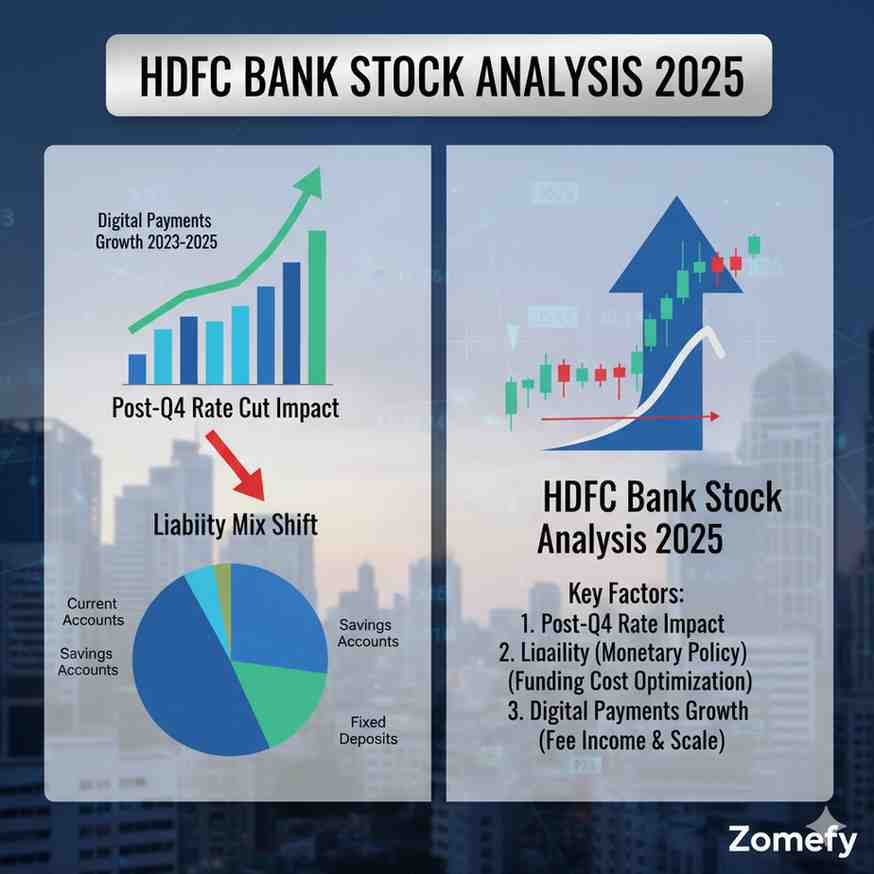
HDFC Bank Stock Analysis 2025: Post-Q4 Rate Cut Impact, Liability Mix Shift & Digital Payments Growth
HDFC Bank, India's largest private sector bank by market capitalization at ₹15.
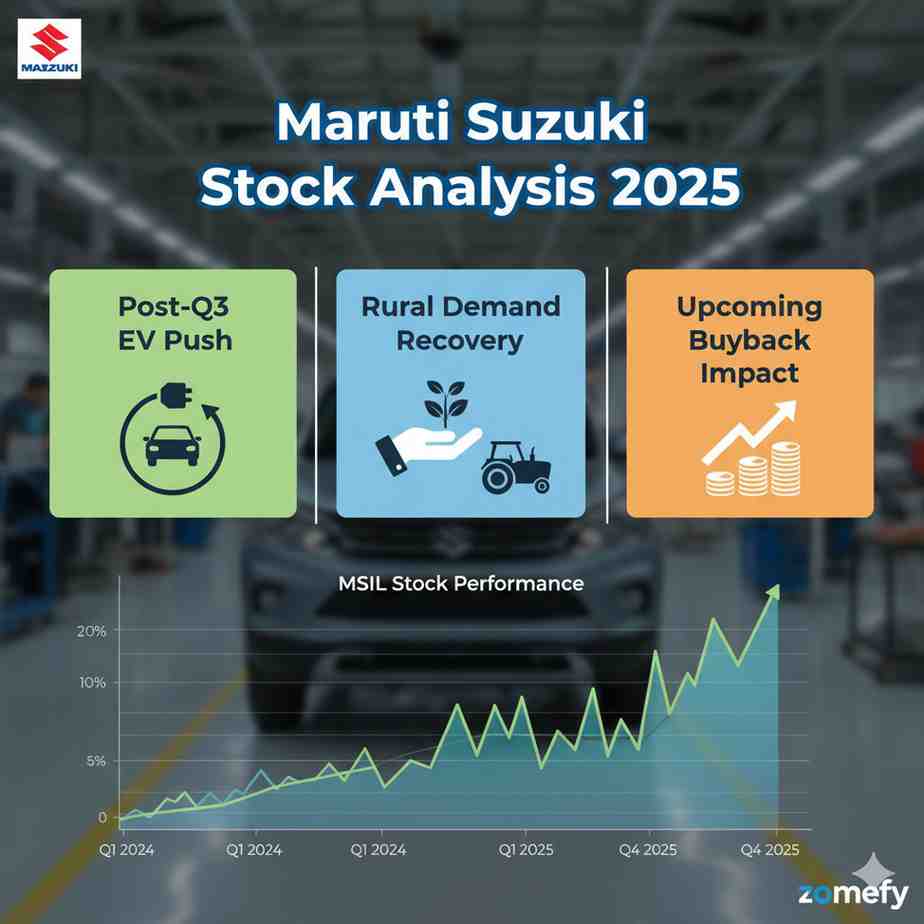
Maruti Suzuki Stock Analysis 2025: Post-Q3 EV Push, Rural Demand Recovery & Upcoming Buyback Impact
Maruti Suzuki India Limited (NSE: MARUTI), India's largest passenger vehicle manufacturer, has once again demonstrated its market dominance with stellar Q3 FY25 results announced on January 29, 2025.

India’s Cryptocurrency Regulation Pivot 2025: Crypto Tax Reforms, Adoption Surge & Portfolio Allocation Strategies
India's cryptocurrency landscape is undergoing a transformative pivot in 2025, marked by refined tax reforms, surging adoption, and clearer regulatory frameworks that signal maturation from uncerta...
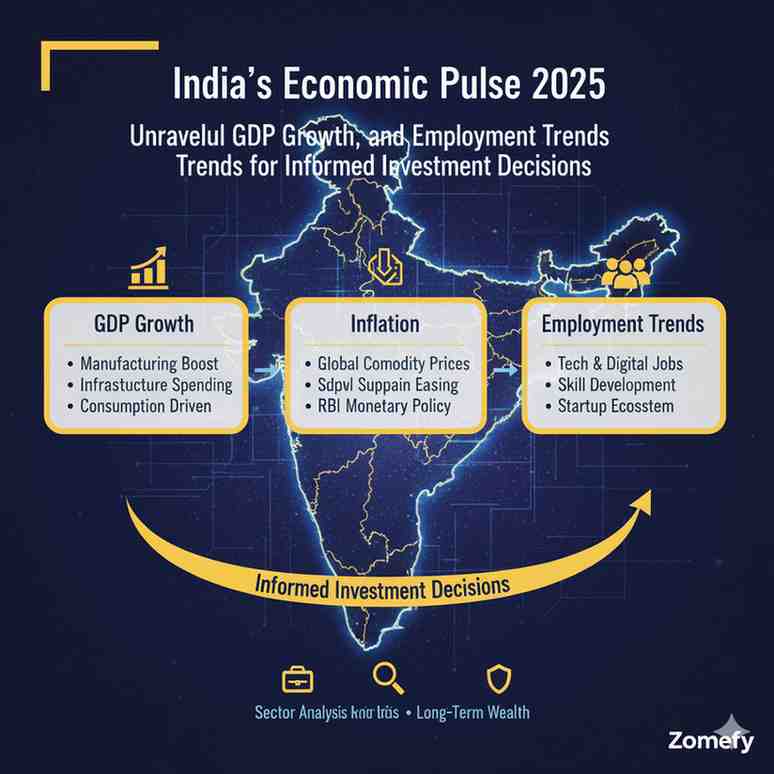
India's Economic Pulse 2025: Unraveling GDP Growth, Inflation, and Employment Trends for Informed Investment Decisions
India's economy in 2025 stands at a pivotal juncture, characterized by robust GDP growth, moderated inflation, and evolving employment trends that collectively shape the investment landscape.
Explore More Insights
Continue your financial education journey