
CEAT: Can Aggressive Capacity Expansion Drive Sustainable Market Share Amidst Rising Competition?
CEAT Limited, a prominent player in the Indian tyre manufacturing sector, has recently captured market attention with its robust Q3 FY26 results and an.
CEAT: Can Aggressive Capacity Expansion Drive Sustainable Market Share Amidst Rising Competition?
What You Can Do Next
- Read the full article for complete insights
- Save for later reference
- Share with others learning about this topic
Image not available
CEAT Limited, a prominent player in the Indian tyre manufacturing sector, has recently captured market attention with its robust Q3 FY26 results and an ambitious capacity expansion announcement. While the headline numbers of increased revenue and profit, coupled with significant capital expenditure, might paint an optimistic picture, a deeper dive is crucial for retail investors. This article aims to move beyond the immediate news flow to assess CEAT's business fundamentals, the sustainability of its growth trajectory amidst intensifying competition, and the inherent valuation risks. Investors will gain a clearer understanding of what the market may be overlooking and the specific conditions under which this investment thesis could falter, enabling more informed, long-term decisions.
Data Freshness
Updated on: 2026-03-22 As of: 2026-03-22 Latest price: Rs 3,537.50 (NSE) as of March 21, 2026 Market cap: Rs 14,307.40 crore Latest earnings period: FY26 Q3 Key sources: https://in.investing.com/equities/ceat-ltd; https://www.findoc.com/market/share-price/ceat-ltd; https://www.groww.in/stocks/ceat-ltd
News Trigger Summary
Event: CEAT Limited reported strong Q3 FY26 results and announced a significant capital expenditure of ₹1,314 crore for capacity expansion at its Chennai plant. Date: January 19-20, 2026 Why the Market Reacted: The market responded positively to CEAT's robust Q3 FY26 financial performance, which included a 26% year-on-year increase in consolidated revenue to ₹4,157 crore and a 60.41% jump in consolidated net profit to ₹155.77 crore. The announcement of a substantial ₹1,314 crore investment to expand passenger car and utility vehicle (PCUV) tyre capacity by 3.5 million units annually at its Chennai plant by H1 FY28 further boosted investor confidence, signaling strong future growth prospects. Why This Is Not Just News: While the Q3 FY26 results and capacity expansion are important, this article delves deeper into whether these positive developments are sustainable given the cyclical nature of the tyre industry and intense competition. It challenges the assumption that aggressive expansion automatically translates into profitable market share gains and explores the underlying business fundamentals, potential downside risks, and the long-term implications of such capital allocation decisions, which extend far beyond a single quarter's performance.
Core Thesis in One Sentence
CEAT's aggressive capacity expansion in the PCUV segment, while signaling growth ambition, faces the critical challenge of sustainable market share gains and margin protection in India's highly competitive and cyclical tyre industry, where raw material price volatility and intense pricing battles are persistent threats.
Business Model Analysis
CEAT Limited, an integral part of the RPG Group, is an Indian multinational tyre manufacturing company that produces a comprehensive range of tyres for various vehicle segments. Its product portfolio spans two-wheelers, three-wheelers, passenger cars, utility vehicles (UVs), buses, light commercial vehicles (LCVs), trucks, off-highway vehicles (OHVs), and tractors, catering to both Original Equipment Manufacturers (OEMs) and the aftermarket (replacement) segment through a vast distribution network.
The company's revenue streams are broadly diversified across these segments and geographies, with a significant portion traditionally coming from the replacement market, which tends to be more stable than OEM demand. However, CEAT has been strategically recalibrating its mix, aiming for a more balanced portfolio and a stronger presence in premium and global markets. The acquisition of Michelin Group's CAMSO Construction Compact Line Business in September 2025 further underscores this strategy, moving CEAT into higher-margin off-highway tyre segments and expanding its global footprint.
Profitability in the tyre industry is heavily influenced by raw material prices (crude oil derivatives, natural rubber), which are inherently volatile. CEAT's ability to manage these input costs, coupled with operational efficiencies from its manufacturing plants across India (Halol, Butibori, Bhandup, Nashik, Ambernath, and Chennai), is crucial for sustaining margins. The company's focus on developing market-specific products and strengthening OEM relationships also plays a key role in its long-term strategy. While domestic demand, particularly from the automotive sector, drives a large part of its business, CEAT also exports its products to over 100 countries, aiming to leverage global opportunities and diversify risk. The recent capacity expansion, particularly in the PCUV category, is a direct response to anticipated growth in this segment, but its success hinges on effective utilization and competitive pricing without eroding profitability.
Key Financial Metrics
Metric | FY25 (Consolidated) | FY24 (Consolidated) | FY23 (Consolidated) | TTM (Dec 2025) |
|---|---|---|---|---|
| Revenue (Rs crore) | 13,238.9 | 11,963.8 | 11,314.9 | 14,880 |
| Net Profit (Rs crore) | 471.4 | 635.3 | 182.4 | 552 |
| EBITDA Margin (%) | 11.1 | 13.5 | 8.9 | 13.5 (Q3 FY26) |
| ROCE (%) | 15.39 | 20.10 | 9.10 | 15.78 (1 Yr) |
| Debt to Equity | 0.458 | 0.418 | 0.629 | 0.45 (current) |
CEAT's financial performance shows a mixed trend. While revenue has demonstrated consistent growth over the past few years, increasing from ₹11,314.9 crore in FY23 to ₹13,238.9 crore in FY25, and further to ₹14,880 crore on a TTM basis (Dec 2025), net profit has been more volatile. Net profit declined in FY25 to ₹471.4 crore from ₹635.3 crore in FY24, before recovering to ₹552 crore on a TTM basis. This volatility often reflects the impact of raw material price fluctuations and competitive pressures on margins. The EBITDA margin, while showing recovery to 13.5% in Q3 FY26, dipped to 11.1% in FY25 from 13.5% in FY24, indicating sensitivity to operating leverage and cost management. Return on Capital Employed (ROCE) has fluctuated, peaking at 20.10% in FY24 and then moderating to 15.39% in FY25, suggesting that capital efficiency can vary with business cycles and investment phases. The Debt to Equity ratio has remained manageable, at 0.458 in FY25 and currently at 0.45, indicating a relatively healthy balance sheet to support expansion plans.
What the Market Is Missing
The market's positive reaction to CEAT's capacity expansion and Q3 FY26 results may be underestimating several critical factors. Firstly, the assumption that increased capacity will automatically translate into proportionate market share gains in the PCUV segment might be fragile. The Indian tyre market is intensely competitive, with both domestic majors and global players vying for share. Competitors are also expanding and innovating, potentially leading to pricing wars that could erode CEAT's margins, especially in the replacement market which is over half of CEAT's business. While CEAT aims for premiumization and global expansion, these segments also attract fierce competition.
Secondly, the cyclical nature of the tyre industry, heavily reliant on automotive OEM demand and raw material price volatility, is often downplayed during periods of strong performance. While Q3 FY26 benefited from stable commodity prices, a rebound in OEM and export demand, and a premium product mix, these tailwinds are not permanent. A sharp increase in crude oil or natural rubber prices could quickly reverse margin gains, as seen in past cycles. The ₹1,314 crore capital expenditure, while funded by a mix of internal accruals and debt, will increase the capital intensity of the business. The success of this investment depends not just on demand materializing, but on CEAT's ability to maintain pricing power and high utilization rates in an oversupplied market, which is a significant execution risk.
Finally, the market might be overlooking the 'cost of growth'. The company's ROCE, while decent, has fluctuated, suggesting that incremental capital might not always generate superior returns, particularly if the new capacity comes online during a downturn or amidst aggressive competitive pricing. Investors should question whether the growth is truly 'profitable growth' or merely revenue expansion that strains capital and dilutes returns over the long term, especially if the current strong demand for PCUV tyres softens.
Valuation and Expectations
Metric | CEAT (Current) | 5-Year Avg. | Industry Avg. |
|---|---|---|---|
| P/E (TTM) | 22.73 | 24.6 (Mar 2025) | ~25-30 |
| EV/EBITDA | 9.2 (current) | 9.42 (3-Yr Avg) | ~10-12 |
| P/B | 3.03 | 3.03 (Mar 2025) | ~2.5-3.5 |
| Dividend Yield (%) | 0.85 | 0.85 (current) | ~0.5-1.5 |
CEAT's current valuation metrics suggest the market is pricing in a reasonable growth trajectory, but perhaps not an extraordinary one, especially when compared to its historical averages and the broader industry. A TTM P/E of 22.73 is broadly in line with its 5-year average P/E of 24.6 (as of March 2025), indicating that the recent positive news might have brought the stock to a fair value based on past performance and current earnings. The EV/EBITDA of 9.2 is slightly below its 3-year average of 9.42, which could suggest some room for re-rating if the aggressive capacity expansion delivers superior profitability.
However, investors should be mindful that a P/E in the low 20s for a cyclical industry like tyres already embeds expectations of sustained earnings growth and margin stability. This implies that the market is expecting CEAT to effectively utilize its new capacity, gain market share, and maintain or even improve its EBITDA margins despite potential raw material headwinds and competitive pressures. Any significant deviation from these expectations, such as lower-than-anticipated capacity utilization, margin erosion due to pricing wars, or a slowdown in the PCUV segment, could lead to a re-evaluation of its earnings multiple. The current valuation does not seem to fully discount the execution risks associated with large-scale capital deployment in a competitive environment.
Bull, Base, and Bear Scenarios
Scenario | Key Assumptions | Revenue (FY28E, Rs crore) | Net Profit (FY28E, Rs crore) | P/E (FY28E) | Target Price (Rs) |
|---|---|---|---|---|---|
| Bull Case | Strong PCUV demand, successful premiumization, stable raw material costs, high capacity utilization (>90%), effective market share gains, Camso integration success. | ~20,000 | ~900 | 25x | ~5,500 |
| Base Case | Moderate PCUV demand growth, sustained competition, some raw material volatility, 80-85% capacity utilization, gradual market share gains, steady Camso integration. | ~18,000 | ~700 | 20x | ~4,000 |
| Bear Case | Slowdown in auto sector (PCUV), intense price wars, sharp rise in raw material costs, lower capacity utilization (<75%), delayed project execution, debt burden increases. | ~16,000 | ~400 | 15x | ~2,500 |
These scenarios highlight the range of potential outcomes for CEAT by FY28, largely driven by demand dynamics, cost management, and competitive intensity. In a 'Bull Case', CEAT capitalizes fully on its expanded capacity, gains significant market share in the PCUV segment, and successfully integrates the Camso acquisition, leading to higher margins and premium valuations. This assumes a benign raw material environment and robust economic growth. The 'Base Case' reflects a more realistic scenario where CEAT achieves moderate growth, faces ongoing competitive pressures, and manages raw material volatility, resulting in steady but not spectacular earnings. Capacity utilization remains healthy but not at peak levels. The 'Bear Case' outlines a challenging environment where a slowdown in the automotive sector, aggressive price competition, and surging raw material costs severely impact profitability and capacity utilization. Delays in the new Chennai plant becoming fully operational or higher-than-expected debt servicing costs could further depress earnings and valuation multiples. Investors should consider these probability-weighted outcomes, recognizing the inherent cyclicality and competitive risks in the tyre industry that can swing results significantly.
Key Risks and Thesis Breakers
Peer Comparison
Company | Mkt Cap (Rs crore) | LTP (Rs) | P/E (TTM) | EV/EBITDA | Debt/Equity | ROCE (%) (FY25) |
|---|---|---|---|---|---|---|
| CEAT Ltd. | 14,307.40 | 3,537.50 | 22.73 | 9.2 | 0.458 | 15.39 |
| MRF Ltd. | 54,139.4 | 138,005 | 26.21 | N/A | 0.187 | N/A |
| Apollo Tyres Ltd. | 26,712.3 | 417.65 | 23.79 | N/A | N/A | N/A |
| Balkrishna Industries Ltd. | 40,679.7 | 2,280.2 | 34.28 | N/A | N/A | N/A |
| JK Tyre & Industries Ltd. | 12,028.9 | 430.7 | 17.78 | N/A | N/A | N/A |
CEAT, with a market capitalization of approximately Rs 14,307.40 crore, is a significant player but smaller than market leader MRF and even Apollo Tyres and Balkrishna Industries in terms of market cap. Its TTM P/E of 22.73 places it broadly in the mid-range of its peers; it's lower than Balkrishna Industries (34.28) and MRF (26.21), but higher than JK Tyre (17.78). Balkrishna Industries often commands a premium due to its niche focus on off-highway tyres and stronger margins.
CEAT's Debt to Equity ratio of 0.458 (FY25) is relatively healthy, though some peers like MRF have even lower leverage (0.187). The ROCE of 15.39% (FY25) for CEAT is decent but can be volatile. The key insight here is that CEAT's valuation does not currently offer a significant discount relative to its peers, especially considering its aggressive expansion plans which carry inherent execution and competitive risks. For CEAT to justify a premium or even sustain its current multiple, it must demonstrate superior execution in capacity ramp-up, maintain or improve margins through product mix and cost control, and consistently gain profitable market share against well-entrenched competitors, rather than just growing revenue.
Who Should and Should Not Consider This Stock
Suitable For
- Long-term investors with a high-risk appetite who believe in the structural growth story of the Indian automotive sector and CEAT's ability to execute large-scale projects and premiumize its product portfolio.
- Investors willing to tolerate cyclicality in earnings and monitor key operational metrics closely, looking for potential re-rating if CEAT consistently outperforms market share and margin expectations.
Not Suitable For
- Short-term traders or investors seeking stable, predictable earnings, given the inherent volatility in raw material prices and intense competition in the tyre industry.
- Conservative investors who prioritize strong and consistent return on capital employed (ROCE) and low leverage, as CEAT's expansion phase might temporarily impact these metrics.
What to Track Going Forward
Final Take
CEAT's recent Q3 FY26 performance and the ambitious ₹1,314 crore capacity expansion are clear signals of management's intent to capture growth in the Indian automotive market, particularly the PCUV segment. While this demonstrates foresight and a proactive approach, investors must temper optimism with a realistic assessment of the challenges ahead. The tyre industry is inherently cyclical and highly competitive, characterized by volatile raw material costs and intense pricing pressures.
The success of this aggressive expansion hinges on CEAT's ability to not just add capacity, but to profitably utilize it, gain sustainable market share without triggering destructive price wars, and effectively manage its cost structure amidst potential raw material headwinds. The market appears to be pricing in a decent growth trajectory, but it may not fully account for the execution risks, the 'cost of growth' impacting capital efficiency, and the persistent competitive threats from both domestic and global players. Investors should maintain a cautious yet watchful stance, focusing less on headline growth numbers and more on underlying profitability, capital allocation efficiency, and the company's ability to navigate the cyclical and competitive currents of the Indian tyre market. The next few quarters will be crucial in validating whether CEAT can truly drive sustainable market share or if its aggressive expansion becomes a drag on returns.
Frequently Asked Questions
What is the significance of CEAT's recent capacity expansion?
CEAT's planned ₹1,314 crore investment aims to add 3.5 million passenger car and utility vehicle (PCUV) tyres annually at its Chennai plant by H1 FY28, on top of existing expansions. This signals the company's intent to capture anticipated demand growth in the PCUV segment and potentially gain market share, but also implies increased capital intensity and execution risk.
How does rising competition impact CEAT's growth prospects?
The Indian tyre market is highly competitive, with established players like MRF, Apollo Tyres, and Balkrishna Industries. While CEAT is expanding, sustained market share gains depend on product differentiation, distribution strength, and pricing power, which can be challenged by aggressive strategies from domestic and international rivals, potentially pressuring margins.
References
- [1] CEAT Ltd Stock Price Today | NSE - Investing.com - Investing.com. View Source ↗(Accessed: 2026-03-22)
- [2] CEAT Share Price Today, Ceat Ltd Stock Price Live NSE/BSE | Findoc - Findoc. View Source ↗(Accessed: 2026-03-22)
- [3] CEAT Share Price Today - CEAT Limited Stock Price Live NSE/BSE - Groww - Groww. View Source ↗(Accessed: 2026-03-22)
- [4] Ceat Limited Today Live NSE/BSE - Bajaj Finserv - Bajaj Finserv. View Source ↗(Accessed: 2026-03-22)
- [5] CEAT Reports 26% Rise in Q3 FY26 Consolidated Revenue | Autocar Professional - Autocar Professional. View Source ↗(Accessed: 2026-03-22)
- [6] CEAT Q3 Results 2026: Net Profit Surged 60.41% YoY - Univest - Univest. View Source ↗(Accessed: 2026-03-22)
- [7] CEAT Limited Reports Strong Q3FY26 Results with 26% Revenue Growth, Announces ₹1,314 Crore Capacity Expansion - ScanX - ScanX. View Source ↗(Accessed: 2026-03-22)
- [8] Ceat Q3FY26 results: Profit soars 60% to ₹156 crore, revenue up 26% - Business Standard - Business Standard. View Source ↗(Accessed: 2026-03-22)
- [9] CEAT Q3 FY26 Earnings Results - AlphaStreet - AlphaStreet. View Source ↗(Accessed: 2026-03-22)
- [10] CEAT Share Price Today - CEATLTD Live Updates NSE/BSE | Dhan - Dhan. View Source ↗(Accessed: 2026-03-22)
- [11] [LIVE] CEAT Share Price | 52 Week High/Low Stocks - Nirmal Bang - Nirmal Bang. View Source ↗(Accessed: 2026-03-22)
- [12] CEAT Ltd share price | About CEAT | Key Insights - Screener - Screener. View Source ↗(Accessed: 2026-03-22)
- [13] CEAT Releases Investor Presentation on Q3 FY26 Unaudited Results - TipRanks.com - TipRanks.com. View Source ↗(Accessed: 2026-03-22)
- [14] Ceat outlines tire capacity expansion plans at Indian factories - European Rubber Journal - European Rubber Journal. View Source ↗(Accessed: 2026-03-22)
- [15] CEAT LTD. : Latest Quarterly Results Analysis - ICICI Direct - ICICI Direct. View Source ↗(Accessed: 2026-03-22)
- [16] Ceat to Further Boost Capacity at Chennai Plant with Rs 1314 Crore Investment - EquityBulls. View Source ↗(Accessed: 2026-03-22)
- [17] CEAT to invest ₹1314 crore to add 3.5 million tyres capacity by H1 FY28 - ET Auto - ET Auto. View Source ↗(Accessed: 2026-03-22)
- [18] CEAT Q3 Profit Soars 60%, Announces ₹1314 Cr Expansion | Market News & Analysis - Market News & Analysis. View Source ↗(Accessed: 2026-03-22)
- [19] Ceat to expand Chennai plant capacity - Industrial Economist - Industrial Economist. View Source ↗(Accessed: 2026-03-22)
- [20] CEAT Limited Integrated Annual Report FY25 - Public Technologies (PUBT) - Public Technologies (PUBT). View Source ↗(Accessed: 2026-03-22)
- [21] Financial Performance - CEAT Tyres - CEAT Tyres. View Source ↗(Accessed: 2026-03-22)
- [22] CEAT Ltd Q3 Results & Revenue - INDmoney - INDmoney. View Source ↗(Accessed: 2026-03-22)
- [23] CEAT 2024-25 Annual Report Analysis - Equitymaster - Equitymaster. View Source ↗(Accessed: 2026-03-22)
- [24] CEAT's Competitors, Revenue, Number of Employees, Funding, Acquisitions & News - Owler Company Profile - Owler. View Source ↗(Accessed: 2026-03-22)
- [25] CEAT Ltd Results: Quarterly Earnings Date - Investing.com India - Investing.com India. View Source ↗(Accessed: 2026-03-22)
- [26] CEAT Tyres Annual Reports – Investor Information - CEAT Tyres. View Source ↗(Accessed: 2026-03-22)
- [27] Ceat - Investor Presentations - Trendlyne.com - Trendlyne.com. View Source ↗(Accessed: 2026-03-22)
- [28] Ceat Ltd. - Stocks - The Economic Times - The Economic Times. View Source ↗(Accessed: 2026-03-22)
- [29] Ceat Ltd. Investor Presentation - Trendlyne.com - Trendlyne.com. View Source ↗(Accessed: 2026-03-22)
- [30] CEAT Limited - Wikipedia - Wikipedia. View Source ↗(Accessed: 2026-03-22)
- [31] Return on Capital Employed (ROCE) of CEAT -Mar2025 - Smart-Investing.in - Smart-Investing.in. View Source ↗(Accessed: 2026-03-22)
- [32] Driven by Purpose, Powered by Progress. - CEAT Tyres - CEAT Tyres. View Source ↗(Accessed: 2026-03-22)
- [33] CEAT's big bet on premium and global markets: Opportunity or overreach? | Smart Stocks News - The Indian Express - The Indian Express. View Source ↗(Accessed: 2026-03-22)
- [34] CEAT Is In A Good Position To Become World's Alternative To China For Tyres - Tyrepress India. View Source ↗(Accessed: 2026-03-22)
- [35] Ceat Ltd. Share Price Today, Market Cap, Price Chart, Balance Sheet - Finology Ticker - Finology Ticker. View Source ↗(Accessed: 2026-03-22)
- [36] CEATLTD Investor Relations - CEAT Ltd - Alpha Spread - Alpha Spread. View Source ↗(Accessed: 2026-03-22)
- [37] Debt / Common Equity For CEAT Ltd-BO (500878) - Finbox - Finbox. View Source ↗(Accessed: 2026-03-22)
- [38] Debt to Equity analysis of Ceat Ltd., FY Ratio 0.458 - Top Stock Research - Top Stock Research. View Source ↗(Accessed: 2026-03-22)
- [39] Tyre Stock: How Is Balkrishna Industries Outperforming Peers Like MRF and Ceat? - The Economic Times. View Source ↗(Accessed: 2026-03-22)
- [40] Compare Stocks CEAT vs MRF vs BALKRISHNA INDUSTRIES - Smart-Investing.in - Smart-Investing.in. View Source ↗(Accessed: 2026-03-22)
- [41] Ceat Ltd.: Balance Sheet, Profit & Loss and cash flow - Tijori Finance - Tijori Finance. View Source ↗(Accessed: 2026-03-22)
- [42] CEAT Ltd Peer Comparison - Competitive Analysis | IIFL Capital - IIFL Capital. View Source ↗(Accessed: 2026-03-22)
- [43] CEAT Peer Comparison, Competitor Analysis - Stocks - Groww - Groww. View Source ↗(Accessed: 2026-03-22)
- [44] Ceat Ltd vs Mrf Ltd Stock Comparison - BlinkX - BlinkX. View Source ↗(Accessed: 2026-03-22)
Disclaimer: IMPORTANT DISCLAIMER: This analysis is generated using artificial intelligence and is NOT a recommendation to purchase, sell, or hold any stock. This analysis is for informational and educational purposes only. Past performance does not guarantee future results. Please consult with a qualified financial advisor before making any investment decisions. The author and platform are not responsible for any investment losses.
Continue Your Investment Journey
Discover more insights that match your interests
India’s Private Credit Explosion 2025: High-Yield Opportunities in AIFs for Retail Investors
India's private credit market is experiencing an unprecedented explosion in 2025, emerging as a high-yield powerhouse for retail investors seeking superior returns amid traditional fixed-income lim...
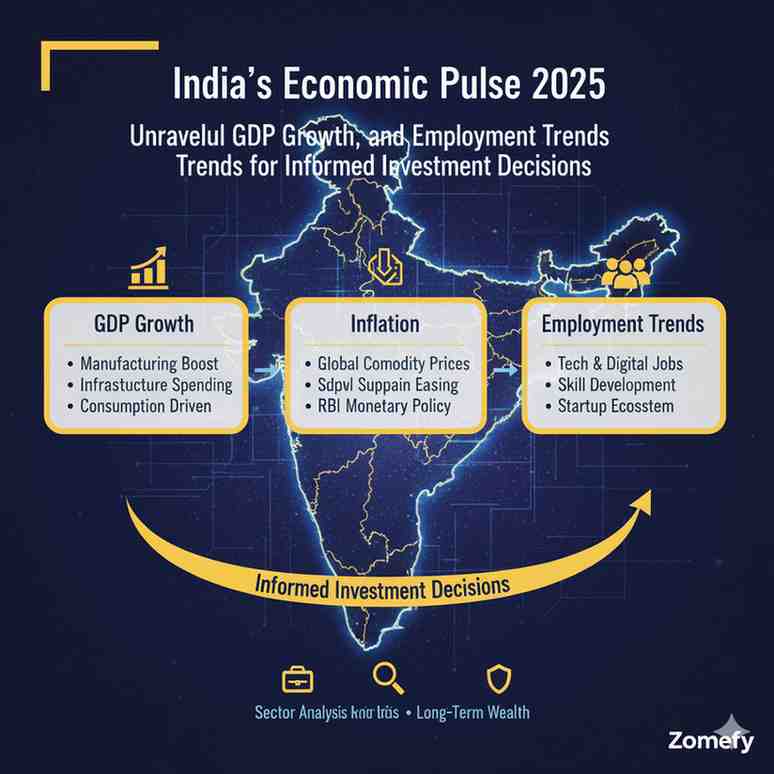
India's Economic Pulse 2025: Unraveling GDP Growth, Inflation, and Employment Trends for Informed Investment Decisions
India's economy in 2025 stands at a pivotal juncture, characterized by robust GDP growth, moderated inflation, and evolving employment trends that collectively shape the investment landscape.
Top Mid Cap Mutual Funds 2025: Volatility & Return Analysis
Discover the top mid cap mutual funds for 2025 with detailed volatility and return analysis. Compare best performing mid cap funds with risk-adjusted returns and investment recommendations.

Tech & AI Disruption: Fintech, Trading & Market Intelligence in India 2025
Explore how AI is revolutionizing India's fintech, trading, and market intelligence. Real-world examples from HDFC, Paytm, Zerodha, and emerging startups transforming BFSI with ₹150-250/month AI solutions.
Explore More Insights
Continue your financial education journey