
Ashok Leyland: Can CV Demand Cyclicality and EV Transition Drive Consistent Earnings
Ashok Leyland, a venerable name in the Indian commercial vehicle (CV) industry, stands as the second-largest manufacturer in the segment, playing a pivotal.
Ashok Leyland: Can CV Demand Cyclicality and EV Transition Drive Consistent Earnings
What You Can Do Next
- Read the full article for complete insights
- Save for later reference
- Share with others learning about this topic
Image not available
Ashok Leyland, a venerable name in the Indian commercial vehicle (CV) industry, stands as the second-largest manufacturer in the segment, playing a pivotal role in the nation's logistics and infrastructure development. Its journey is intrinsically linked to India's economic cycles, making it a bellwether for industrial activity and freight movement. This analysis is triggered by recent market movements surrounding a press conference, which, while deemed non-material by the company, underscores the market's sensitivity to even subtle cues in a cyclical business. For long-term retail investors, understanding Ashok Leyland goes beyond quarterly results; it requires a deep dive into the underlying demand drivers, the sustainability of its market position, the strategic pivot towards electric vehicles (EVs), and the inherent risks that could derail its growth trajectory. This article aims to cut through the noise, offering an independent perspective on the company's business fundamentals, the risks associated with its cyclical nature and EV transition, and the key assumptions that underpin its future earnings potential.
Data Freshness
Updated on: 2026-03-09 As of: 2026-03-09 Latest price: Rs 194.67 (NSE) as of 2026-03-07 Market cap: Rs 1,14,346 crore Latest earnings period: FY26 Q3 (ending December 2025) Key sources: https://www.screener.in/company/ASHOKLEY/; https://www.sovrenn.com/news/ashok-leyland-q3-fy26-results-concall-summary-and-key-highlights; https://www.marketsmojo.com/company/ashok-leyland-ltd/q3-fy26-results
News Trigger Summary
Event: Ashok Leyland issued a regulatory clarification on March 8, 2026, stating that a recent press conference covered by media on March 6, 2026, did not constitute a material event under SEBI Listing Regulations. The company also clarified that any share price movements on the day were due to general market conditions and not related to the press conference content. Date: March 8, 2026 (clarification filing) Why the Market Reacted: While the company clarified the event was non-material, the market often reacts to any public statements or media coverage, especially for prominent companies. The clarification itself indicates that there might have been some market speculation or movement that prompted the company to address it, even if the underlying news was not deemed significant by the company. Why This Is Not Just News: This event, rather than being a standalone piece of news, serves as a prompt to evaluate Ashok Leyland's core investment thesis. It highlights the market's tendency to react to sentiment and non-material events, making it crucial for investors to look beyond headlines and focus on the fundamental drivers of a cyclical business like commercial vehicles and its long-term strategic shifts, such as the EV transition. This article delves into the enduring business model, the true cyclicality, and the strategic risks and opportunities, rather than merely reporting on a single corporate communication.
Core Thesis in One Sentence
Ashok Leyland's ability to deliver consistent earnings hinges on navigating the inherent cyclicality of the Indian commercial vehicle market while executing a profitable and timely transition to electric vehicles amidst evolving competitive dynamics.
Business Model Analysis
Ashok Leyland operates primarily as a manufacturer of commercial vehicles, including trucks, buses, light commercial vehicles (LCVs), and defense vehicles. The company is India's second-largest manufacturer of commercial vehicles and the fourth largest manufacturer of buses globally. Its revenue streams are predominantly from the sale of these vehicles, with a significant portion derived from the Medium and Heavy Commercial Vehicle (M&HCV) segment. Beyond vehicle sales, Ashok Leyland also generates revenue from spare parts, power solutions, and exports to over 50 countries. The business model is deeply tied to India's economic growth, infrastructure spending, and industrial output, which directly influence freight demand and fleet expansion. A robust replacement cycle, driven by the aging fleet on Indian roads, is also a key demand driver. The company has a well-established distribution and service network across India, which is critical for after-sales support and market penetration. In recent years, Ashok Leyland has been strategically diversifying its product portfolio and revenue sources, with increased focus on LCVs, defense vehicles, and power solutions, which are less susceptible to the sharp cyclical swings of the M&HCV segment. The company is also making significant investments in new technologies, particularly in electric vehicles (EVs) and alternative fuels like hydrogen, to prepare for the industry's long-term transition. This 'fuel-agnostic' strategy aims to position Ashok Leyland for future mobility solutions, encompassing both hydrogen internal combustion engine (H2 ICE) and fuel cell electric vehicle (FCEV) options. The profitability of Ashok Leyland is influenced by sales volumes, product mix (higher margin M&HCVs versus LCVs), raw material costs, and operational efficiencies. The company's captive NBFC, Hinduja Leyland Finance (HLF), also contributes to the ecosystem by providing financing solutions, though it's undergoing a reverse merger for corporate simplification.
Key Financial Metrics
Particulars (Rs crore) | FY23 | FY24 | FY25 | TTM (Dec 2025) |
|---|---|---|---|---|
| Revenue from Operations | 41,673 | 45,791 | 38,753 | 53,810 |
| EBITDA | 5,093 | 7,943 | 4,924 | 6,990 |
| EBITDA Margin (%) | 12.2 | 17.3 | 12.7 | 13.0 |
| Profit After Tax (PAT) | 1,359 | 2,696 | 3,303 | 4,116 |
| ROCE (%) | 15.0 | 14.3 | 15.0 | N.A. |
| Debt/Equity (x) | N.A. | 0.74 | N.A. | N.A. |
Ashok Leyland has demonstrated a fluctuating but generally upward trend in revenue and profitability over the past few years, reflecting the cyclical nature of the CV industry. Revenue from operations saw substantial growth from FY23 to FY24, followed by a slight dip in FY25, before a strong TTM performance ending December 2025 (Q3 FY26). EBITDA margins have been somewhat volatile, reaching a high of 17.3% in FY24 but moderating to 12.7% in FY25 and around 13.0% for TTM Dec 2025. The significant increase in PAT from FY23 to FY25 and further in TTM Dec 2025 indicates improved operational efficiency and possibly better product mix or pricing power during favorable market conditions. The company's Return on Capital Employed (ROCE) around 14-15% suggests a reasonable efficiency in utilizing capital. A notable financial improvement is the shift to a net cash position of ₹4,242 crore in FY25 from a net debt position in FY24, improving its gearing. However, the consolidated Q3 FY26 results from other sources show some margin pressure despite strong volume growth, indicating that commodity costs and product mix can still impact profitability.
What the Market Is Missing
The market, in its current enthusiasm for the commercial vehicle upcycle, might be underestimating the potential for a sharper-than-expected deceleration in demand. While current indicators point to strong replacement-led demand and infrastructure spending, the CV cycle is inherently volatile, and a slowdown in economic activity or government spending could quickly reverse fortunes. Investors might be overly optimistic about the sustainability of current volume growth rates (e.g., 28% domestic sales growth in Feb 2026) without fully pricing in the historical peaks and troughs of the cycle. Furthermore, the market's excitement around the EV transition for Ashok Leyland may be premature in terms of its immediate profitability contribution. While the ₹5,000 crore investment in battery localization is a strategic long-term move, the path to profitable EV scaling in heavy commercial vehicles is fraught with challenges. These include high upfront battery costs, evolving charging infrastructure, intense competition from new entrants, and the need for significant R&D. The market might be assuming a smooth, linear transition to EV profitability, overlooking the potential for margin dilution in the initial phases and the substantial capital expenditure required (FY26 capex expected to cross ₹1,000 crore). Additionally, the pledge of 40.9% of promoter holding is a factor that often warrants closer scrutiny, as it can sometimes signal underlying financial strains or alternative funding strategies not immediately apparent to retail investors, potentially adding a layer of risk not fully appreciated.
Valuation and Expectations
Metric | Ashok Leyland (Current) | Industry Average (Commercial Vehicles) |
|---|---|---|
| P/E (x) | 31.7 - 34.5 | 42.3 |
| P/B (x) | 8.5 - 9.1 | 4.4 |
| EV/EBITDA (x) | 13.3 (Nov 2025) | N.A. |
| ROCE (%) | 14.3 | N.A. |
Ashok Leyland's current valuation metrics suggest a mixed picture. Its Price-to-Earnings (P/E) ratio, ranging from 31.7x to 34.5x, appears to be at a discount compared to the peer average P/E of 43.8x or the broader sector average of 42.3x. This might imply that the market sees some headroom for growth or that the cyclicality is being factored in. However, its Price-to-Book (P/B) ratio of 8.5x to 9.1x is significantly higher than the industry average of 4.4x, indicating that the stock is trading at a substantial premium to its book value. This could be interpreted as the market pricing in strong future growth and profitability, or a belief in the long-term value creation from its brand and market position. The EV/EBITDA of 13.29x as of November 2025 provides another valuation perspective. The current valuation seems to price in continued strong earnings growth driven by the CV upcycle and a successful, albeit potentially expensive, EV transition. Any disruption to these assumptions – such as a prolonged downturn in the CV cycle, slower-than-expected EV adoption, or higher-than-anticipated EV transition costs – could lead to a re-rating downwards, as the premium P/B suggests high expectations are already baked into the price.
Bull, Base, and Bear Scenarios
Scenario | Key Assumptions | Revenue (FY27E, Rs crore) | PAT (FY27E, Rs crore) | Implied P/E (x) |
|---|---|---|---|---|
| Bull Case | Strong CV upcycle (15% CAGR), rapid profitable EV adoption, market share gains. | ~65,000 | ~5,500 | 25-30 |
| Base Case | Moderate CV growth (8-10% CAGR), gradual EV transition with initial margin pressure, stable market share. | ~60,000 | ~4,500 | 28-33 |
| Bear Case | CV cycle downturn (0-3% growth), delayed EV profitability, intense competition, market share erosion. | ~55,000 | ~3,000 | 35-40+ |
These scenarios highlight the range of potential outcomes for Ashok Leyland, heavily influenced by the cyclical nature of the CV market and the execution of its EV strategy. The Bull Case assumes a sustained, robust CV upcycle, potentially exceeding current industry forecasts, combined with a quicker and more profitable ramp-up of its EV portfolio than currently anticipated. This would lead to significant operating leverage and market share gains, justifying a lower forward P/E as earnings grow faster. The Base Case reflects a more realistic scenario where the CV market experiences moderate growth in line with economic expansion and replacement demand, but the EV transition involves initial investments and some margin dilution before scaling profitably. This scenario suggests a valuation range closer to its current levels, reflecting a balance of growth and execution risks. The Bear Case envisions a premature end or sharp deceleration of the CV upcycle, possibly due to economic headwinds or policy changes, coupled with a slower-than-expected or capital-intensive EV adoption. In this scenario, earnings growth would be subdued, and the current valuation multiples could expand, making the stock appear expensive, as the market re-rates its growth prospects downwards. Investors should consider the probability weighting of these scenarios, noting that the CV industry's inherent volatility makes the 'Base Case' a delicate balance between optimism and caution.
Key Risks and Thesis Breakers
Peer Comparison
Company | Market Cap (Rs crore) | P/E (x) | P/B (x) | ROCE (%) |
|---|---|---|---|---|
| Ashok Leyland | 1,14,346 | 31.7 - 34.5 | 8.5 - 9.1 | 14.3 |
| Tata Motors (CV Business Est.) | N.A. (Overall: 3,46,000)* | N.A. (Overall: 10-15)* | N.A. (Overall: 3-4)* | N.A. (Overall: 15-20)* |
| Force Motors | ~8,000 | 28.27 (Nov 2025) | ~4-5 | ~10-12 |
| SML Isuzu | ~2,500 | 29.17 (Nov 2025) | ~2-3 | ~8-10 |
| Industry Average (Commercial Vehicles) | N.A. | 42.3 | 4.4 | N.A. |
*Approximate figures for Tata Motors are for the consolidated entity, as direct CV business financials and valuation multiples are not readily separable for a direct comparison. Ashok Leyland trades at a lower P/E compared to the broader commercial vehicle industry average, which might suggest a relative undervaluation or a recognition of its specific cyclical risks. However, its Price-to-Book ratio is significantly higher than both smaller peers like Force Motors and SML Isuzu, and the industry average, indicating that investors are assigning a premium to its brand, market leadership, and future growth potential. This premium could be justified by Ashok Leyland's strong market share in M&HCVs, its diversified product portfolio, and its proactive investments in future technologies like EVs. However, the higher P/B also means there is less margin of safety from a book value perspective, and the company needs to continue delivering strong earnings growth and efficient capital allocation to sustain this premium valuation relative to its assets.
Who Should and Should Not Consider This Stock
Suitable For
- Long-term investors with a high-risk appetite comfortable with cyclical industries and willing to ride out periods of volatility.
- Investors who believe in India's long-term infrastructure growth story and the eventual profitable adoption of electric commercial vehicles.
- Those seeking exposure to a market leader in a critical industrial segment, willing to monitor macroeconomic indicators and company-specific execution closely.
Not Suitable For
- Short-term traders or investors seeking stable, predictable earnings and low volatility.
- Risk-averse investors uncomfortable with significant exposure to economic cycles and technological transition risks.
- Investors who prioritize low Price-to-Book valuations and a high margin of safety from asset backing.
What to Track Going Forward
Final Take
Ashok Leyland presents a compelling, yet complex, investment case for Indian retail investors. The immediate future appears supported by a buoyant commercial vehicle upcycle, driven by India's economic growth and infrastructure push. The company's strong Q3 FY26 performance and February 2026 sales figures underscore this momentum. However, the inherent cyclicality of the CV market remains a significant factor, and investors should guard against extrapolating current growth rates indefinitely. The long-term narrative for Ashok Leyland is increasingly tied to its ability to successfully navigate the costly and competitive transition to electric vehicles. While the ₹5,000 crore investment in battery localization is a crucial strategic step, the path to profitable EV scaling in heavy commercial vehicles is uncertain and will require sustained capital allocation and technological prowess. The current valuation, particularly the high Price-to-Book ratio, suggests that the market has already priced in a significant portion of this future growth. Therefore, any missteps in execution, a sharper-than-anticipated downturn in the CV cycle, or higher-than-expected costs in the EV pivot could lead to a re-evaluation of its premium. Investors should focus on tracking volume growth, margin sustainability, and tangible progress in EV adoption and profitability, rather than relying solely on the optimism of a cyclical upturn or the promise of future technologies.
Frequently Asked Questions
What is the current state of commercial vehicle demand in India?
The Indian commercial vehicle industry is showing robust growth, with retail sales increasing by 28.89% year-on-year in February 2026. This growth is driven by factors such as freight movement, e-commerce activity, and infrastructure development. Analysts anticipate the CV industry to be in an upcycle, with M&HCV demand potentially growing at a 10% CAGR.
How is Ashok Leyland positioned for the EV transition in commercial vehicles?
Ashok Leyland is actively investing in the EV transition, with plans to invest around ₹5,000 crore over the next 7-10 years in the battery ecosystem to localize battery development and manufacturing. The company is pursuing a 'fuel-agnostic' strategy, including hydrogen-powered vehicles, alongside electric mobility expansion. However, the pace and profitability of this transition remain key factors to monitor.
References
- [1] Ashok Leyland Ltd share price | About Ashok Leyland | Key Insights - Screener. View Source ↗(Accessed: 2026-03-09)
- [2] Ashok Leyland Q3 FY26 Results: Concall Summary and Key Highlights - Sovrenn. View Source ↗(Accessed: 2026-03-09)
- [3] Ashok Leyland Q3 FY26: Strong Volume Growth Drives 23.6% Revenue Surge, But Margins Face Pressure - MarketsMojo. View Source ↗(Accessed: 2026-03-09)
- [4] Ashok Leyland Share Price Today - Ashok Leyland Stock Price Live NSE/BSE - Groww. View Source ↗(Accessed: 2026-03-09)
- [5] Ashok Leyland Ltd. Stock Price Today | NSE: ASOK Live - Investing.com. View Source ↗(Accessed: 2026-03-09)
- [6] Ashok Leyland Ltd. Share/Stock Price Live Today on NSE - ET Money. View Source ↗(Accessed: 2026-03-09)
- [7] Ashok Leyland Delivers Record Q3 FY26 Performance with Strong Volume Growth and Market Share Gains - ScanX. View Source ↗(Accessed: 2026-03-09)
- [10] Ashok Leyland Ltd - Profits Growing beyond Expectations - Equitymaster. View Source ↗(Accessed: 2026-03-09)
- [11] Ashok Leyland Delivers Best-Ever Q3 FY26 Performance | Trucks.cardekho.com - Trucks.cardekho.com. View Source ↗(Accessed: 2026-03-09)
- [12] Ashok Leyland Share Price Falls Over 2% on Q3 FY26 Earnings Results: Revenue and Profit Register Growth - Angel One. View Source ↗(Accessed: 2026-03-09)
- [13] Ashok Leyland Clarifies Press Conference Announcement Not Material Event Under SEBI Regulations - ScanX. View Source ↗(Accessed: 2026-03-09)
- [14] Ashok Leyland Share Price - Stocks - 5paisa. View Source ↗(Accessed: 2026-03-09)
- [15] Ashok Leyland to Invest ₹5,000 Crore in EV Battery Localisation | India Infoline - India Infoline. View Source ↗(Accessed: 2026-03-09)
- [17] Ashok Leyland Powers India's Green Future with ₹5000 Crore Battery Ecosystem Investment - EQ - The Leading Solar Magazine In India. View Source ↗(Accessed: 2026-03-09)
- [18] Ashok Leyland to Invest in Battery Ecosystem - Asia Pacific - Energetica India Magazine. View Source ↗(Accessed: 2026-03-09)
- [19] Ashok Leyland Peer Comparison & Competitor Insights - Choice - Stock Broker. View Source ↗(Accessed: 2026-03-09)
- [20] Ashok Leyland to Invest in the Battery Ecosystem for a Sustainable India - Ashok Leyland Official Press Release. View Source ↗(Accessed: 2026-03-09)
- [22] What is Growth Strategy and Future Prospects of Ashok Leyland Company? - Swotandpestle.com. View Source ↗(Accessed: 2026-03-09)
- [23] INDIAN AUTOMOBILE INDUSTRY – COMMERCIAL VEHICLES - ICRA Limited. View Source ↗(Accessed: 2026-03-09)
- [24] Ashok Leyland (NSEI:ASHOKLEY) Stock Valuation, Peer Comparison & Price Targets - Simply Wall St. View Source ↗(Accessed: 2026-03-09)
- [25] Ashok Leyland Clarification on Press Conference and Market Price Movement - InvestyWise. View Source ↗(Accessed: 2026-03-09)
- [27] Ashok Leyland Ltd. Sees Significant Open Interest Surge Amid Market Volatility - Equitymaster. View Source ↗(Accessed: 2026-03-09)
- [28] Ashok Leyland gets 'Outperform' from BNP Paribas; CV cycle tailwinds seen - Business Standard. View Source ↗(Accessed: 2026-03-09)
- [30] India's Truck Market Is Revving Up — And Two Stocks Are Poised To Drive It - NDTV Profit. View Source ↗(Accessed: 2026-03-09)
- [31] Ashok Leyland Limited Revenue Breakdown – NSE:ASHOKLEY - TradingView. View Source ↗(Accessed: 2026-03-09)
- [33] Ashok Leyland (BSE:500477) Stock Valuation, Peer Comparison & Price Targets - Simply Wall St. View Source ↗(Accessed: 2026-03-09)
- [34] ASHOKLEY Stock Price and Chart - TradingView. View Source ↗(Accessed: 2026-03-09)
- [35] Is Ashok Leyland overvalued or undervalued? - MarketsMojo. View Source ↗(Accessed: 2026-03-09)
- [36] Feb 2026 best-ever YoY for India auto retail: FADA - Awaz The Voice. View Source ↗(Accessed: 2026-03-09)
- [38] India's Commercial Vehicle Retail Sales Rise 28.89% in February 2026 - Autocar Professional. View Source ↗(Accessed: 2026-03-09)
- [39] Ashok Leyland Limited - CSA Advisor - CSA Advisor. View Source ↗(Accessed: 2026-03-09)
- [40] Breaking Down Ashok Leyland Limited Financial Health: Key Insights for Investors - DCFmodeling.com. View Source ↗(Accessed: 2026-03-09)
- [41] India Car Sales Rise by 26.12% in February 2026 with Increased Rural Demand; FADA “Cautiously Optimistic” - autoX. View Source ↗(Accessed: 2026-03-09)
- [42] Revenue For Ashok Leyland Ltd. (ASHOKLEY) - Finbox. View Source ↗(Accessed: 2026-03-09)
Disclaimer: IMPORTANT DISCLAIMER: This analysis is generated using artificial intelligence and is NOT a recommendation to purchase, sell, or hold any stock. This analysis is for informational and educational purposes only. Past performance does not guarantee future results. Please consult with a qualified financial advisor before making any investment decisions. The author and platform are not responsible for any investment losses.
Continue Your Investment Journey
Discover more insights that match your interests
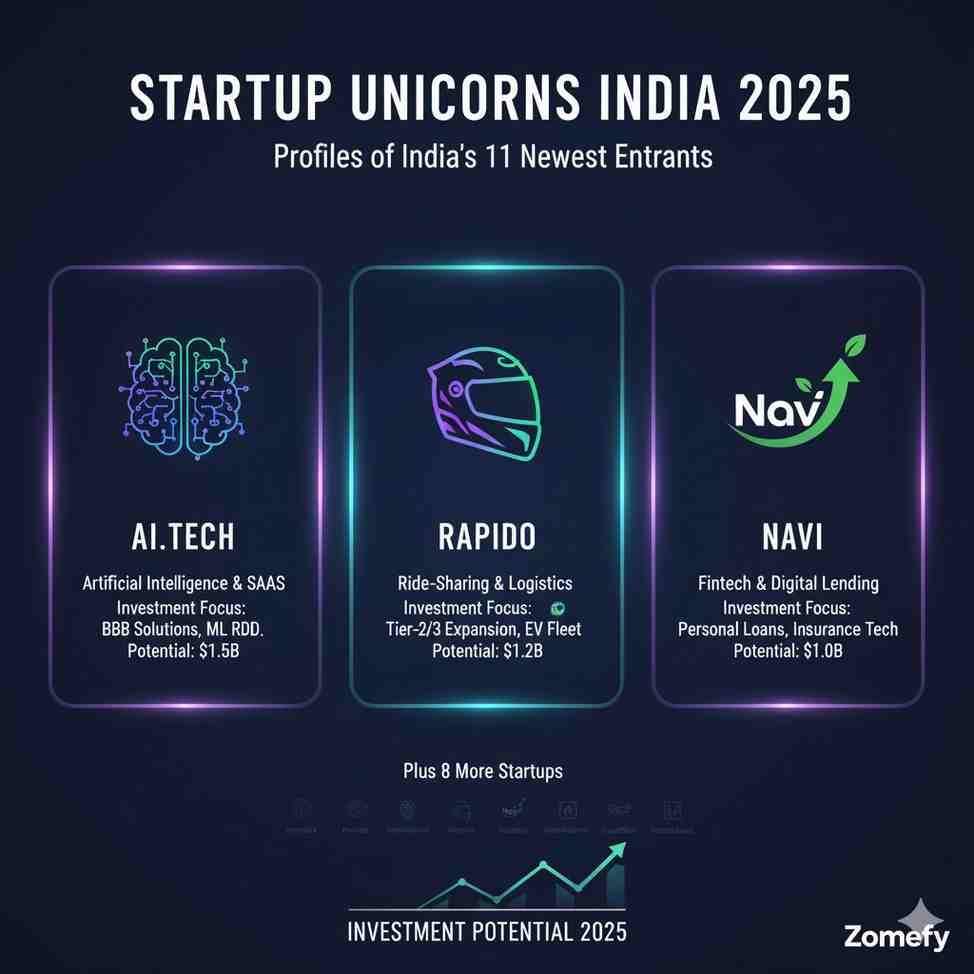
Startup Unicorns 2025: Profiles of India's 11 Newest Entrants - Ai.tech, Rapido, Navi and Their Investment Potential
India's startup ecosystem continues its remarkable ascent in 2025, with 11 groundbreaking companies achieving unicorn status—valuations exceeding $1 billion—according to the prestigious Hurun Repor...
India's Economic Transformation 2025: Unpacking GST Revisions and Their Impact on Auto and Consumer Sectors
India’s economic landscape is undergoing a profound transformation in 2025, driven by landmark reforms to the Goods and Services Tax (GST) regime.
India’s Digital Lending Boom 2025: Opportunities, Risks, and Regulatory Outlook for Retail Investors
India's digital lending sector is experiencing a transformative boom, driven by rapid technological adoption, expanding fintech ecosystems, and progressive regulatory frameworks.
Startup Unicorns 2025: How Indian D2C Brands Are Redefining Profitability and Investor Returns
The Indian startup ecosystem has witnessed a transformative evolution, particularly in the direct-to-consumer (D2C) space, which is reshaping traditional business models and investor expectations.
Explore More Insights
Continue your financial education journey