Adani Green Energy Stock Analysis 2025: Impact of Recent SEBI Regulatory Updates and Renewable Capacity Expansion
Adani Green Energy Limited (ADANIGREEN) stands as India's largest renewable energy company, commanding a pivotal position in the nation's energy transition.
Adani Green Energy Stock Analysis 2025: Impact of Recent SEBI Regulatory Updates and Renewable Capacity Expansion
What You Can Do Next
- Read the full article for complete insights
- Save for later reference
- Share with others learning about this topic
Image not available
Adani Green Energy Limited (ADANIGREEN) stands as India's largest renewable energy company, commanding a pivotal position in the nation's energy transition. As of December 2025, the company navigates a complex landscape marked by robust operational achievements alongside market volatility and leverage concerns. In H1 FY26, Adani Green Energy demonstrated exceptional financial performance with consolidated net profit surging 79.5% to ₹1,296 crore on a 14.5% increase in net sales to ₹6,565 crore. The company has operationalized 2.4 GW of renewable energy capacity in the first half of FY26 and remains firmly committed to its ambitious 50 GW capacity target by 2030. However, the stock has experienced significant headwinds, slipping 4% year-to-date despite a 4% gain over the past 12 months. This analysis examines the company's operational excellence, financial trajectory, market positioning, and the critical factors influencing investor sentiment in the context of India's renewable energy revolution and evolving regulatory environment.
Operational Excellence and Capacity Expansion: The Growth Engine
Adani Green Energy's operational performance in FY26 reflects the company's strategic positioning as India's renewable energy leader. The company achieved a remarkable 39% year-on-year increase in energy sales, totaling 19.6 billion units, while simultaneously recording a 49% growth in renewable capacity. This dual expansion demonstrates the company's ability to scale operations effectively across India's vast renewable energy landscape. The greenfield capacity addition of 5.5 GW during H1 FY26 showcases aggressive expansion, with significant contributions from resource-rich sites in Khavda, Gujarat and Rajasthan. These regions offer superior solar irradiation and wind resources, enabling higher plant load factors and improved operational efficiency. The company's deployment of advanced renewable energy technologies, including bifacial solar panels and hybrid systems, positions it at the technological frontier of India's renewable sector. Cash profit rose 8% year-on-year to ₹1,349 crore during the quarter, demonstrating the conversion of operational growth into tangible financial returns. CEO Ashish Khanna's statement regarding the firm path to 5 GW capacity addition in FY26 underscores management's confidence in execution capabilities. The 50 GW target by 2030 represents approximately 12-15% of India's projected renewable energy capacity by that year, positioning Adani Green as a critical player in achieving the nation's net-zero ambitions. However, the company faces operational challenges including adverse weather conditions affecting plant performance and grid constraints in certain regions, which have impacted the Plant Load Factor (PLF) for hybrid projects.
Capacity Expansion Trajectory and Strategic Partnerships
Adani Green Energy's pathway to 50 GW involves strategic partnerships and capital deployment of ₹30,000 crores over the next two years. The company's operationalization of 200 MW solar capacity at Khavda in early December 2025 (75 MW + 125 MW), bringing total capacity to 16,929.8 MW, demonstrates consistent execution. This expansion strategy is underpinned by: (1) Long-term power purchase agreements (PPAs) with state electricity boards and large corporates, providing revenue visibility; (2) Geographic diversification across Gujarat, Rajasthan, Tamil Nadu, and other states to mitigate regional weather risks; (3) Technology diversification including solar, wind, and hybrid projects to optimize returns across different geographies. The company's focus on greenfield capacity additions rather than acquisitions reflects a disciplined capital allocation approach. Debtor days have improved from 68.9 to 50.1 days, indicating enhanced working capital management and stronger collection efficiency. This operational excellence in cash conversion is critical given the capital-intensive nature of renewable energy projects. The company's ability to maintain high capacity utilization while expanding aggressively suggests robust project management and execution capabilities.
Financial Performance Analysis: Profitability and Profitability Metrics
The financial performance of Adani Green Energy in FY26 represents a significant inflection point, with consolidated net profit jumping 79.5% to ₹1,296 crore in H1 FY26 compared to H1 FY25. This exceptional profit growth outpaced revenue growth of 14.5%, indicating substantial operating leverage and improved operational efficiency. The company delivered a 127% profit CAGR over the last 5 years, demonstrating consistent value creation despite market volatility. EBITDA growth has been particularly robust, driven by capacity additions coming online and improved performance of existing assets. The following table provides a comprehensive view of the company's financial trajectory:
Revenue and Profitability Metrics
Financial Metric | H1 FY25 (₹ Crore) | H1 FY26 (₹ Crore) | YoY Growth (%) |
|---|---|---|---|
| Net Sales | 5,735 | 6,565 | 14.5% |
| Consolidated Net Profit | 721 | 1,296 | 79.5% |
| Cash Profit | 1,250 | 1,349 | 8.0% |
| Energy Sales (Billion Units) | 14.1 | 19.6 | 39.0% |
| Capacity Added (GW) | 1.8 | 2.4 | 33.3% |
The divergence between net profit growth (79.5%) and revenue growth (14.5%) highlights the company's improving operational leverage and cost management. This suggests that incremental capacity additions are generating higher margins than existing assets. The 39% growth in energy sales outpacing the 14.5% revenue growth indicates favorable tariff realization or a shift toward higher-margin contracts. However, investors should note that this exceptional profit growth may not be sustainable at these rates as the company scales, as newer capacity additions typically have lower returns initially before reaching steady-state operations.
Leverage and Capital Structure Concerns
Despite impressive operational performance, Adani Green Energy faces significant leverage concerns that warrant investor attention. The company reports a net debt to run rate EBITDA ratio of 4.4 times, which is elevated compared to industry peers and indicates substantial financial leverage. This high leverage ratio reflects the capital-intensive nature of renewable energy projects and the company's aggressive expansion strategy. The ₹30,000 crore capital expenditure commitment over two years will likely maintain or increase leverage ratios in the near term. While renewable energy projects typically have long-term, stable cash flows that support debt servicing, the company's leverage leaves limited margin for operational disruptions or adverse market conditions. The following comparison illustrates leverage metrics in context: A net debt to EBITDA ratio of 4.4x implies that the company would require 4.4 years of current EBITDA to pay off net debt, assuming no new borrowings. For comparison, many infrastructure companies operate at 2.5-3.5x leverage ratios. Adani Green's higher leverage reflects its growth phase and the need to fund capacity expansion. However, rising interest rates or deterioration in operational performance could pressure debt servicing capabilities. The company's ability to refinance debt at reasonable rates and maintain access to capital markets remains critical for its expansion plans.
Stock Performance and Technical Analysis: Market Sentiment and Valuation
Adani Green Energy's stock performance in 2025 reflects investor ambivalence toward the company's growth prospects despite strong operational achievements. The stock has declined 4% year-to-date but gained 4% over the past 12 months, indicating consolidation and sideways movement. The 52-week low of ₹758 (recorded on March 3, 2025) and current trading levels around ₹1,022-1,040 represent a 35% recovery from lows, suggesting some investor confidence in the recovery narrative. However, the stock's 50% decline over three years and 12.17% decline over five years indicate significant long-term underperformance, likely reflecting regulatory concerns and market volatility surrounding the Adani Group. The relative strength index (RSI) at 39.4 positions the stock in neutral territory, neither oversold nor overbought, suggesting potential for movement in either direction. Technical analysts present divergent views on the stock's near-term trajectory:
Technical Analysis and Price Targets
Analyst/Source | Current View | Support Level (₹) | Resistance Level (₹) | Target Price (₹) |
|---|---|---|---|---|
| Angel One (Osho Krishan) | Bullish Consolidation | 970-990 | 1,100-1,155 | 1,200+ |
| Tips2trades (A R Ramachandran) | Bearish Daily Charts | 1,024 | 1,037.50 | 961 |
| TradingView Consensus (8 Analysts) | Neutral to Positive | 792 | 2,142 | 1,353 |
| StockInvest Technical | Sell Signal | 939-965 | 1,015-1,025 | 975-990 |
The wide divergence in analyst price targets (ranging from ₹792 to ₹2,142) reflects significant uncertainty regarding the company's valuation. The consensus 1-year price target of ₹1,353 implies 26-32% upside from current levels, suggesting analysts remain cautiously optimistic despite near-term technical weakness. The stock's trading below its 5-day, 10-day, 20-day, 50-day, and 100-day moving averages but above its 150-day and 200-day moving averages indicates a stock in intermediate-term consolidation. The bullish gap around ₹990 identified by technical analysts could provide support in case of further selling pressure.
Valuation Metrics and Investment Perspective
Based on H1 FY26 performance, Adani Green Energy's valuation metrics present an interesting risk-reward profile. The next quarter EPS is expected to reach ₹7.39, implying a forward P/E ratio of approximately 138-140x at current prices of ₹1,022-1,040. This elevated P/E ratio reflects market expectations of significant profit growth in coming quarters as new capacity additions mature. However, this also suggests limited margin for disappointment. The consensus price target of ₹1,353 implies a forward P/E of approximately 183x on expected quarterly EPS, indicating that even analyst consensus targets assume continued exceptional profit growth. For Indian retail investors, the critical consideration is whether the company can sustain 79.5% profit growth rates as it scales to 50 GW. Historically, renewable energy companies experience margin compression as they mature and face increased competition. The company's current valuation appears to price in optimistic scenarios where capacity additions continue at 5+ GW annually and margins remain elevated. More conservative scenarios would justify lower valuations. The stock appears suitable for growth-oriented investors with 3-5 year investment horizons who believe in India's renewable energy transition story, but less appropriate for value investors seeking margin of safety.
Regulatory Environment and SEBI Compliance: Navigating Governance Challenges
Adani Green Energy operates within India's evolving renewable energy regulatory framework, which includes SEBI oversight of listed companies and Ministry of Power regulations governing renewable energy procurement. The company's compliance with SEBI regulations regarding disclosure, corporate governance, and related-party transactions remains under scrutiny following broader concerns about the Adani Group. The company has demonstrated commitment to transparency through regular analyst meets and detailed operational updates. The renewable energy sector itself benefits from supportive government policies including renewable purchase obligations (RPOs) for state electricity boards, accelerated depreciation benefits, and renewable energy certificates (REC) mechanisms. However, regulatory risks remain, including: (1) Changes in renewable energy tariff determination by state electricity regulatory commissions; (2) Potential modifications to renewable purchase obligations affecting demand; (3) Grid integration challenges requiring infrastructure investments; (4) Environmental and land acquisition regulations affecting project timelines. The company's strategic focus on long-term PPAs with state electricity boards and large corporates provides some insulation from tariff volatility. The improved debtor collection (debtor days declining from 68.9 to 50.1 days) reflects better contract enforcement and payment discipline among customers. For investors, the regulatory environment presents both opportunities and risks. The Indian government's commitment to 500 GW renewable capacity by 2030 provides structural tailwinds for companies like Adani Green. However, regulatory changes or enforcement actions could materially impact returns.
Government Policy Support and Sector Tailwinds
Policy/Initiative | Impact on Adani Green | Timeline | Potential Upside |
|---|---|---|---|
| 500 GW Renewable Target by 2030 | Structural demand growth | 2025-2030 | High - aligns with company's 50 GW target |
| Production-Linked Incentive (PLI) for Solar Manufacturing | Potential cost reduction for solar components | 2025-2030 | Medium - reduces equipment costs |
| Green Hydrogen Mission | Future diversification opportunity | 2025-2030 | Medium - long-term strategic option |
| Renewable Energy Certificates (REC) Mechanism | Additional revenue stream | Ongoing | Low to Medium - volatile pricing |
| Accelerated Depreciation Benefits | Tax efficiency improvement | Ongoing | Medium - improves post-tax returns |
The government's aggressive renewable energy targets create structural demand for Adani Green's capacity additions. The company's 50 GW target represents approximately 10% of the 500 GW national target, positioning it as a critical enabler of India's climate commitments. The Production-Linked Incentive scheme for solar manufacturing could reduce equipment costs for the company, improving project economics. The emerging green hydrogen opportunity presents a long-term diversification avenue, though commercial viability remains uncertain.
Risk Assessment and Investment Considerations: Critical Factors for Investors
Adani Green Energy presents a complex risk-reward profile that requires careful consideration by investors. The company's operational excellence and growth trajectory are offset by leverage concerns, valuation risks, and regulatory uncertainties. The following analysis presents key risks and investment considerations:

Risk-Return Analysis Matrix
Risk Category | Risk Level | Potential Impact | Mitigation Strategy | Investor Action |
|---|---|---|---|---|
| Leverage/Debt Risk | High | 4.4x net debt/EBITDA limits financial flexibility | Strong cash flows from PPAs; refinancing capability | Monitor debt ratios quarterly; assess refinancing risk |
| Valuation Risk | High | P/E of 138-140x leaves limited margin for disappointment | Growth trajectory must sustain; capacity additions on track | Consider entry on weakness; avoid chasing rallies |
| Regulatory Risk | Medium | Changes in tariff mechanisms or RPOs could impact returns | Long-term PPAs provide revenue visibility; diversified geography | Monitor policy changes; assess contract terms |
| Operational Risk | Medium | Grid constraints, weather impact PLF; execution risks on 5 GW target | Advanced technologies improve performance; geographic diversification | Track quarterly capacity additions and PLF metrics |
| Market Risk | Medium | Stock volatility reflects Adani Group concerns; sentiment swings | Strong operational performance; improving transparency | Long-term investment horizon; ignore short-term noise |
| Interest Rate Risk | Medium | Rising rates increase debt servicing costs; project economics worsen | Fixed-rate debt; long-term PPAs lock in returns | Monitor RBI policy; assess refinancing costs |
Investment Recommendation Framework
For different investor categories, Adani Green Energy presents distinct investment propositions: GROWTH INVESTORS (3-5 year horizon): The stock offers compelling growth potential given India's renewable energy transition and the company's operational excellence. The 79.5% profit growth and 39% energy sales growth demonstrate execution capability. Entry points below ₹1,000 offer reasonable risk-reward, with potential upside to ₹1,200-1,350 if the company sustains capacity additions and margin profile. However, investors must be comfortable with leverage and valuation risks. VALUE INVESTORS: The current valuation of 138-140x forward P/E offers limited margin of safety. Even at the consensus target of ₹1,353, the P/E remains elevated at 183x. Value investors should wait for significant corrections (below ₹850-900) or focus on dividend income (though renewable energy companies typically reinvest cash for growth). INCOME INVESTORS: Adani Green Energy is not suitable for income-focused investors, as the company prioritizes reinvestment over dividend distributions, reflecting its growth stage. RISK-AVERSE INVESTORS: The combination of high leverage (4.4x net debt/EBITDA), elevated valuation, and regulatory uncertainties make this stock inappropriate for conservative portfolios. Better alternatives exist in more stable, lower-leverage renewable energy players or diversified infrastructure funds. SECTOR ALLOCATION PERSPECTIVE: For investors seeking renewable energy exposure, Adani Green Energy represents a concentrated bet on India's renewable transition. A more diversified approach through renewable energy-focused mutual funds or ETFs may offer better risk-adjusted returns while maintaining sector exposure.
Comparative Analysis: Adani Green Energy vs. Sector Peers and Alternatives
To contextualize Adani Green Energy's investment proposition, it is valuable to compare the company with other renewable energy players and alternative investment vehicles in the Indian market. While direct peer comparison data is limited in the search results, the following framework provides context for investment decisions:
Renewable Energy Sector Positioning
Metric | Adani Green Energy | Sector Average | Investment Implication |
|---|---|---|---|
| Capacity (GW) | 16.9 (as of Dec 2025) | 5-8 (typical player) | Market leader; scale advantage |
| Profit CAGR (5Y) | 127% | 15-25% | Exceptional growth; unsustainable long-term |
| Net Debt/EBITDA | 4.4x | 2.5-3.5x | Higher leverage; elevated financial risk |
| Forward P/E | 138-140x | 25-35x | Premium valuation; growth expectations high |
| Revenue Growth (H1 FY26) | 14.5% | 8-12% | Above-sector growth; execution excellence |
| Profit Growth (H1 FY26) | 79.5% | 15-25% | Exceptional; reflects capacity ramp-up |
Adani Green Energy's positioning as the sector leader is evident from its capacity scale and growth trajectory. However, the premium valuation and elevated leverage reflect market expectations of continued exceptional performance. Investors comparing Adani Green with other renewable energy companies should consider: (1) NTPC Green Energy: A government-backed alternative with lower leverage but potentially slower growth; (2) Renewable Energy-focused Mutual Funds: Offer diversified exposure across multiple renewable energy players, reducing concentration risk; (3) Infrastructure-focused ETFs: Provide broader exposure to renewable energy and other infrastructure segments; (4) Green Bonds: Fixed-income alternatives offering stable returns from renewable energy projects without equity volatility.
Investment Alternatives Comparison
Investment Vehicle | Risk Level | Growth Potential | Dividend Yield | Liquidity | Best For |
|---|---|---|---|---|---|
| Adani Green Energy Stock | High | Very High (15-20%+ potential) | Low | Very High | Growth investors, 3-5Y horizon |
| Renewable Energy Mutual Funds | Medium | High (10-15% potential) | Low-Medium | High | Diversified exposure, moderate risk |
| Infrastructure ETFs | Medium | Medium-High (8-12% potential) | Medium (2-3%) | Very High | Broad sector exposure, lower cost |
| Green Bonds | Low-Medium | Low (5-7% potential) | Medium-High (5-6%) | Medium | Income investors, capital preservation |
| Balanced Funds with RE Exposure | Low-Medium | Medium (7-10% potential) | Medium (3-4%) | High | Conservative investors, diversification |
Conclusion and Strategic Recommendations: Navigating the Investment Decision
Adani Green Energy Limited represents a compelling yet complex investment opportunity in India's renewable energy transition. The company's operational excellence, demonstrated by 79.5% profit growth and 39% energy sales growth in H1 FY26, reflects strong execution in a capital-intensive sector. The 50 GW capacity target by 2030 positions the company as a critical enabler of India's 500 GW renewable energy ambition, providing structural tailwinds for long-term growth. However, several factors warrant cautious consideration: The elevated leverage of 4.4x net debt/EBITDA limits financial flexibility and increases vulnerability to interest rate shocks or operational disruptions. The premium valuation of 138-140x forward P/E reflects aggressive growth expectations that may prove difficult to sustain as the company scales. The stock's underperformance over 3-5 years, despite strong recent operational performance, reflects lingering concerns about Adani Group governance and regulatory risks. For Indian retail investors and financial professionals, the investment decision should be guided by individual risk tolerance, investment horizon, and portfolio objectives. STRATEGIC RECOMMENDATIONS: (1) GROWTH-ORIENTED INVESTORS: Consider a phased accumulation strategy with entry points below ₹1,000, targeting a 3-5 year holding period. The company's operational trajectory supports potential appreciation to ₹1,200-1,350, offering 15-35% upside. However, position sizing should reflect the elevated leverage and valuation risks. (2) DIVIDEND/INCOME INVESTORS: Avoid Adani Green Energy, as the company prioritizes reinvestment over distributions. Alternative infrastructure or utility stocks offering 3-5% dividend yields are more suitable. (3) CONSERVATIVE INVESTORS: The combination of leverage, valuation, and regulatory risks makes this stock inappropriate for risk-averse portfolios. Consider diversified renewable energy mutual funds or infrastructure ETFs offering lower volatility. (4) TACTICAL TRADERS: The stock's technical consolidation between ₹990-1,100 offers trading opportunities. Support at ₹970-990 and resistance at ₹1,100-1,155 provide defined risk-reward parameters for short-term positioning. (5) PORTFOLIO ALLOCATION: For investors seeking renewable energy exposure, limit Adani Green Energy to 2-3% of total portfolio to manage concentration risk. Complement with diversified renewable energy funds or infrastructure ETFs for broader sector exposure. MONITORING FRAMEWORK: Investors should track the following metrics quarterly: (1) Capacity additions against the 5 GW FY26 target; (2) Plant Load Factor (PLF) trends, particularly for hybrid projects; (3) Debt levels and refinancing costs; (4) Energy sales growth and tariff realization; (5) Regulatory developments affecting renewable energy procurement; (6) Relative valuation metrics against sector peers. The next 12-18 months are critical for Adani Green Energy, as the company must demonstrate sustained execution on its 50 GW roadmap while managing leverage and maintaining operational margins. Success in these areas could justify current valuations and deliver significant returns to investors. Conversely, execution shortfalls or adverse regulatory developments could trigger significant corrections. Therefore, investors should approach this opportunity with both conviction in India's renewable energy transition and healthy skepticism regarding the company's ability to sustain exceptional growth rates as it scales.
Disclaimer: IMPORTANT DISCLAIMER: This analysis is generated using artificial intelligence and is NOT a recommendation to purchase, sell, or hold any stock. This analysis is for informational and educational purposes only. Past performance does not guarantee future results. Please consult with a qualified financial advisor before making any investment decisions. The author and platform are not responsible for any investment losses.


Continue Your Investment Journey
Discover more insights that match your interests

Nifty and Sensex Outlook 2025: Navigating Sectoral Rotation Strategies Amidst Market Volatility
The Indian equity markets, represented by the Nifty 50 and the BSE Sensex, have demonstrated remarkable resilience and dynamism amidst a backdrop of global uncertainties and domestic economic reforms.

FII and DII Flow Dynamics in 2025: How Foreign and Domestic Investment Patterns Are Reshaping Indian Market Valuations and Sectoral Performance**
The Indian equity market landscape in 2025 is witnessing a significant transformation shaped by the evolving dynamics between Foreign Institutional Investors (FIIs) and Domestic Institutional Inves...

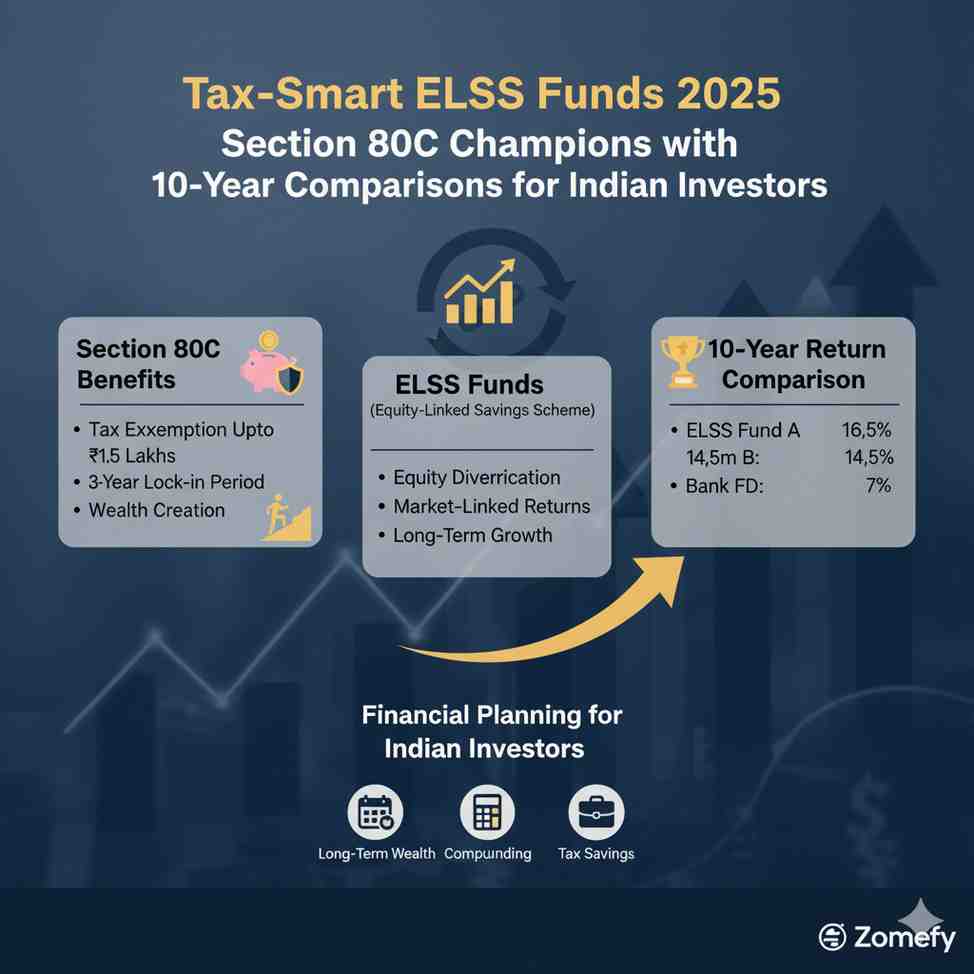
Tax-Smart ELSS Funds 2025: Section 80C Champions with 10-Year Return Comparisons for Indian Investors
Equity-Linked Savings Schemes (ELSS) have long been a cornerstone of tax planning for Indian investors seeking to optimize their tax liability under Section 80C of the Income Tax Act.
From Blackouts to Breakthroughs: How India’s AI-Driven Energy Crunch Is Reshaping Power Investments in 2025
India’s energy sector is undergoing a transformative phase in 2025, driven by the twin forces of an escalating energy crunch and innovative artificial intelligence (AI) applications.
Explore More Insights
Continue your financial education journey